Our Three Step Process
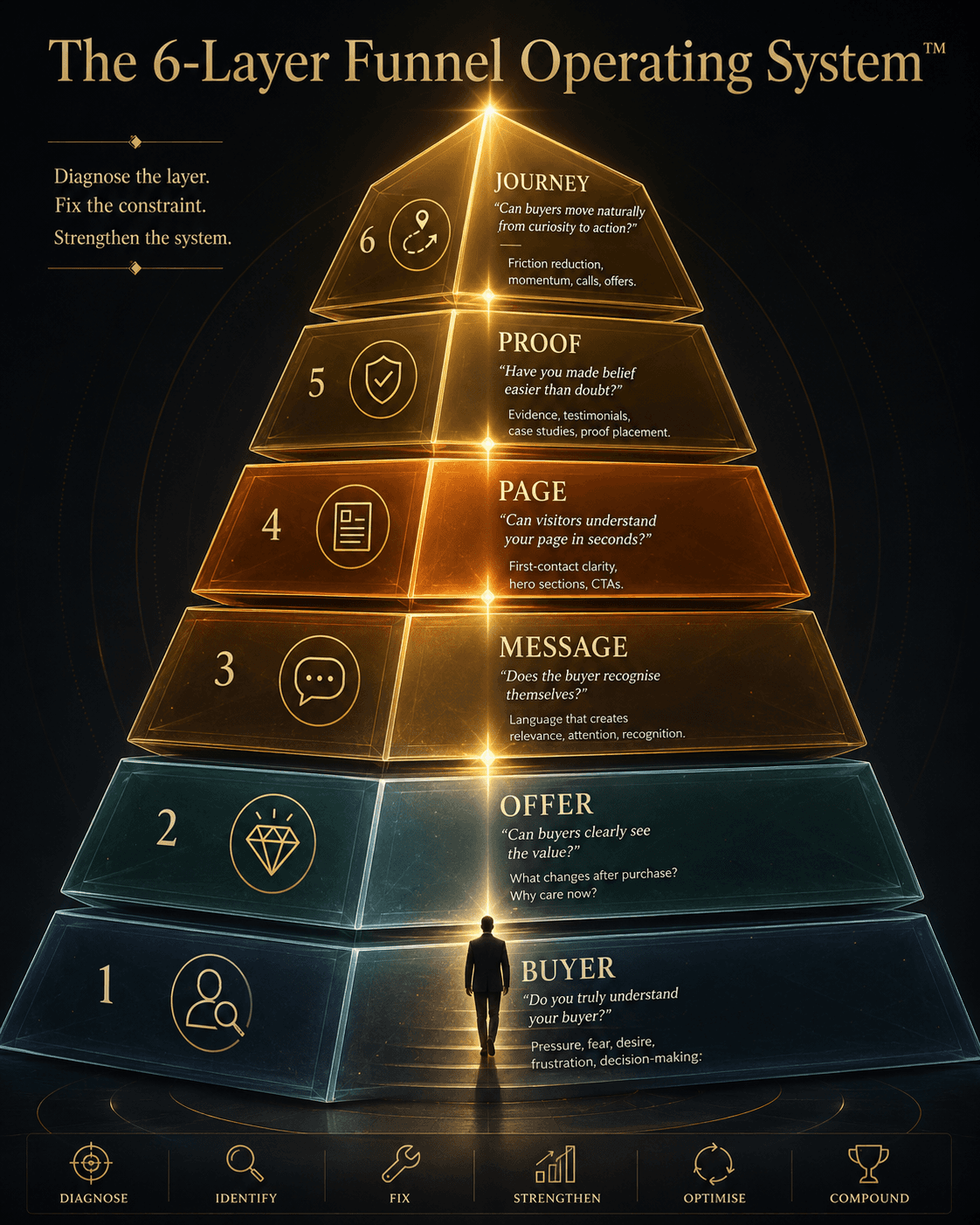
THE PAGE LAYER™ | LAYER 4
Our Three Step Process
THE PAGE LAYER™ | LAYER 4
Why Most Landing Pages Die Before They're Read
Most founders assume landing pages fail because of bad design.
Bad colours.
Bad layouts.
Bad buttons.
Bad headlines.
Sometimes that's true.
Usually it isn't.
Because most landing pages die long before a visitor evaluates any of those things.
They die during the first contact moment.
The first few seconds.
The first glance.
The first impression.
Before the visitor reads the page.
Before they scroll.
Before they engage.
Before persuasion ever begins.
The page loses the right to be read.
And once that happens, nothing underneath matters.
Not the proof.
Not the offer.
Not the CTA.
Not the testimonials.
Nothing.
——
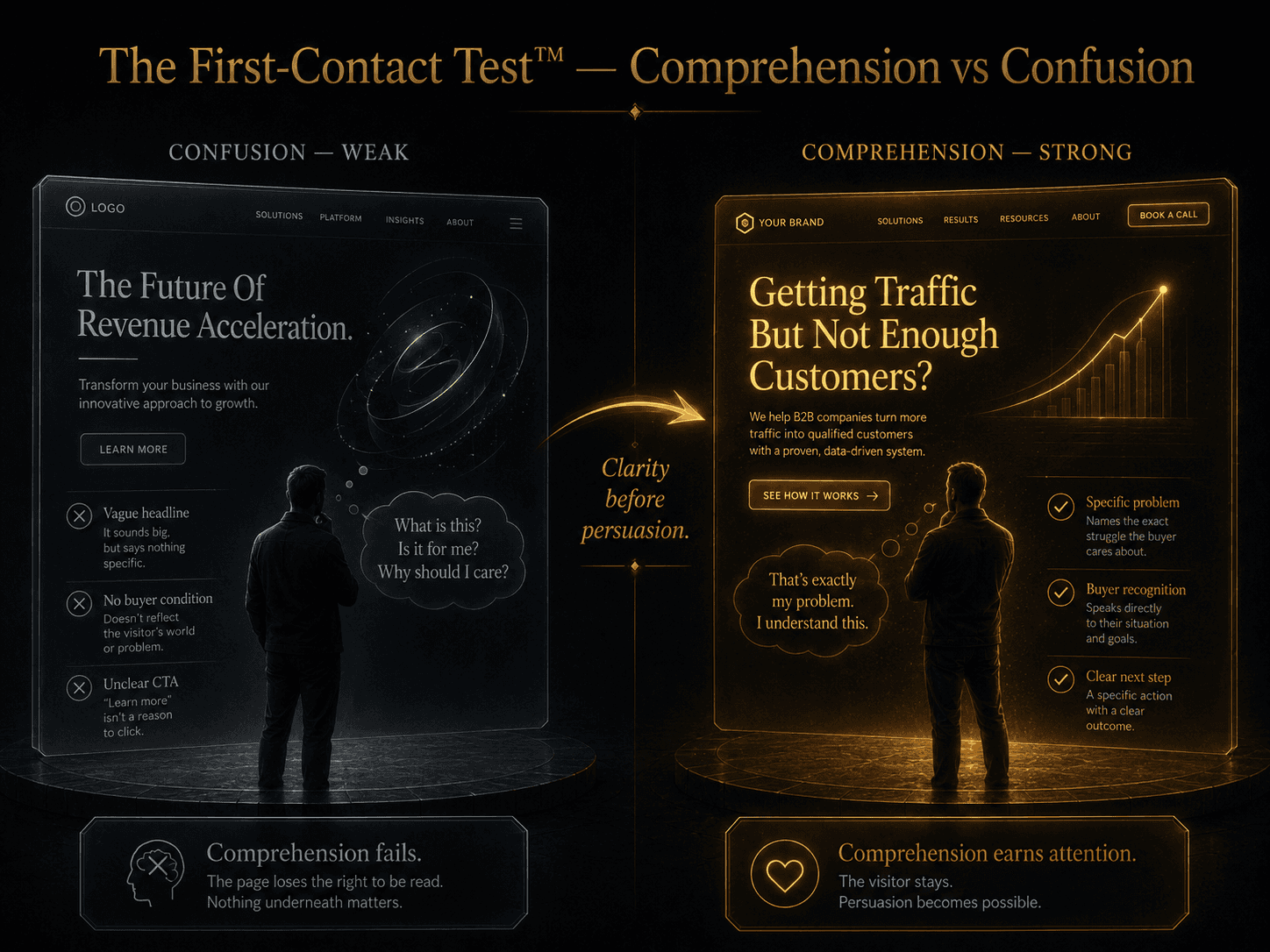
The First-Contact Test™
The moment a visitor lands on a page, their brain immediately starts asking questions.
Not consciously.
Automatically.
Questions like:
What is this?
Is it for me?
Can I trust it?
Why should I care?
What do I do next?
The page is either answering those questions.
Or creating more of them.
And more questions create friction.
More friction creates exits.
The strongest pages reduce uncertainty immediately.
Because the first goal is not persuasion.
The first goal is comprehension.
——
Landing Pages Are Not Reading Environments
This is one of the biggest misconceptions in marketing.
Founders believe visitors arrive ready to read.
They don't.
Visitors arrive ready to judge.
Think about your own behaviour online.
You open a page.
Within seconds you're deciding:
Stay.
Leave.
Continue.
Ignore.
The page is not being studied.
It's being screened.
Which means clarity matters far more than cleverness.
Because clever headlines require interpretation.
Clear headlines create understanding.
And understanding earns attention.
——
The Comprehension Gap™
Most pages lose visitors because they create unnecessary mental work.
The visitor shouldn't need to decode:
what you do
who it's for
why it matters
what happens next
Yet many pages force visitors to figure those things out.
The result?
Confusion.
And confusion is expensive.
Not because buyers disagree.
Because buyers don't understand.
——
The Drunk Stranger Test™
One of the simplest page diagnostics is this:
Imagine a distracted stranger lands on your page.
They spend ten seconds looking at it.
Could they clearly answer:
What is this?
Who is this for?
Why should I care?
What should I do next?
If the answer is no, the page likely has a comprehension problem.
And comprehension problems kill momentum.
——
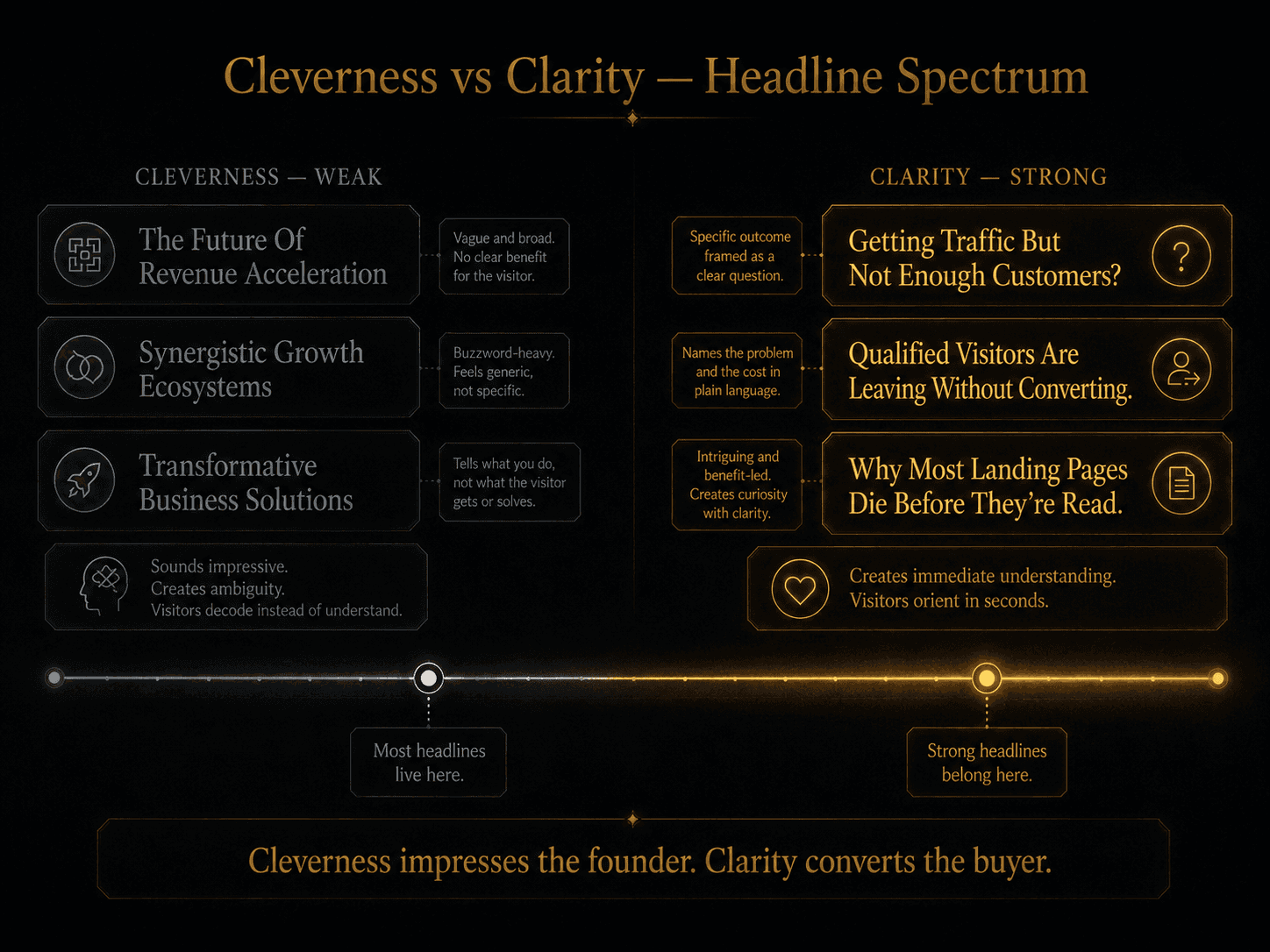
Why Clever Headlines Often Fail
Founders love cleverness.
Buyers love clarity.
These are not the same thing.
Example:
The Future Of Revenue Acceleration
Sounds impressive.
Means almost nothing.
Now compare:
Getting Traffic But Not Enough Customers?
Immediate clarity.
Immediate relevance.
Immediate comprehension.
The second headline creates a picture.
The first creates ambiguity.
And ambiguity slows understanding.
——
The Hero Section Problem™
Most landing pages lose visitors in the hero section.
Not because visitors hate the offer.
Because visitors cannot orient themselves.
The hero section has one job:
Create clarity.
Not impress.
Not entertain.
Not showcase design.
Orient.
The visitor should quickly understand:
Who this is for.
What problem it solves.
What changes.
What happens next.
Everything else comes later.
——
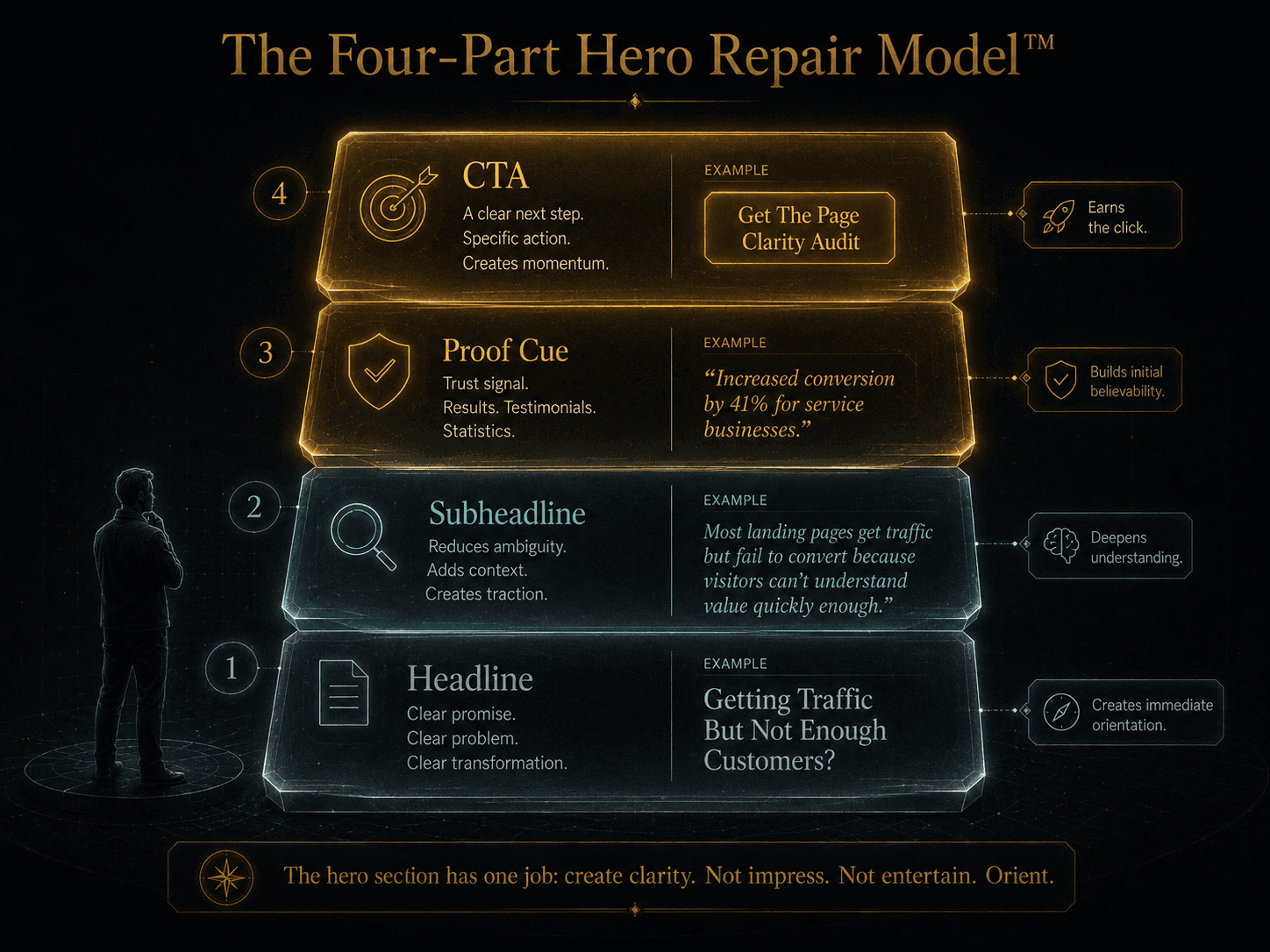
The Four-Part Hero Repair Model™
Strong hero sections usually contain four elements.
1. Headline
Clear promise.
Clear problem.
Clear transformation.
2. Subheadline
Reduces ambiguity.
Adds context.
Creates traction.
3. Proof Cue
Trust signal.
Results.
Testimonials.
Statistics.
Recognition.
4. CTA
A clear next step.
Not:
Submit
Learn More
Continue
Instead:
Get The Guide
Start The Assessment
Book A Diagnostic
Specific actions create momentum.
——
Why Visitors Leave
Most founders assume visitors leave because they aren't interested.
Sometimes.
More often visitors leave because:
they are confused
they are uncertain
they are overwhelmed
they cannot see relevance
Interest is often present.
Comprehension is not.
And without comprehension, interest cannot survive.
——
Diagnostic Observation™ #06
Confused buyers rarely convert.
Not because they disagree.
Because they don't understand.
Quick Self-Test
Review your homepage or landing page.
Can a first-time visitor answer:
What is this?
Who is this for?
Why should I care?
What should I do next?
Within ten seconds?
If not, your Page Layer may be limiting growth.
——
Common Symptoms Of A Weak Page Layer
High bounce rates
Low conversion rates
Poor engagement
Visitors leaving quickly
Prospects asking basic questions
High traffic with weak results
These are often comprehension problems.
Not traffic problems.
——
Recommended Resources
Drunk Stranger Test™
Evaluate first-contact clarity.
[Download Resource]
First Contact Test™
Diagnose comprehension issues.
[Download Resource]
Hero Section Repair Model™
Repair weak page openings.
[Download Resource]
Funnel Autopsy Worksheet™
Diagnose page-level bottlenecks.
[Download Resource]
Page Clarity Audit™
Identify confusion before it costs conversions.
[Download Resource]
——
Final Thought
Most founders try to make pages more persuasive.
The strongest founders make pages easier to understand.
Because buyers cannot believe what they do not understand.
And they cannot act on what they cannot explain.
Which means every high-converting page begins with the same objective:
Reduce uncertainty.
Create comprehension.
Earn the right to be read.
Because the first win in conversion is not persuasion.
It's understanding.
Next Layer → The Proof Layer™
Trust Is Earned, Not Claimed
Why Most Landing Pages Die Before They're Read
Most founders assume landing pages fail because of bad design.
Bad colours.
Bad layouts.
Bad buttons.
Bad headlines.
Sometimes that's true.
Usually it isn't.
Because most landing pages die long before a visitor evaluates any of those things.
They die during the first contact moment.
The first few seconds.
The first glance.
The first impression.
Before the visitor reads the page.
Before they scroll.
Before they engage.
Before persuasion ever begins.
The page loses the right to be read.
And once that happens, nothing underneath matters.
Not the proof.
Not the offer.
Not the CTA.
Not the testimonials.
Nothing.
——
The First-Contact Test™
The moment a visitor lands on a page, their brain immediately starts asking questions.
Not consciously.
Automatically.
Questions like:
What is this?
Is it for me?
Can I trust it?
Why should I care?
What do I do next?
The page is either answering those questions.
Or creating more of them.
And more questions create friction.
More friction creates exits.
The strongest pages reduce uncertainty immediately.
Because the first goal is not persuasion.
The first goal is comprehension.
——
Landing Pages Are Not Reading Environments
This is one of the biggest misconceptions in marketing.
Founders believe visitors arrive ready to read.
They don't.
Visitors arrive ready to judge.
Think about your own behaviour online.
You open a page.
Within seconds you're deciding:
Stay.
Leave.
Continue.
Ignore.
The page is not being studied.
It's being screened.
Which means clarity matters far more than cleverness.
Because clever headlines require interpretation.
Clear headlines create understanding.
And understanding earns attention.
——
The Comprehension Gap™
Most pages lose visitors because they create unnecessary mental work.
The visitor shouldn't need to decode:
what you do
who it's for
why it matters
what happens next
Yet many pages force visitors to figure those things out.
The result?
Confusion.
And confusion is expensive.
Not because buyers disagree.
Because buyers don't understand.
——
The Drunk Stranger Test™
One of the simplest page diagnostics is this:
Imagine a distracted stranger lands on your page.
They spend ten seconds looking at it.
Could they clearly answer:
What is this?
Who is this for?
Why should I care?
What should I do next?
If the answer is no, the page likely has a comprehension problem.
And comprehension problems kill momentum.
——
Why Clever Headlines Often Fail
Founders love cleverness.
Buyers love clarity.
These are not the same thing.
Example:
The Future Of Revenue Acceleration
Sounds impressive.
Means almost nothing.
Now compare:
Getting Traffic But Not Enough Customers?
Immediate clarity.
Immediate relevance.
Immediate comprehension.
The second headline creates a picture.
The first creates ambiguity.
And ambiguity slows understanding.
——
The Hero Section Problem™
Most landing pages lose visitors in the hero section.
Not because visitors hate the offer.
Because visitors cannot orient themselves.
The hero section has one job:
Create clarity.
Not impress.
Not entertain.
Not showcase design.
Orient.
The visitor should quickly understand:
Who this is for.
What problem it solves.
What changes.
What happens next.
Everything else comes later.
——
The Four-Part Hero Repair Model™
Strong hero sections usually contain four elements.
1. Headline
Clear promise.
Clear problem.
Clear transformation.
2. Subheadline
Reduces ambiguity.
Adds context.
Creates traction.
3. Proof Cue
Trust signal.
Results.
Testimonials.
Statistics.
Recognition.
4. CTA
A clear next step.
Not:
Submit
Learn More
Continue
Instead:
Get The Guide
Start The Assessment
Book A Diagnostic
Specific actions create momentum.
——
Why Visitors Leave
Most founders assume visitors leave because they aren't interested.
Sometimes.
More often visitors leave because:
they are confused
they are uncertain
they are overwhelmed
they cannot see relevance
Interest is often present.
Comprehension is not.
And without comprehension, interest cannot survive.
——
Diagnostic Observation™ #06
Confused buyers rarely convert.
Not because they disagree.
Because they don't understand.
Quick Self-Test
Review your homepage or landing page.
Can a first-time visitor answer:
What is this?
Who is this for?
Why should I care?
What should I do next?
Within ten seconds?
If not, your Page Layer may be limiting growth.
——
Common Symptoms Of A Weak Page Layer
High bounce rates
Low conversion rates
Poor engagement
Visitors leaving quickly
Prospects asking basic questions
High traffic with weak results
These are often comprehension problems.
Not traffic problems.
——
Recommended Resources
Drunk Stranger Test™
Evaluate first-contact clarity.
[Download Resource]
First Contact Test™
Diagnose comprehension issues.
[Download Resource]
Hero Section Repair Model™
Repair weak page openings.
[Download Resource]
Funnel Autopsy Worksheet™
Diagnose page-level bottlenecks.
[Download Resource]
Page Clarity Audit™
Identify confusion before it costs conversions.
[Download Resource]
——
Final Thought
Most founders try to make pages more persuasive.
The strongest founders make pages easier to understand.
Because buyers cannot believe what they do not understand.
And they cannot act on what they cannot explain.
Which means every high-converting page begins with the same objective:
Reduce uncertainty.
Create comprehension.
Earn the right to be read.
Because the first win in conversion is not persuasion.
It's understanding.
Next Layer → The Proof Layer™
Trust Is Earned, Not Claimed
![“The Drunk Stranger Test™ — 10-Second Clarity” Concept: A minimalist, interactive test simulator. The interface shows: Top section: A page preview (headline, subheadline, CTA). A 10-second countdown timer (animated circle). Below the timer: Four questions that appear after the countdown: “What is this page about?” — [Text field] “Who is it for?” — [Text field] “Why should you care?” — [Text field] “What should you do next?” — [Text field] After submission: A diagnostic analysis comparing the user's answers to the intended page meaning. A “Clarity Score” from 0-100%. Specific recommendations for improving the weakest area. Style: Luxury UI meets interactive test simulator. Dark background, gold timer, clean typography. Feels like a serious clarity-verification instrument. Interaction: The user enters their page details or loads a sample. Clicking “Start Test” begins the 10-second countdown. After the countdown, the page preview disappears. The user answers the four questions. The tool analyzes the answers and generates a Clarity Score and specific recommendations.](https://framerusercontent.com/images/ulVnlCXN5IFhbTD8POQcv5VU2c.png?width=1448&height=1086)
Other Projects
Other Case Studies
Check our other project case studies with detailed explanations
Other Projects
Other Case Studies
Check our other project case studies with detailed explanations