Our Three Step Process
THE MESSAGE LAYER™ | LAYER 3
Our Three Step Process
THE MESSAGE LAYER™ | LAYER 3
Recognition Comes Before Persuasion
Most businesses have a persuasion problem.
Or at least that's what they think.
They believe they need:
Better copy
Better headlines
Better hooks
Better storytelling
Better sales psychology
Sometimes they're right.
Most of the time they're skipping a step.
Because persuasion only works after recognition.
And recognition is where most messages fail.
The buyer doesn't think:
"I disagree."
The buyer thinks:
"This isn't about me."
And once that happens, the conversation is over.
Not because the offer is bad.
Not because the solution doesn't work.
Because relevance never happened.
——
The Recognition Gap™
Your message can be clear.
Logical.
Well-written.
Persuasive.
And still fail.
Why?
Because clarity is not the same thing as recognition.
A buyer can understand exactly what you're saying.
Without caring.
Without paying attention.
Without continuing to read.
This is what we call:
The Recognition Gap™
The gap between understanding a message and feeling that it applies to you.
The strongest messages close that gap immediately.
The buyer thinks:
"That's me."
"That's exactly what's happening."
"How do they know that?"
That's the moment attention begins.
——
Why Most Messaging Gets Ignored
Let's imagine a founder sees this headline:
We Help Businesses Grow Faster
Technically clear.
But emotionally empty.
Now compare it to:
Getting Traffic But Not Enough Customers?
Suddenly something changes.
The second message enters a specific reality.
A specific condition.
A specific moment.
And moments create recognition.
This is why broad messaging struggles.
Broad messages describe categories.
Strong messages describe situations.
——
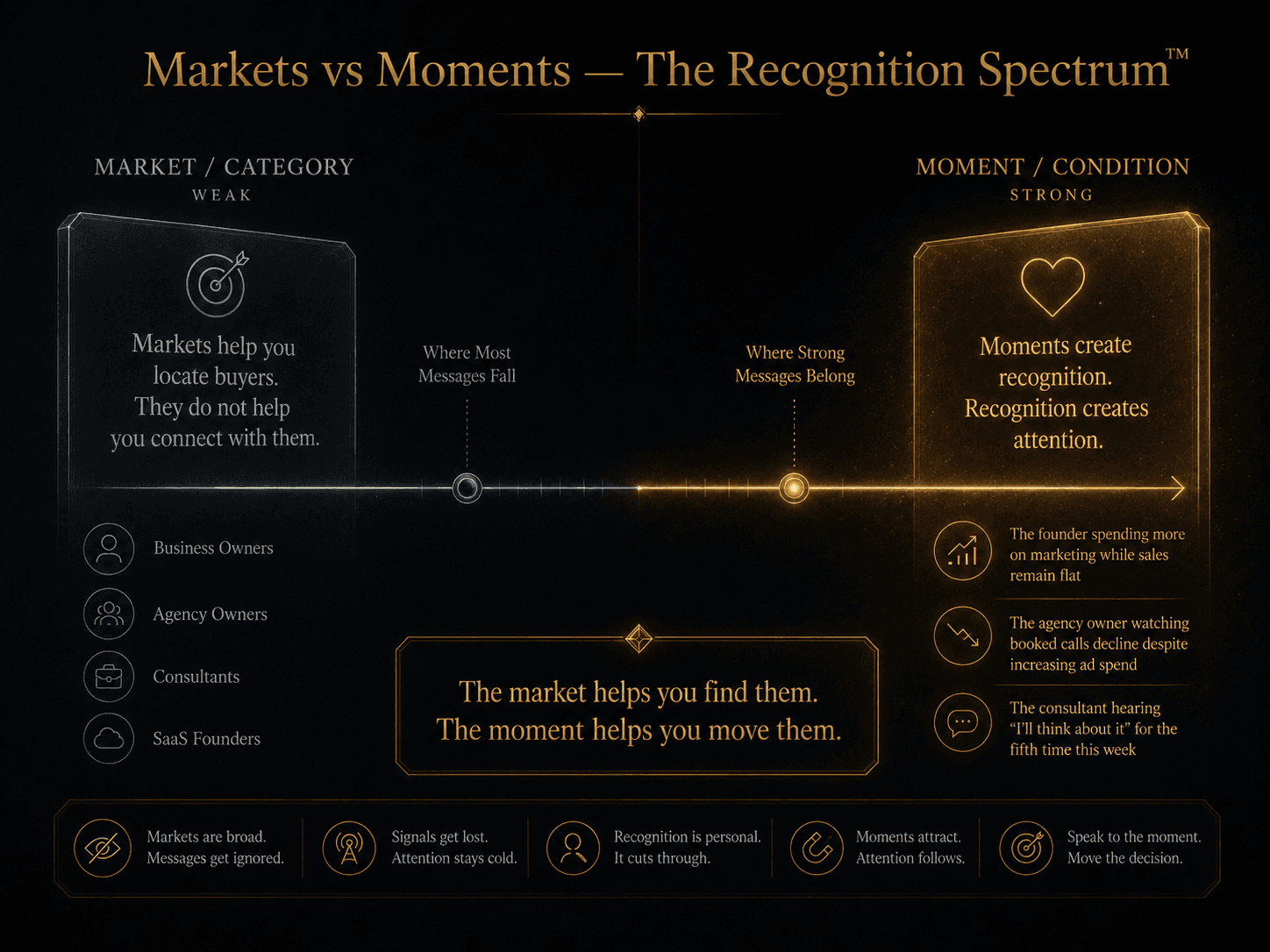
Categories Don't Convert™
One of the biggest mistakes in marketing is writing to a market instead of a moment.
Examples:
Market
Business owners
Moment
The founder spending more on marketing while sales remain flat.
Market
Agency owners
Moment
The agency owner watching booked calls decline despite increasing ad spend.
Market
Consultants
Moment
The consultant hearing "I'll think about it" for the fifth time this week.
The market helps you locate the buyer.
The moment helps you connect with them.
——
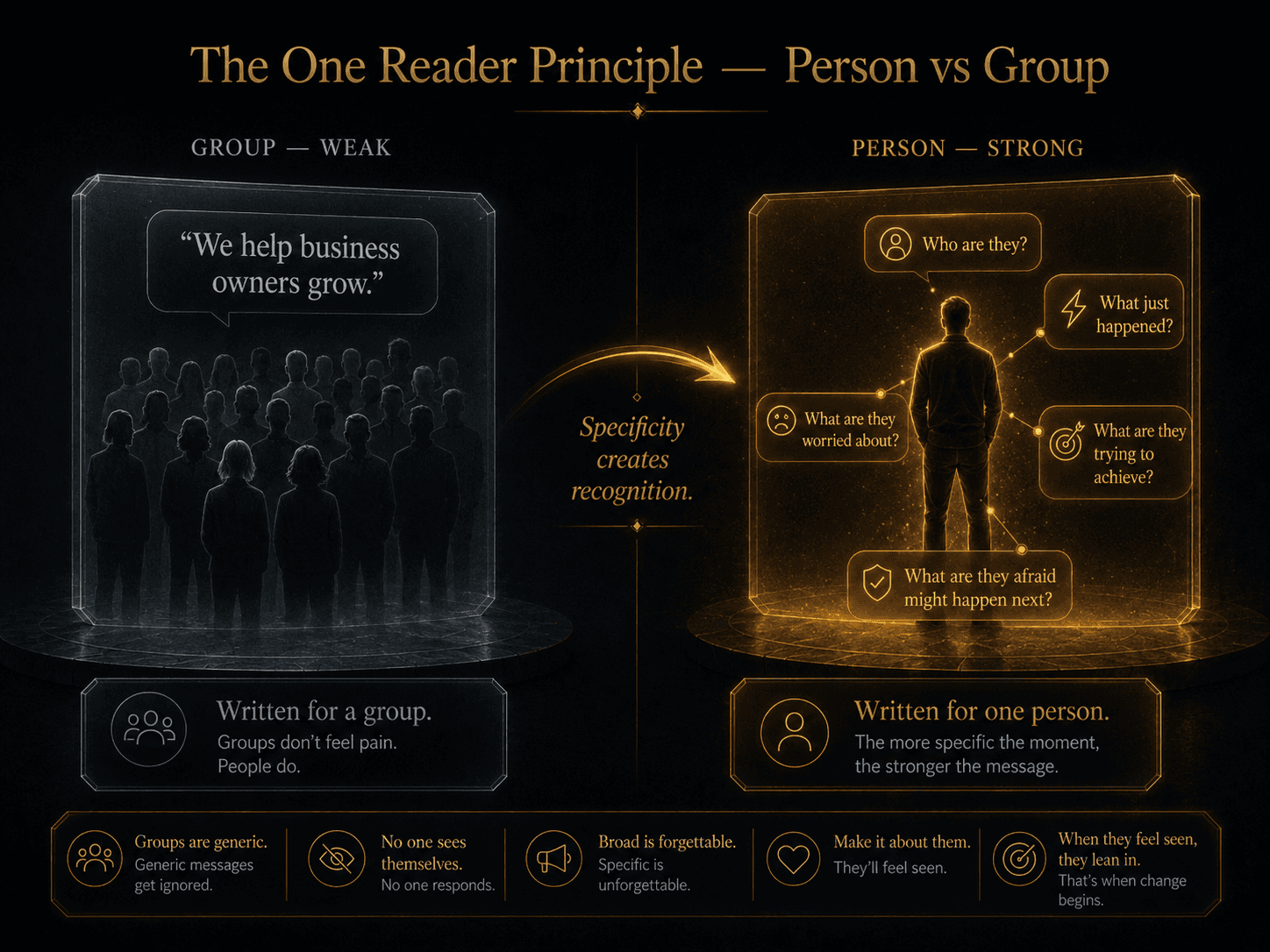
The One Reader Principle™
Most messaging feels generic because it's written for groups.
Groups don't feel pain.
People do.
When writing, imagine one person.
Ask:
Who are they?
What just happened?
What are they worried about?
What are they trying to achieve?
What are they afraid might happen next?
The more specific the moment becomes, the stronger the message becomes.
——
The Moment Before The Purchase
Strong messaging rarely speaks to the market.
It speaks to the moment immediately before change.
Examples:
Not:
Fitness Coach
Instead:
The person avoiding mirrors because they no longer recognise themselves.
Not:
Marketing Agency
Instead:
The founder tired of watching traffic arrive and customers disappear.
Not:
Copywriter
Instead:
The business owner whose offer sounds good in meetings but falls flat online.
Moments create emotional relevance.
And relevance creates attention.
——
Recognition Creates Attention
Most businesses assume attention is won through creativity.
Sometimes.
More often, attention is won through relevance.
People naturally pay attention to things connected to their current situation.
A parent notices baby products.
A homeowner notices home improvement ads.
A founder notices content about growth problems.
Not because they're better ads.
Because they're relevant.
Recognition works exactly the same way.
The buyer pays attention when they feel seen.
——
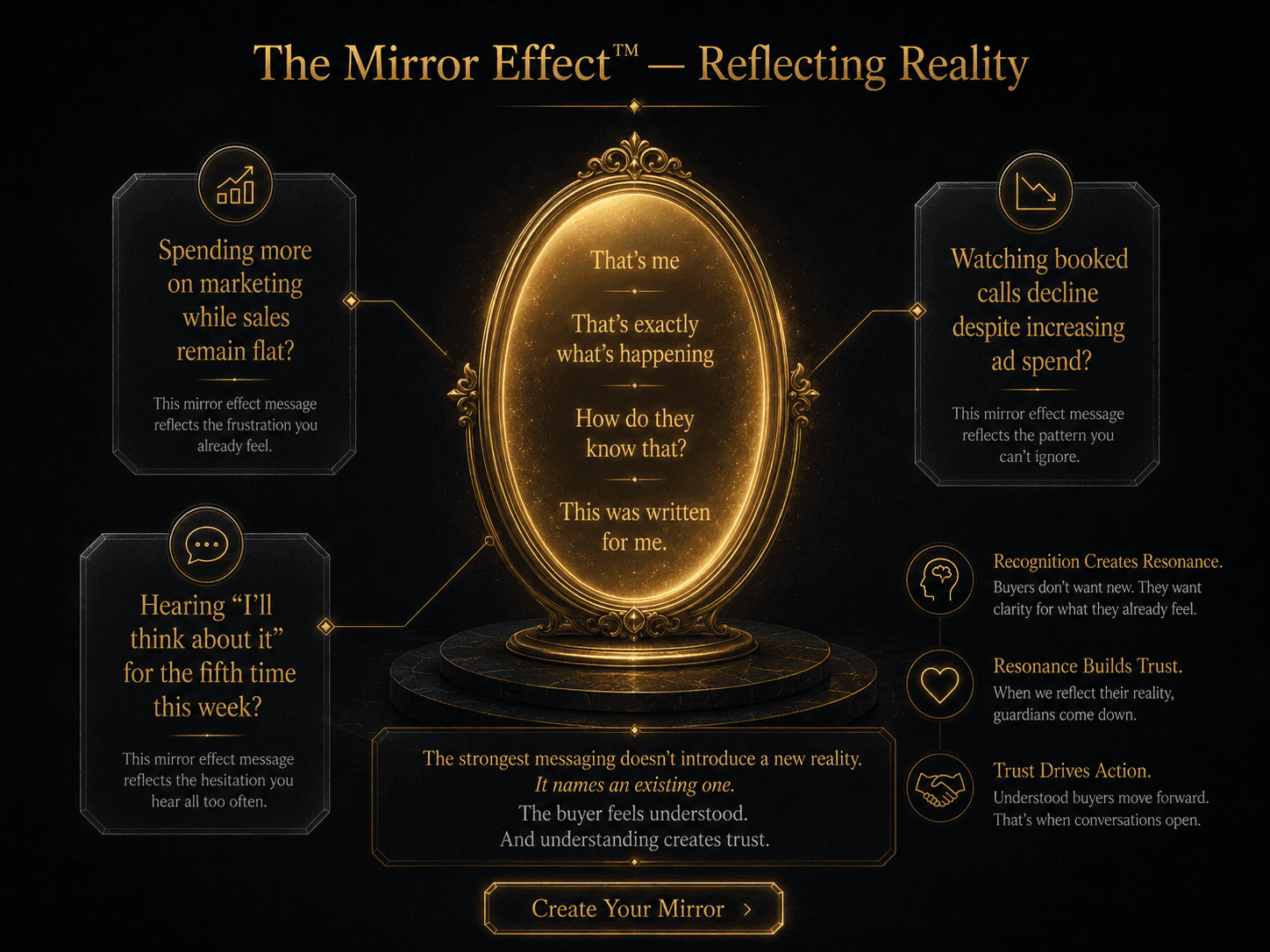
The Mirror Effect™
The strongest messaging acts like a mirror.
It reflects something the buyer already knows.
Something they've experienced.
Something they've felt.
Something they've struggled to explain.
That's why powerful messaging often feels obvious after reading it.
It doesn't introduce a new reality.
It names an existing one.
The buyer feels understood.
And understanding creates trust.
——
Diagnostic Observation™ #05
Recognition is the gateway to persuasion.
Without recognition, nothing else matters.
Quick Self-Test
Review your homepage, sales page, or offer.
Ask:
Does this speak to:
a category?
Or
a condition?
Does it describe:
a market?
Or
a moment?
Does it create:
understanding?
Or
recognition?
If recognition is missing, attention may be leaking before persuasion even begins.
——
Common Symptoms Of A Weak Message Layer
Low click-through rates
Weak engagement
Low response rates
Poor attention
Generic feedback
High bounce rates
Prospects saying:
"Interesting..."
"Maybe later."
"I'm not sure this is for me."
These are often message problems.
Not traffic problems.
——
Recommended Resources
Recognition Gap Audit™
Identify where relevance is breaking down.
[Download Resource]
Buyer Temperature Matrix™
Match your message to buyer awareness.
[Download Resource]
Headline Swipe Vault™
Recognition-first headline examples.
[Download Resource]
Message Clarity Worksheet™
Improve clarity and relevance.
[Download Resource]
Voice Translation Framework™
Turn buyer language into conversion language.
[Download Resource]
——
Final Thought
Most businesses try to persuade strangers.
The strongest businesses focus on recognition first.
Because people don't engage with messages that make sense.
They engage with messages that feel personal.
Messages that reflect reality.
Messages that create the feeling:
"This was written for me."
And once that happens, persuasion becomes much easier.
Because recognition opens the door.
Persuasion simply walks through it.
Next Layer → The Page Layer™
Why Most Landing Pages Die Before They're Read
Recognition Comes Before Persuasion
Most businesses have a persuasion problem.
Or at least that's what they think.
They believe they need:
Better copy
Better headlines
Better hooks
Better storytelling
Better sales psychology
Sometimes they're right.
Most of the time they're skipping a step.
Because persuasion only works after recognition.
And recognition is where most messages fail.
The buyer doesn't think:
"I disagree."
The buyer thinks:
"This isn't about me."
And once that happens, the conversation is over.
Not because the offer is bad.
Not because the solution doesn't work.
Because relevance never happened.
——
The Recognition Gap™
Your message can be clear.
Logical.
Well-written.
Persuasive.
And still fail.
Why?
Because clarity is not the same thing as recognition.
A buyer can understand exactly what you're saying.
Without caring.
Without paying attention.
Without continuing to read.
This is what we call:
The Recognition Gap™
The gap between understanding a message and feeling that it applies to you.
The strongest messages close that gap immediately.
The buyer thinks:
"That's me."
"That's exactly what's happening."
"How do they know that?"
That's the moment attention begins.
——
Why Most Messaging Gets Ignored
Let's imagine a founder sees this headline:
We Help Businesses Grow Faster
Technically clear.
But emotionally empty.
Now compare it to:
Getting Traffic But Not Enough Customers?
Suddenly something changes.
The second message enters a specific reality.
A specific condition.
A specific moment.
And moments create recognition.
This is why broad messaging struggles.
Broad messages describe categories.
Strong messages describe situations.
——
Categories Don't Convert™
One of the biggest mistakes in marketing is writing to a market instead of a moment.
Examples:
Market
Business owners
Moment
The founder spending more on marketing while sales remain flat.
Market
Agency owners
Moment
The agency owner watching booked calls decline despite increasing ad spend.
Market
Consultants
Moment
The consultant hearing "I'll think about it" for the fifth time this week.
The market helps you locate the buyer.
The moment helps you connect with them.
——
The One Reader Principle™
Most messaging feels generic because it's written for groups.
Groups don't feel pain.
People do.
When writing, imagine one person.
Ask:
Who are they?
What just happened?
What are they worried about?
What are they trying to achieve?
What are they afraid might happen next?
The more specific the moment becomes, the stronger the message becomes.
——
The Moment Before The Purchase
Strong messaging rarely speaks to the market.
It speaks to the moment immediately before change.
Examples:
Not:
Fitness Coach
Instead:
The person avoiding mirrors because they no longer recognise themselves.
Not:
Marketing Agency
Instead:
The founder tired of watching traffic arrive and customers disappear.
Not:
Copywriter
Instead:
The business owner whose offer sounds good in meetings but falls flat online.
Moments create emotional relevance.
And relevance creates attention.
——
Recognition Creates Attention
Most businesses assume attention is won through creativity.
Sometimes.
More often, attention is won through relevance.
People naturally pay attention to things connected to their current situation.
A parent notices baby products.
A homeowner notices home improvement ads.
A founder notices content about growth problems.
Not because they're better ads.
Because they're relevant.
Recognition works exactly the same way.
The buyer pays attention when they feel seen.
——
The Mirror Effect™
The strongest messaging acts like a mirror.
It reflects something the buyer already knows.
Something they've experienced.
Something they've felt.
Something they've struggled to explain.
That's why powerful messaging often feels obvious after reading it.
It doesn't introduce a new reality.
It names an existing one.
The buyer feels understood.
And understanding creates trust.
——
Diagnostic Observation™ #05
Recognition is the gateway to persuasion.
Without recognition, nothing else matters.
Quick Self-Test
Review your homepage, sales page, or offer.
Ask:
Does this speak to:
a category?
Or
a condition?
Does it describe:
a market?
Or
a moment?
Does it create:
understanding?
Or
recognition?
If recognition is missing, attention may be leaking before persuasion even begins.
——
Common Symptoms Of A Weak Message Layer
Low click-through rates
Weak engagement
Low response rates
Poor attention
Generic feedback
High bounce rates
Prospects saying:
"Interesting..."
"Maybe later."
"I'm not sure this is for me."
These are often message problems.
Not traffic problems.
——
Recommended Resources
Recognition Gap Audit™
Identify where relevance is breaking down.
[Download Resource]
Buyer Temperature Matrix™
Match your message to buyer awareness.
[Download Resource]
Headline Swipe Vault™
Recognition-first headline examples.
[Download Resource]
Message Clarity Worksheet™
Improve clarity and relevance.
[Download Resource]
Voice Translation Framework™
Turn buyer language into conversion language.
[Download Resource]
——
Final Thought
Most businesses try to persuade strangers.
The strongest businesses focus on recognition first.
Because people don't engage with messages that make sense.
They engage with messages that feel personal.
Messages that reflect reality.
Messages that create the feeling:
"This was written for me."
And once that happens, persuasion becomes much easier.
Because recognition opens the door.
Persuasion simply walks through it.
Next Layer → The Page Layer™
Why Most Landing Pages Die Before They're Read
![“The Recognition Gap Auditor — Interactive Tool” Concept: A minimalist, interactive audit tool. The interface shows: Top section: A text area where the user pastes their message (headline, hook, or offer line). Below: Three diagnostic questions with sliders: Question 1: “Does this speak to a category or a condition?” — Slider from Category → Condition Question 2: “Does this describe a market or a moment?” — Slider from Market → Moment Question 3: “Does this create understanding or recognition?” — Slider from Understanding → Recognition Below the sliders: A diagnostic analysis that updates in real-time: “Your message is currently [Category/Market/Understanding]-focused.” “To create recognition, try [specific suggestion based on slider positions].” “Example rewrite: [generated example]” Bottom: A “Rewrite My Message” button that applies the suggestions and generates a recognition-first version. A “Copy” button. Style: Luxury UI meets interactive audit tool. Dark background, gold sliders, clean typography. Feels like a serious message-diagnostic instrument. Interaction: The user pastes their message. They adjust the three sliders based on honest assessment. The diagnostic analysis updates in real-time, offering specific suggestions. Clicking “Rewrite My Message” generates a recognition-first version.](https://framerusercontent.com/images/94hcU3diH9qfCLFxfbz2CqNFi4.png?width=1448&height=1086)
Other Projects
Other Case Studies
Check our other project case studies with detailed explanations
Other Projects
Other Case Studies
Check our other project case studies with detailed explanations