Our Three Step Process
THE JOURNEY LAYER™ | LAYER 6
Our Three Step Process
THE JOURNEY LAYER™ | LAYER 6
Why Growth Is Lost Between Steps
Most founders think conversion happens in a moment.
A click.
A purchase.
A booked call.
A form submission.
A sale.
Something sudden.
Something obvious.
Something measurable.
Reality is different.
Most conversions happen through a series of small decisions.
The buyer notices something.
The buyer becomes curious.
The buyer explores.
The buyer understands.
The buyer believes.
The buyer acts.
Or they don't.
The difference is often determined by what happens between those moments.
And that's where the Journey Layer™ lives.
——
The Hidden Growth Problem
Many businesses have:
good traffic
good offers
good pages
good proof
Yet growth still feels inconsistent.
Why?
Because buyers don't disappear at the beginning.
They disappear between steps.
Between:
Ad → Page
Page → Lead Magnet
Lead Magnet → Email
Email → Book
Book → Diagnostic
Diagnostic → Client
Every transition creates risk.
Every step creates friction.
Every moment creates the possibility of abandonment.
Which means growth is often lost between stages.
Not within them.
——
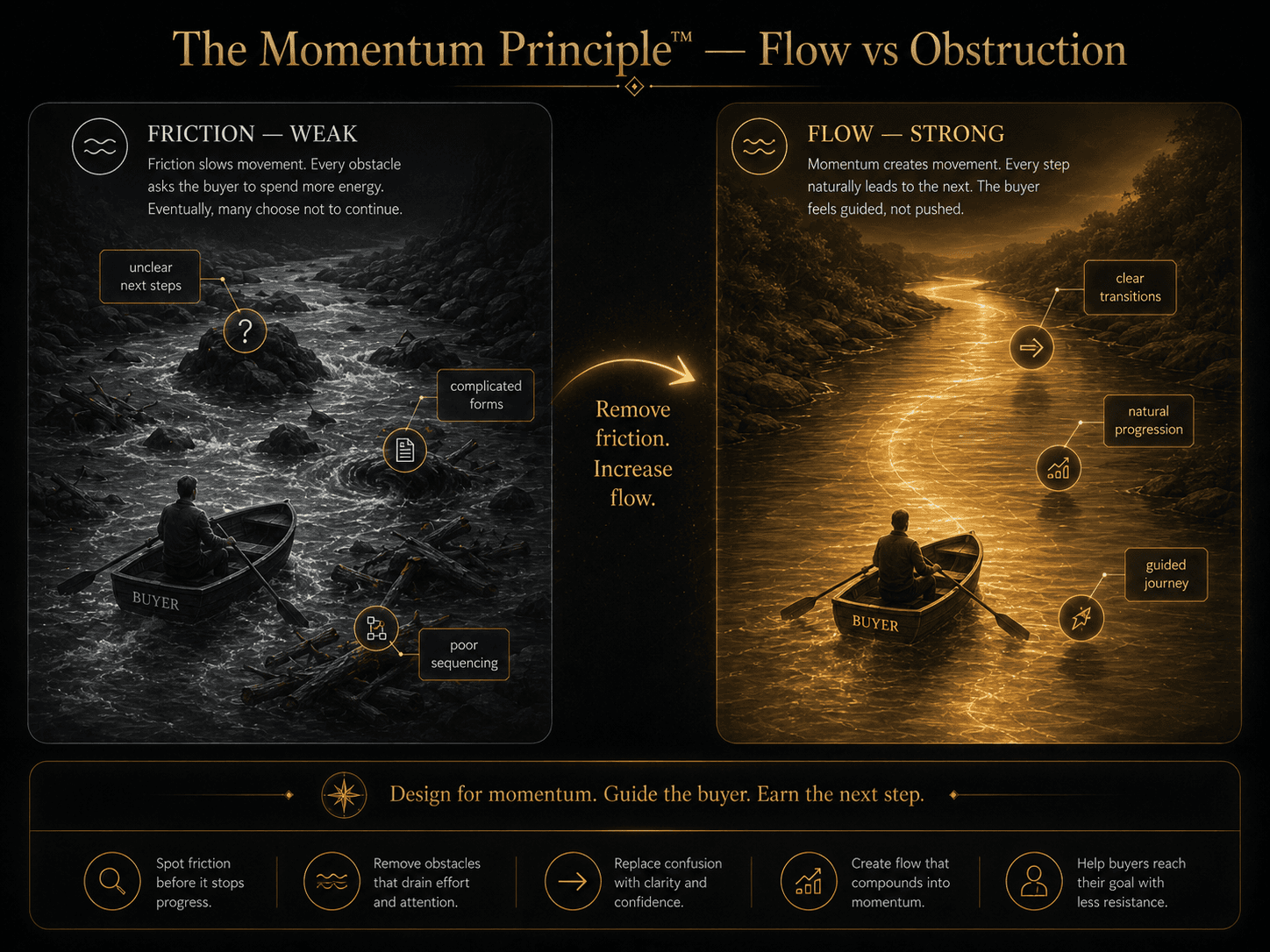
The Momentum Principle™
One of the most important ideas inside the Funnel Operating System™ is this:
Momentum creates movement.
Not pressure.
Many businesses try to force buyers forward.
More urgency.
More scarcity.
More persuasion.
More pressure.
But pressure has limits.
Momentum doesn't.
Momentum occurs when every step naturally leads to the next.
The buyer doesn't feel pushed.
The buyer feels guided.
And guided buyers move further.
——
Why Funnels Feel Broken
Most funnels aren't broken because of the pages.
They're broken because of the transitions.
Let's imagine:
A founder discovers a reel.
The reel feels relevant.
They click.
The landing page feels disconnected.
Momentum disappears.
Or:
The lead magnet is useful.
The emails feel random.
Momentum disappears.
Or:
The content is excellent.
The offer feels unrelated.
Momentum disappears.
The problem isn't the asset.
The problem is the connection between assets.
Strong systems create continuity.
Weak systems create confusion.
——
Friction Is The Enemy
Imagine driving a car with the handbrake partially engaged.
The vehicle still moves.
But every metre requires more effort.
Funnels behave similarly.
Friction slows movement.
Examples:
Too many choices.
Unclear next steps.
Complicated forms.
Confusing instructions.
Poor sequencing.
Weak transitions.
Every friction point asks the buyer to spend more energy.
Eventually many choose not to.
Not because they dislike the destination.
Because the journey became difficult.
——
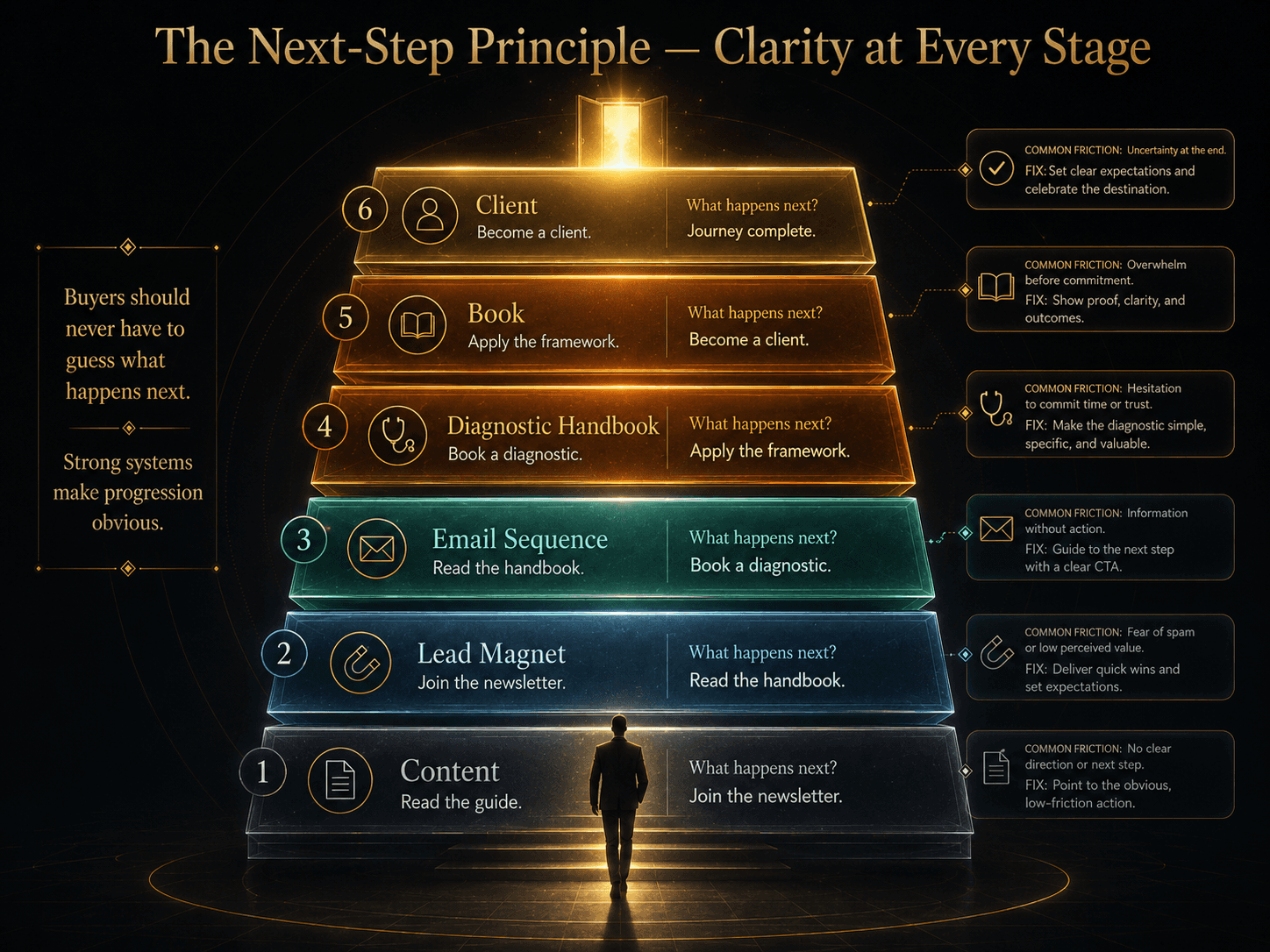
The Next-Step Principle™
Every stage inside a funnel should answer one question:
What happens next?
Buyers should never have to guess.
Strong systems make progression obvious.
Examples:
Read the guide.
Then:
Join the newsletter.
Then:
Read the handbook.
Then:
Book a diagnostic.
Then:
Apply the framework.
The path feels natural.
Momentum increases.
——
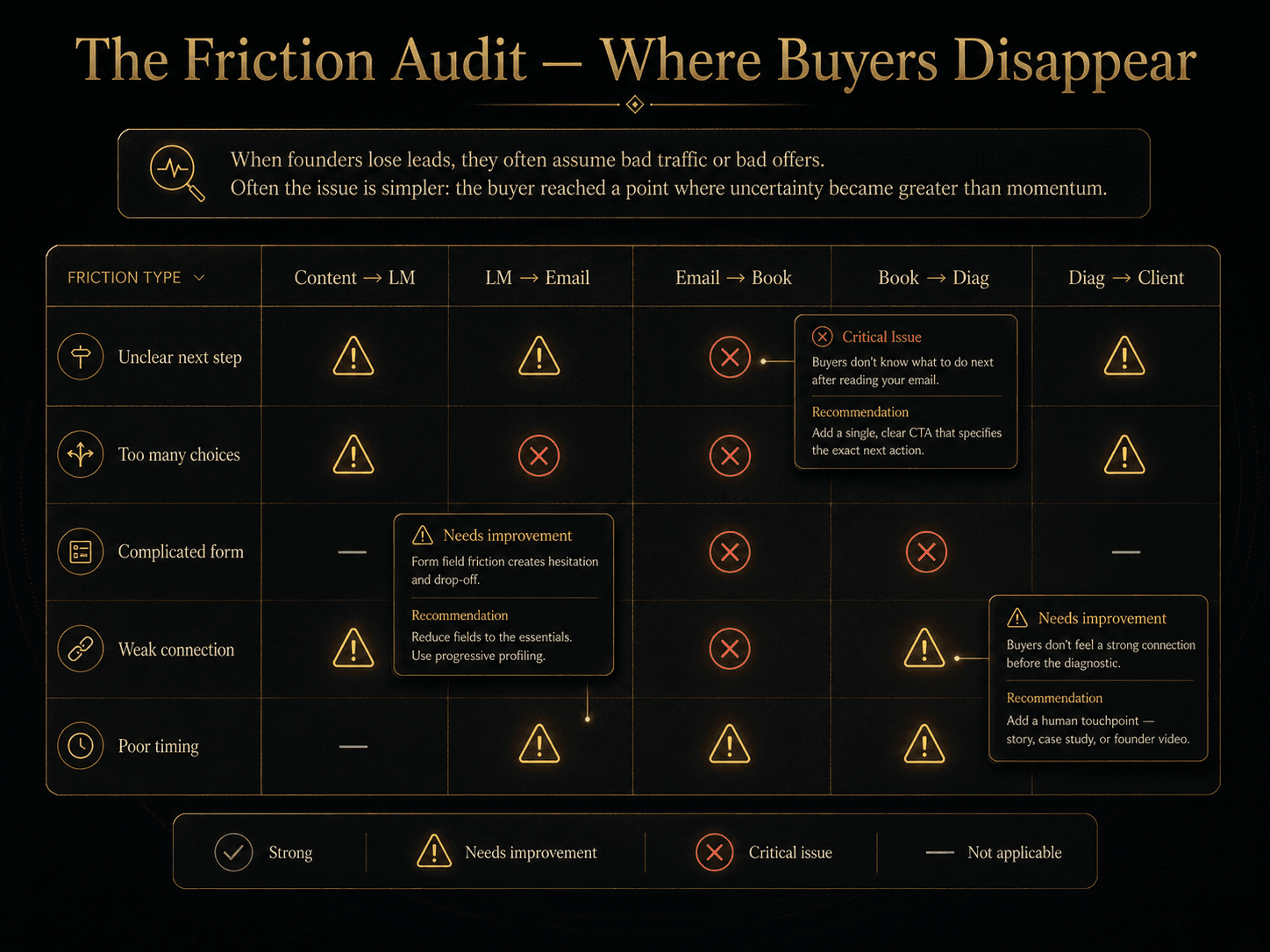
Why Buyers Disappear
When founders lose leads, they often assume:
Bad traffic.
Bad leads.
Bad market.
Bad timing.
Sometimes.
But often the issue is simpler.
The buyer reached a point where uncertainty became greater than momentum.
And when uncertainty wins, movement stops.
This is why Journey Layer™ improvements often create disproportionate gains.
Because removing friction increases flow.
And increased flow creates more conversions without increasing traffic.
——
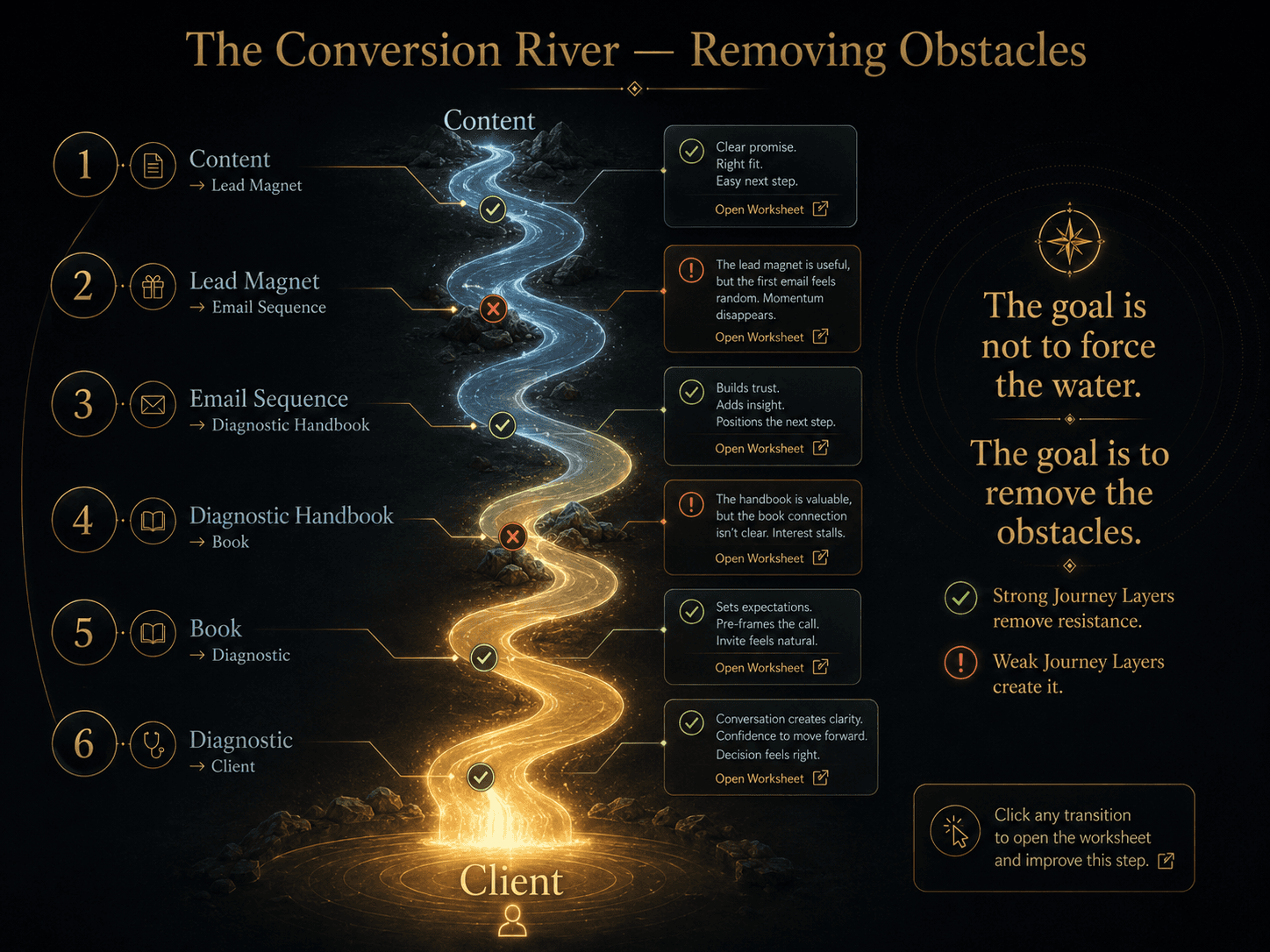
The Conversion River™
Imagine a river flowing downhill.
The water naturally moves forward.
Now imagine placing obstacles throughout the river.
Rocks.
Branches.
Debris.
The flow slows.
Some water continues.
Some becomes trapped.
Funnels behave the same way.
The goal is not to force the water.
The goal is to remove the obstacles.
The goal is not to push buyers.
The goal is to reduce friction.
Strong Journey Layers remove resistance.
Weak Journey Layers create it.
——
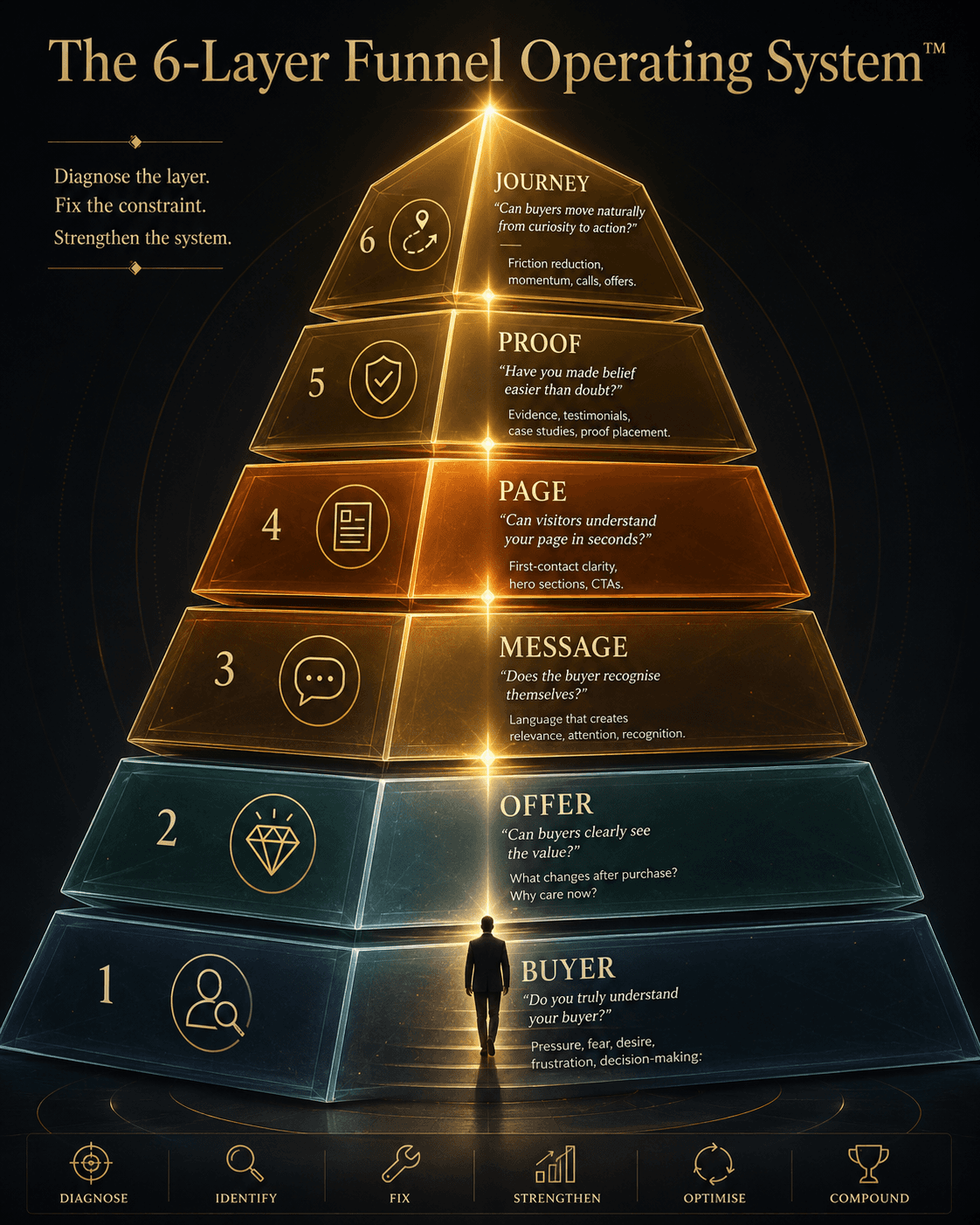
The Funnel Operating System™ Journey
Inside the Funnel Operating System™, momentum is intentionally designed.
A typical journey looks like:
Content
↓
Lead Magnet
↓
Email Sequence
↓
Diagnostic Handbook
↓
Book
↓
Diagnostic
↓
Client
Notice something important.
Each step prepares the buyer for the next.
Each asset increases understanding.
Each asset increases trust.
Each asset increases commitment.
This is not pressure.
This is progression.
——
Diagnostic Observation™ #08
Momentum is the hidden force behind growth.
The easier it is to move forward, the more likely buyers are to continue.
Quick Self-Test
Review your current funnel.
Can buyers clearly answer:
What happens next?
Why should I continue?
What is the benefit of the next step?
Does each step naturally prepare them for the next?
If not, friction may be limiting growth.
Common Symptoms Of A Weak Journey Layer
Abandoned forms
Low email engagement
High drop-off rates
Lead leakage
Inconsistent conversions
Prospects disappearing unexpectedly
These are often momentum problems.
Not traffic problems.
——
Recommended Resources
Journey Mapping Worksheet™
Map every stage of the buyer journey.
[Download Resource]
Funnel Flow Diagnostic™
Identify transition bottlenecks.
[Download Resource]
Momentum Scorecard™
Measure progression across the funnel.
[Download Resource]
Friction Audit™
Find hidden resistance points.
[Download Resource]
Conversion Path Planner™
Design clearer customer journeys.
[Download Resource]
——
Final Thought
Most founders focus on individual assets.
The strongest founders focus on movement between assets.
Because growth rarely depends on one page.
One email.
One offer.
One ad.
Growth depends on how everything works together.
Strong systems create movement.
Movement creates momentum.
Momentum creates growth.
And growth creates freedom.
Which means every funnel eventually arrives at the same question:
Have you made it easy for the buyer to continue?
Because the easier it is to move forward, the more likely growth becomes.
And that is where the Journey Layer™ begins.
Why Growth Is Lost Between Steps
Most founders think conversion happens in a moment.
A click.
A purchase.
A booked call.
A form submission.
A sale.
Something sudden.
Something obvious.
Something measurable.
Reality is different.
Most conversions happen through a series of small decisions.
The buyer notices something.
The buyer becomes curious.
The buyer explores.
The buyer understands.
The buyer believes.
The buyer acts.
Or they don't.
The difference is often determined by what happens between those moments.
And that's where the Journey Layer™ lives.
——
The Hidden Growth Problem
Many businesses have:
good traffic
good offers
good pages
good proof
Yet growth still feels inconsistent.
Why?
Because buyers don't disappear at the beginning.
They disappear between steps.
Between:
Ad → Page
Page → Lead Magnet
Lead Magnet → Email
Email → Book
Book → Diagnostic
Diagnostic → Client
Every transition creates risk.
Every step creates friction.
Every moment creates the possibility of abandonment.
Which means growth is often lost between stages.
Not within them.
——
The Momentum Principle™
One of the most important ideas inside the Funnel Operating System™ is this:
Momentum creates movement.
Not pressure.
Many businesses try to force buyers forward.
More urgency.
More scarcity.
More persuasion.
More pressure.
But pressure has limits.
Momentum doesn't.
Momentum occurs when every step naturally leads to the next.
The buyer doesn't feel pushed.
The buyer feels guided.
And guided buyers move further.
——
Why Funnels Feel Broken
Most funnels aren't broken because of the pages.
They're broken because of the transitions.
Let's imagine:
A founder discovers a reel.
The reel feels relevant.
They click.
The landing page feels disconnected.
Momentum disappears.
Or:
The lead magnet is useful.
The emails feel random.
Momentum disappears.
Or:
The content is excellent.
The offer feels unrelated.
Momentum disappears.
The problem isn't the asset.
The problem is the connection between assets.
Strong systems create continuity.
Weak systems create confusion.
——
Friction Is The Enemy
Imagine driving a car with the handbrake partially engaged.
The vehicle still moves.
But every metre requires more effort.
Funnels behave similarly.
Friction slows movement.
Examples:
Too many choices.
Unclear next steps.
Complicated forms.
Confusing instructions.
Poor sequencing.
Weak transitions.
Every friction point asks the buyer to spend more energy.
Eventually many choose not to.
Not because they dislike the destination.
Because the journey became difficult.
——
The Next-Step Principle™
Every stage inside a funnel should answer one question:
What happens next?
Buyers should never have to guess.
Strong systems make progression obvious.
Examples:
Read the guide.
Then:
Join the newsletter.
Then:
Read the handbook.
Then:
Book a diagnostic.
Then:
Apply the framework.
The path feels natural.
Momentum increases.
——
Why Buyers Disappear
When founders lose leads, they often assume:
Bad traffic.
Bad leads.
Bad market.
Bad timing.
Sometimes.
But often the issue is simpler.
The buyer reached a point where uncertainty became greater than momentum.
And when uncertainty wins, movement stops.
This is why Journey Layer™ improvements often create disproportionate gains.
Because removing friction increases flow.
And increased flow creates more conversions without increasing traffic.
——
The Conversion River™
Imagine a river flowing downhill.
The water naturally moves forward.
Now imagine placing obstacles throughout the river.
Rocks.
Branches.
Debris.
The flow slows.
Some water continues.
Some becomes trapped.
Funnels behave the same way.
The goal is not to force the water.
The goal is to remove the obstacles.
The goal is not to push buyers.
The goal is to reduce friction.
Strong Journey Layers remove resistance.
Weak Journey Layers create it.
——
The Funnel Operating System™ Journey
Inside the Funnel Operating System™, momentum is intentionally designed.
A typical journey looks like:
Content
↓
Lead Magnet
↓
Email Sequence
↓
Diagnostic Handbook
↓
Book
↓
Diagnostic
↓
Client
Notice something important.
Each step prepares the buyer for the next.
Each asset increases understanding.
Each asset increases trust.
Each asset increases commitment.
This is not pressure.
This is progression.
——
Diagnostic Observation™ #08
Momentum is the hidden force behind growth.
The easier it is to move forward, the more likely buyers are to continue.
Quick Self-Test
Review your current funnel.
Can buyers clearly answer:
What happens next?
Why should I continue?
What is the benefit of the next step?
Does each step naturally prepare them for the next?
If not, friction may be limiting growth.
Common Symptoms Of A Weak Journey Layer
Abandoned forms
Low email engagement
High drop-off rates
Lead leakage
Inconsistent conversions
Prospects disappearing unexpectedly
These are often momentum problems.
Not traffic problems.
——
Recommended Resources
Journey Mapping Worksheet™
Map every stage of the buyer journey.
[Download Resource]
Funnel Flow Diagnostic™
Identify transition bottlenecks.
[Download Resource]
Momentum Scorecard™
Measure progression across the funnel.
[Download Resource]
Friction Audit™
Find hidden resistance points.
[Download Resource]
Conversion Path Planner™
Design clearer customer journeys.
[Download Resource]
——
Final Thought
Most founders focus on individual assets.
The strongest founders focus on movement between assets.
Because growth rarely depends on one page.
One email.
One offer.
One ad.
Growth depends on how everything works together.
Strong systems create movement.
Movement creates momentum.
Momentum creates growth.
And growth creates freedom.
Which means every funnel eventually arrives at the same question:
Have you made it easy for the buyer to continue?
Because the easier it is to move forward, the more likely growth becomes.
And that is where the Journey Layer™ begins.
Other Projects
Other Case Studies
Check our other project case studies with detailed explanations

Other Projects
Other Case Studies
Check our other project case studies with detailed explanations