Our Three Step Process
May 25, 2026
Chap 2 | Resource 1 | The Black File Protocol™
Our Three Step Process
May 25, 2026
Chap 2 | Resource 1 | The Black File Protocol™
The Black File Protocol™ A pressure-based buyer intelligence worksheet for uncovering the pain, fear, desire, failed attempts, resistance, proof needs, and real language behind high-conversion messaging.
Prefer Audio Or Video?
The Black File Protocol™ is also available as:
🎧 A guided audio walkthrough explaining buyer pressure, emotional precision, and message relevance
🎥 A full video breakdown with real buyer dossier examples, research extraction, and copy translation demonstrationsChoose the format that fits how you learn best.
[Listen To The Audio Walkthrough] (coming soon)
[Watch The Video Breakdown] (coming soon)
——
Why Most Copy Problems Are Actually Intelligence Problems
Most weak copy is not weak because the writer lacks talent.
It is weak because the buyer file is weak.
The messaging sounds broad because the pressure was never mapped properly.
The headline feels generic because the emotional tension was never identified deeply enough.
The CTA feels flat because the writer does not yet understand what kind of movement the buyer is psychologically ready for.
This is one of the biggest misunderstandings in marketing.
People think copywriting starts with:
headlines
hooks
templates
formulas
“creative writing”
better phrasing
stronger wording
It does not.
Strong copy starts with buyer intelligence.
Because the page can only be as sharp as the understanding behind it.
That is what The Black File Protocol™ is designed to solve.
It helps you build the buyer intelligence dossier behind the page, so your copy stops sounding broad, polite, and generic — and starts feeling aimed.
——
What This Resource Helps You Do
The Black File Protocol™ helps you build a pressure-based buyer dossier before writing or rewriting page copy.
Use it to uncover:
what the buyer is really struggling with
what pressure is active right now
what they publicly say they want
what they privately fear may be true
what they have already tried
what they are tired of hearing
what proof they would actually believe
what language feels instantly familiar
what kind of CTA fits their current readiness
This is not extra research.
This is the strategic intelligence layer behind the funnel.
If the buyer file is shallow, the copy will become shallow again.
If the buyer file is sharp, the page finally has something real to aim at.
——
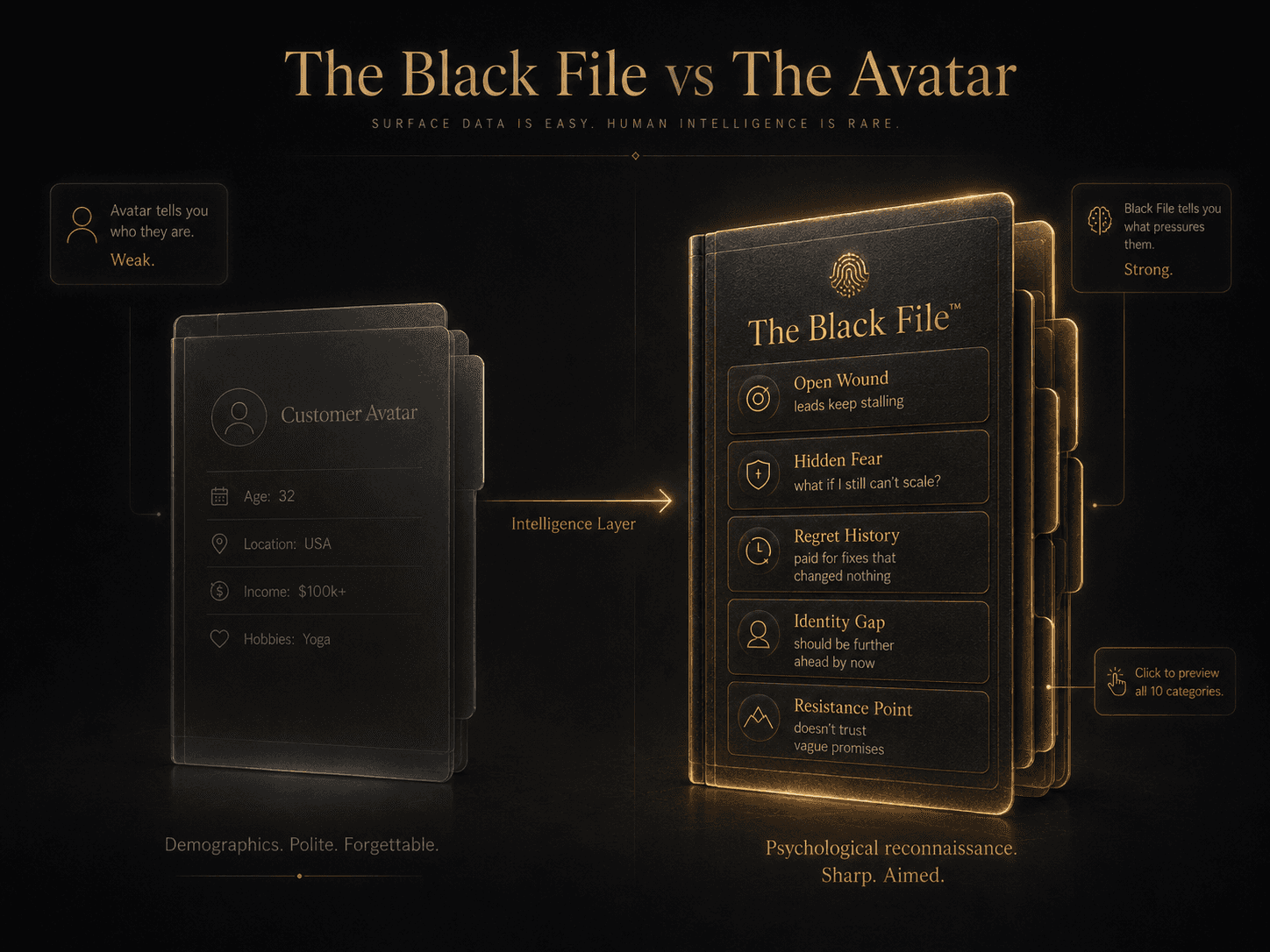
The Black File Is Not A Customer Avatar™
This distinction matters enormously.
Most customer avatar exercises ask questions like:
age
gender
location
income
hobbies
job title
lifestyle
basic goals
That information may be useful in some contexts.
But it is rarely enough to create emotionally accurate messaging.
A customer avatar tells you who the buyer is.
A Black File tells you what pressure the buyer is carrying.
That is the difference.
A Black File is not:
demographic profiling
polite persona building
category description
a market summary
a presentation slide
It is psychological reconnaissance.
The Black File maps:
pressure
emotional cost
identity tension
regret history
hidden fear
failed attempts
resistance
proof expectations
real buyer language
That is what makes messaging feel aimed instead of generic.
——
Avatar vs Black File™
Weak Avatar™
Female founder
32 years old
Wants to grow her business
Struggles with consistency
Wants more leads
Technically usable.
Emotionally weak.
This describes the buyer from the outside.
It gives you a category.
But it does not give you pressure.
——
Strong Black File™
Knows the page is weak but keeps treating it like a traffic problem
Delays decisions by calling the funnel “almost ready”
Rewrites copy to make it safer instead of clearer
Feels embarrassed by how vague the page still sounds after all the effort already invested
Distrusts “plug-and-play” advice because past frameworks created more work than traction
Wants to send traffic with confidence instead of low-level dread
Needs proof that shows exactly what changed, not inflated claims about “growth”
Now the buyer feels human.
Now the copy has something to work from.
Now you can hear:
the pain
the fear
the resistance
the failed attempts
the identity bruise
the proof requirement
the language direction
That changes everything.
——
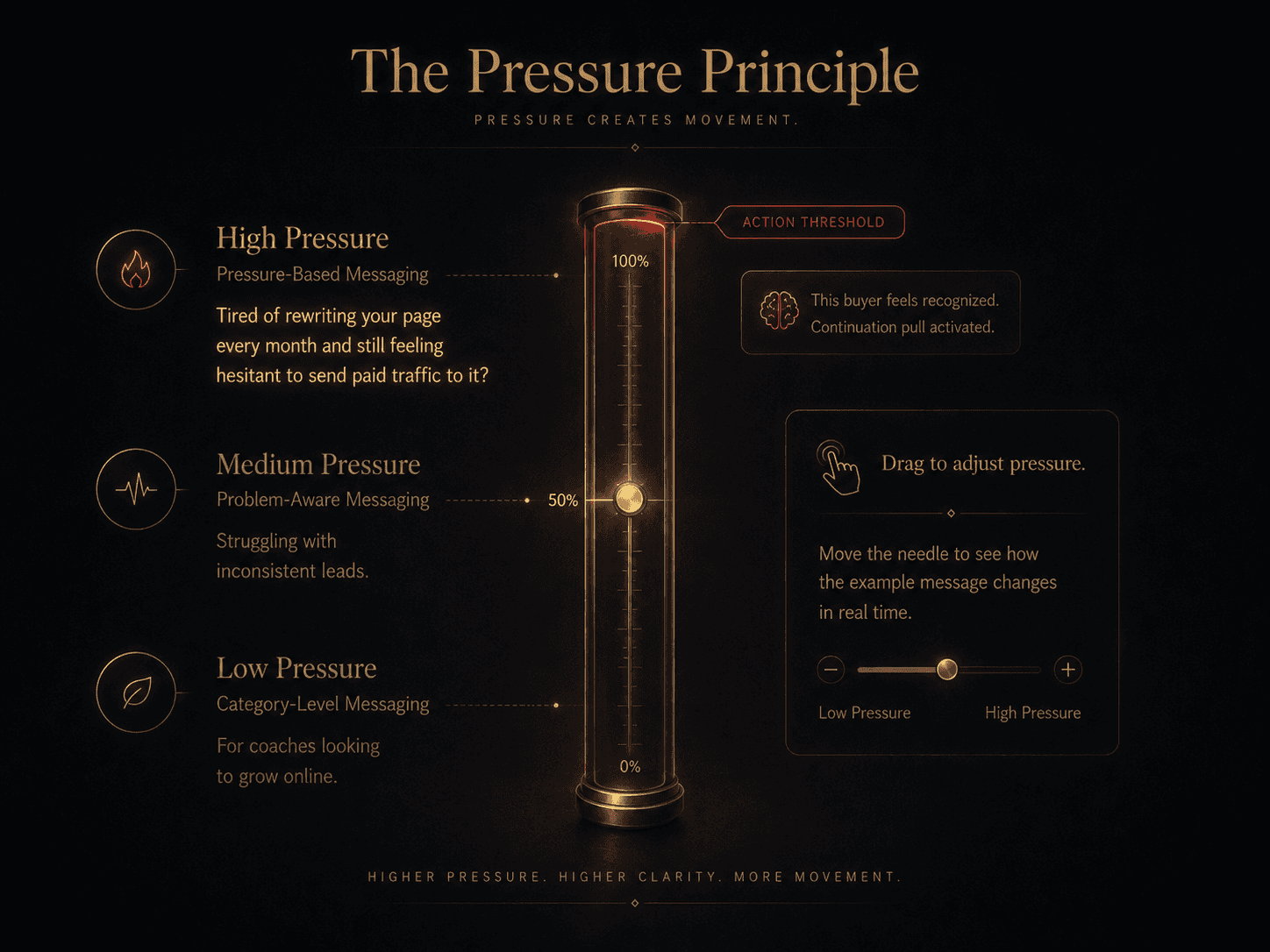
The Pressure Principle™
Buyers rarely move because of demographics.
They move because pressure becomes emotionally expensive enough to act on.
This is critical.
People buy when:
frustration compounds
uncertainty becomes exhausting
delay becomes painful
identity tension increases
failed attempts accumulate
the future starts feeling threatening
staying where they are begins to cost too much
That means strong copy should not merely describe categories.
It should expose pressure.
Because pressure creates movement.
——
Category-Level Messaging™
Weak example:
“For coaches and consultants looking to grow online.”
Broad.
Polite.
Forgettable.
This message may be technically clear, but it does not create much recognition.
The buyer has to work too hard to find themselves inside it.
——
Pressure-Based Messaging™
Stronger example:
“Tired of rewriting your page every month and still feeling hesitant to send paid traffic to it?”
Now the buyer feels:
emotional familiarity
recognition
tension
pressure
continuation pull
The second message feels closer to lived experience.
That is the difference.
Category language describes the market.
Pressure language enters the buyer’s world.
——
What The Black File Actually Does™
A strong Black File helps you answer the questions that generic buyer research usually misses.
Before writing the page, you should know:
What pain is live enough to interrupt attention?
What belief is keeping the buyer stuck?
What are they privately afraid may be true?
What do they want publicly?
What do they want privately?
What have they already tried?
What are they tired of hearing?
What language feels instantly relevant?
What proof would actually make them believe?
What kind of CTA fits their readiness level?
If you cannot answer these clearly, do not write the page yet.
The buyer file is not ready.
And if the buyer file is not ready, the copy will start guessing.
——
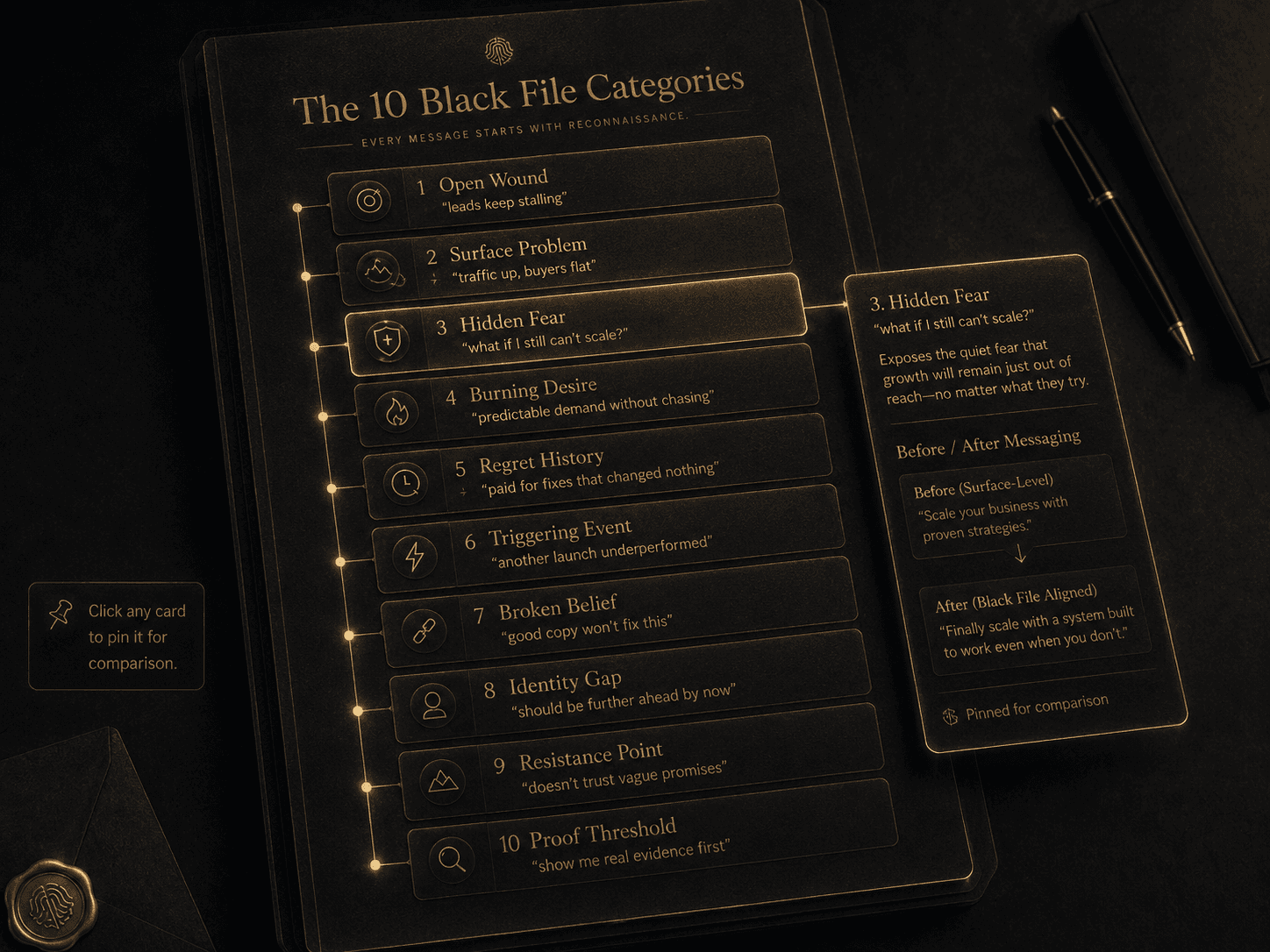
The 10 Black File Categories™
These ten categories form the core structure of the buyer dossier.
Each category reveals a different psychological layer behind buyer behaviour.
Complete each one before rewriting the page.
—
1. Open Wound™
Core Question
What hurts right now?
Not the broad problem.
The live pressure point.
This is the thing the buyer feels most actively.
It is the frustration, tension, or pressure that is close enough to interrupt attention.
Weak Example
“They want more conversions.”
Too abstract.
Too general.
Not enough pressure.
Stronger Example
“They keep delaying ad spend because the page still does not feel trustworthy enough to scale confidently.”
Now the pressure becomes visible.
The buyer is not simply “interested in conversion.”
They are hesitating because the page does not feel strong enough to carry traffic.
That gives the copy something sharper to aim at.
What To Look For
Look for phrases like:
“I’m tired of…”
“This keeps happening…”
“I don’t know why this still isn’t working…”
“I keep fixing it but…”
“It feels like something is off…”
“I’m hesitant to…”
These phrases often reveal the open wound.
Fill This In
The buyer’s open wound is:
The live pressure point is:
The thing they are tired of tolerating is:
Use This For
Use the Open Wound™ for:
headlines
hooks
opening paragraphs
problem sections
first-scroll copy
The hook should usually interrupt the open wound.
Not the broad category.
—
2. Surface Problem™
Core Question
What do they say they need publicly?
This is the problem the buyer will usually admit first.
It is the polite layer.
The public explanation.
The visible symptom.
Examples
They may say they need:
more leads
stronger messaging
clearer positioning
better conversion
better page copy
more sales
stronger funnels
better traffic quality
This is useful.
But it is not deep enough yet.
The surface problem is the starting point, not the final insight.
Why This Matters
Most buyers describe symptoms first.
Not root tension.
Your job is to investigate deeper.
If you only write from the surface problem, your copy will sound like everyone else.
Fill This In
The buyer says they need:
The surface problem they would publicly admit is:
The broad category problem is:
Use This For
Use the Surface Problem™ for:
basic offer framing
category clarity
page context
search-friendly language
initial orientation
But do not stop here.
Surface pain creates understanding.
Deeper pressure creates movement.
—
3. Hidden Fear™
Core Question
What are they privately afraid might be true?
This is where copy starts feeling unusually accurate.
Hidden fear is rarely stated directly.
But it shapes how the buyer reads the page.
Examples
The buyer may privately fear:
“Maybe the problem is my judgement.”
“Maybe I still do not know how to explain what I do.”
“Maybe this should be easier by now.”
“Maybe my offer is not as strong as I thought.”
“Maybe people do not trust me enough.”
“Maybe I am wasting money because I cannot see the real problem.”
“Maybe I am further behind than I admit.”
This is sensitive territory.
Use it carefully.
The goal is not to shame the buyer.
The goal is to understand what is emotionally at stake.
Why This Matters
Fear creates emotional sensitivity.
And emotionally sensitive areas create stronger attention.
When copy touches a hidden fear accurately and respectfully, the buyer feels understood.
Not manipulated.
Understood.
Fill This In
The buyer is privately afraid that:
They would probably never say this publicly, but they worry that:
This fear affects their decision because:
Use This For
Use Hidden Fear™ for:
deeper hooks
problem expansion
objection handling
empathy sections
stakes
urgency
emotional resonance
Do not overuse it.
A little precision here is powerful.
Too much pressure can feel heavy-handed.
—
4. Burning Desire™
Core Question
What do they want badly enough to soften, hide, or understate publicly?
Buyers often describe their desire politely.
But the real desire usually has more emotional charge.
They may say they want “better conversions.”
But underneath that, they may want relief, confidence, control, trust, certainty, status, or momentum.
Good desire feels like relief with shape.
Examples
The buyer may want:
to finally trust the message
to send traffic without low-level dread
to say the offer clearly and confidently
to stop second-guessing every public-facing decision
to feel like the page finally matches the level they want to be known for
to look at the funnel and feel, “Yes. This finally says it properly.”
That is more emotionally useful than “more leads.”
Why This Matters
Desire gives the copy direction.
Pain shows what they want to escape.
Desire shows what they want to move toward.
Strong copy usually needs both.
Fill This In
The buyer publicly wants:
The buyer privately wants:
The emotional relief they want is:
The practical result they want is:
Use This For
Use Burning Desire™ for:
outcome sections
offer framing
transformation copy
CTA language
closing sections
future-state copy
Desire helps the CTA feel like movement, not pressure.
—
5. Regret History™
Core Question
What have they already tried that disappointed them?
Buyers do not arrive neutral.
They arrive carrying memory.
They remember what failed.
They remember what sounded promising but created no real change.
They remember the advice, tactics, and frameworks that disappointed them.
That history shapes scepticism.
Examples
They may have already tried:
prettier design without stronger messaging
endless headline rewrites
CTA tweaks without fixing the sequence
more traffic before fixing the page
generic funnel templates
“plug-and-play” frameworks
another round of copy edits that changed the words but not the psychology
courses that created more notes than traction
Why This Matters
Regret history tells you what the buyer is already resistant to.
If you ignore it, your copy may accidentally sound like one more version of the thing they already distrust.
Fill This In
The buyer has already tried:
What disappointed them was:
What they are tired of hearing is:
The advice or solution they no longer trust is:
Use This For
Use Regret History™ for:
objection handling
differentiation
“why this is different” sections
mechanism explanation
trust-building
offer positioning
Good copy should not pretend the buyer is arriving fresh.
They are arriving with memory.
—
6. Triggering Event™
Core Question
Why does this problem feel urgent now?
Timing affects receptivity enormously.
The same buyer may ignore the message for months — until one event makes the problem feel active.
That event is the trigger.
Examples
The trigger may be:
another weak launch
rising ad costs
traffic going live soon
hearing the same objection repeatedly
watching weaker competitors communicate more clearly
a campaign underperforming
a sales call exposing the same confusion again
finally admitting the page still does not feel ready
Why This Matters
Triggering events explain why the buyer is more open now.
They also help you write urgency without fake scarcity.
Urgency does not have to be manufactured.
Often, it already exists in the buyer’s situation.
Fill This In
The triggering event is:
This became urgent because:
The buyer can no longer ignore it because:
Use This For
Use Triggering Event™ for:
urgency
opening paragraphs
timing-based messaging
launch copy
diagnostic offers
CTA sections
Timing shapes the buyer’s readiness.
—
7. Broken Belief™
Core Question
What explanation is keeping them trapped?
A broken belief is the wrong explanation the buyer is using to understand the problem.
Broken beliefs create broken decisions.
If the buyer misdiagnoses the problem, they will keep making the wrong next move.
Examples
The buyer may believe:
“I just need more traffic.”
“I need more design polish.”
“I need more time.”
“I just need another funnel template.”
“Maybe I am just not naturally good at messaging.”
“Maybe the offer is the problem.”
“Maybe one more round of edits will fix it.”
“Maybe people just are not ready to buy.”
Some of these may be partly true.
But often, they keep the buyer stuck in the wrong loop.
Why This Matters
Strong copy often replaces a broken belief with a better diagnosis.
That is where authority begins.
The page becomes more persuasive when it helps the buyer see the problem more clearly.
Fill This In
The buyer currently believes:
This belief keeps them stuck because:
The better diagnosis is:
Use This For
Use Broken Belief™ for:
hooks
educational sections
belief-shift copy
mechanism explanation
“why this matters” sections
thought leadership
offer positioning
A strong page does not just present an offer.
It changes the buyer’s understanding of the problem.
—
8. Identity Gap™
Core Question
Who are they now, and who are they trying to become?
Identity movement is one of the deepest drivers of action.
The buyer is not only trying to solve a problem.
They are trying to move away from one version of themselves and toward another.
Current Identity™
The buyer may currently feel like someone who is:
second-guessing public-facing decisions
hiding behind broad wording
stalling because the page still feels weak
guessing instead of diagnosing
polishing instead of clarifying
sending traffic with hesitation
rebuilding the same uncertainty in prettier words
Desired Identity™
The buyer wants to become someone who is:
clear
trusted
decisive
confident sending traffic
able to diagnose the real leak
publicly aligned with private ambition
able to explain the offer without rambling
respected for the clarity of their message
Why This Matters
People protect identity deeply.
If the problem makes the buyer feel less capable, less clear, less trusted, or less in control, the emotional stakes rise.
Strong copy can speak to the identity shift without becoming dramatic.
Fill This In
The buyer currently feels like someone who:
The buyer wants to become someone who:
The identity gap is:
Use This For
Use Identity Gap™ for:
deeper messaging
transformation copy
positioning
premium offers
closing sections
brand voice
emotional stakes
The identity gap often gives the page its deepest emotional pull.
—
9. Resistance Point™
Core Question
What are they sceptical of now?
Every buyer arrives with resistance.
Especially if they have been disappointed before.
If your page ignores their resistance, it can trigger distrust while trying to persuade.
Examples
The buyer may be sceptical of:
guru certainty
“plug-and-play” promises
exaggerated claims
polished-but-empty marketing language
vague testimonials
overconfident frameworks
advice that sounds simple but creates more work
anything that sounds too easy
Why This Matters
Resistance tells you what tone the page needs.
Some buyers need energy.
Others need grounded confidence.
Some need proof.
Others need lower-friction next steps.
If you miss this, your copy may sound wrong even if the offer is good.
Fill This In
The buyer is sceptical of:
They no longer trust:
The tone that would trigger resistance is:
The tone that would feel safer is:
Use This For
Use Resistance Point™ for:
tone
proof strategy
objection handling
claims
CTA framing
trust sections
offer explanation
Good copy does not ignore resistance.
It anticipates it.
—
10. Proof Threshold™
Core Question
What evidence would actually feel believable to this buyer?
Proof only works when it matches the wound.
Generic proof is weak.
Specific proof reduces the exact uncertainty the buyer is carrying.
Examples
The buyer may need:
before/after rewrites
side-by-side comparisons
grounded case studies
screenshots
process breakdowns
proof tied directly to their specific problem
explanation of what changed and why it worked
testimonials that sound specific, not polished
Why This Matters
The buyer does not need random proof.
They need proof that answers their current doubt.
If the wound is “my page looks good but does not convert”, then proof should show what changed on a page and why performance improved.
If the wound is “I do not trust templates”, then proof should show diagnosis, not plug-and-play claims.
Fill This In
The buyer would believe this more if they saw:
The proof format they would trust is:
The claim that needs proof most is:
The doubt this proof should reduce is:
Use This For
Use Proof Threshold™ for:
proof sections
case studies
testimonials
CTA-adjacent trust lines
credibility cues
guarantee language
objections
sales page structure
Proof should appear where doubt is likely to form.
——
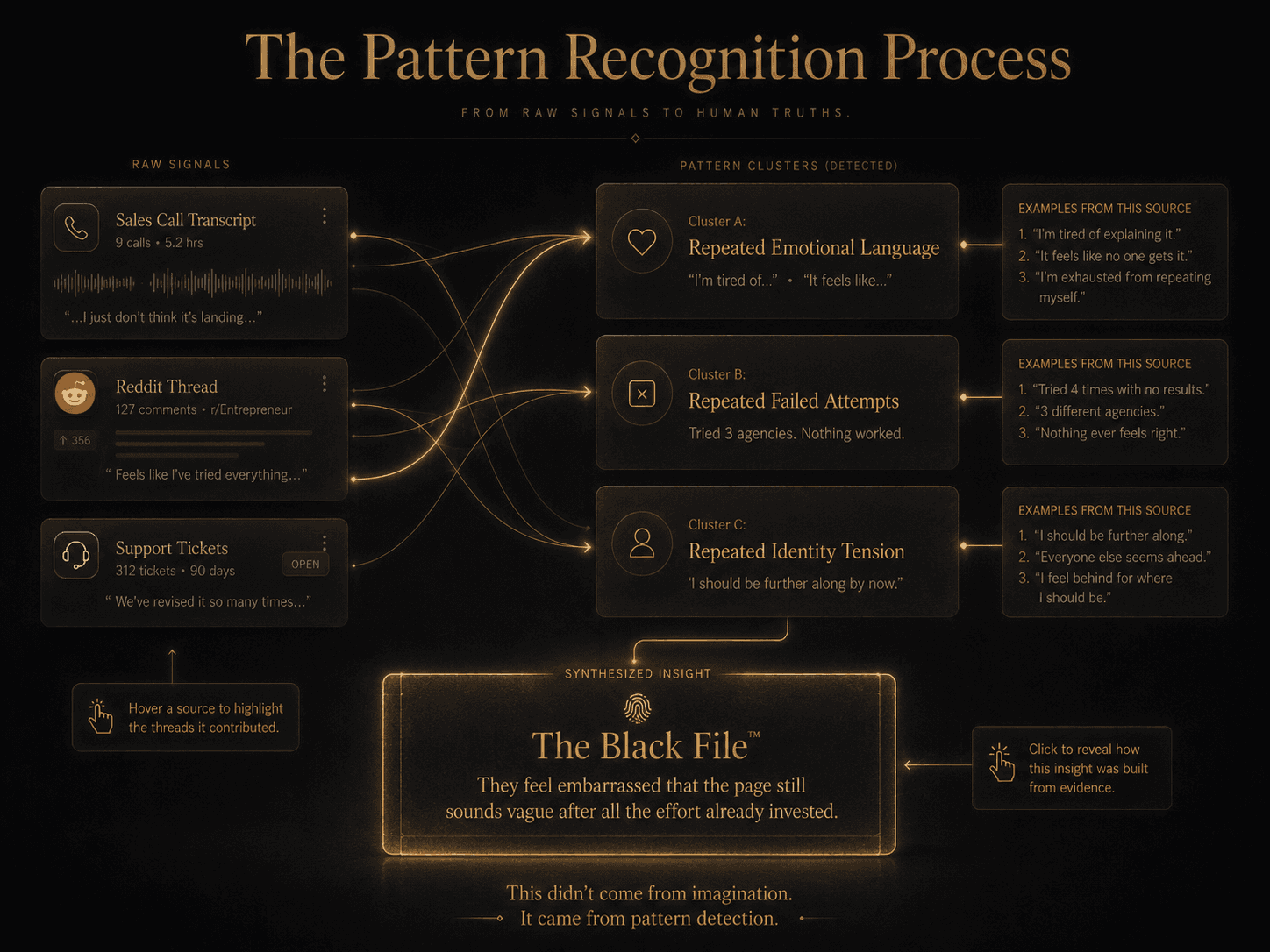
Where Real Buyer Intelligence Comes From™
Do not invent the Black File from imagination.
Build it from evidence.
Otherwise, you are not doing buyer research.
You are writing fiction with a marketing title.
Use real sources such as:
sales calls
support tickets
intake forms
DMs
Reddit threads
YouTube comments
competitor reviews
one-star reviews
testimonials
Facebook groups
support conversations
discovery notes
client messages
You are searching for:
repeated frustrations
emotional phrases
recurring fears
failed-attempt patterns
identity language
proof expectations
self-protective habits
repeated objections
before/after language
This is where relevance comes from.
The goal is not to collect random quotes.
The goal is to detect patterns that belong in the Black File.
——
The Pattern Recognition Process™
Strong buyer intelligence is built through pattern detection.
Not isolated quotes.
Do not treat every single phrase as equally important.
Look for repetition.
Patterns reveal pressure.
——
Repeated Emotional Language™
Look for phrases like:
“I’m tired of…”
“It feels like…”
“I thought this would…”
“I keep trying…”
“I’m worried that…”
“I don’t understand why…”
“I should be further along…”
Repeated emotional phrasing matters enormously because it shows you how the buyer naturally describes the problem.
——
Repeated Failed Attempts™
Ask:
What keeps failing repeatedly?
Look for patterns such as:
they tried more traffic
they tried a redesign
they tried templates
they tried another headline
they tried another launch
they tried copying competitors
they tried simplifying but made the message weaker
Failed attempts reveal scepticism.
They also reveal what the copy must avoid sounding like.
——
Repeated Identity Tension™
Look for phrases like:
“I should be further along by now.”
“I feel like I’m guessing.”
“I’m embarrassed this still isn’t clear.”
“I know the offer is good, but I cannot explain it properly.”
“It looks fine, but I do not trust it.”
This is where messaging becomes psychologically sharp.
Identity tension shows what the problem seems to say about the buyer.
And that is often where the strongest copy lives.
——
The “This Feels Written For Me” Effect™
Strong copy creates recognition.
Not because it sounds dramatic.
Because it sounds accurate.
Buyers trust pages faster when they feel:
understood
recognised
emotionally mirrored
accurately diagnosed
That trust acceleration happens when the Black File is honest enough.
If the buyer reads the final copy and thinks:
“That is exactly what I have been dealing with.”
The Black File is working.
If they think:
“This could apply to anyone.”
The file is still too shallow.
—-
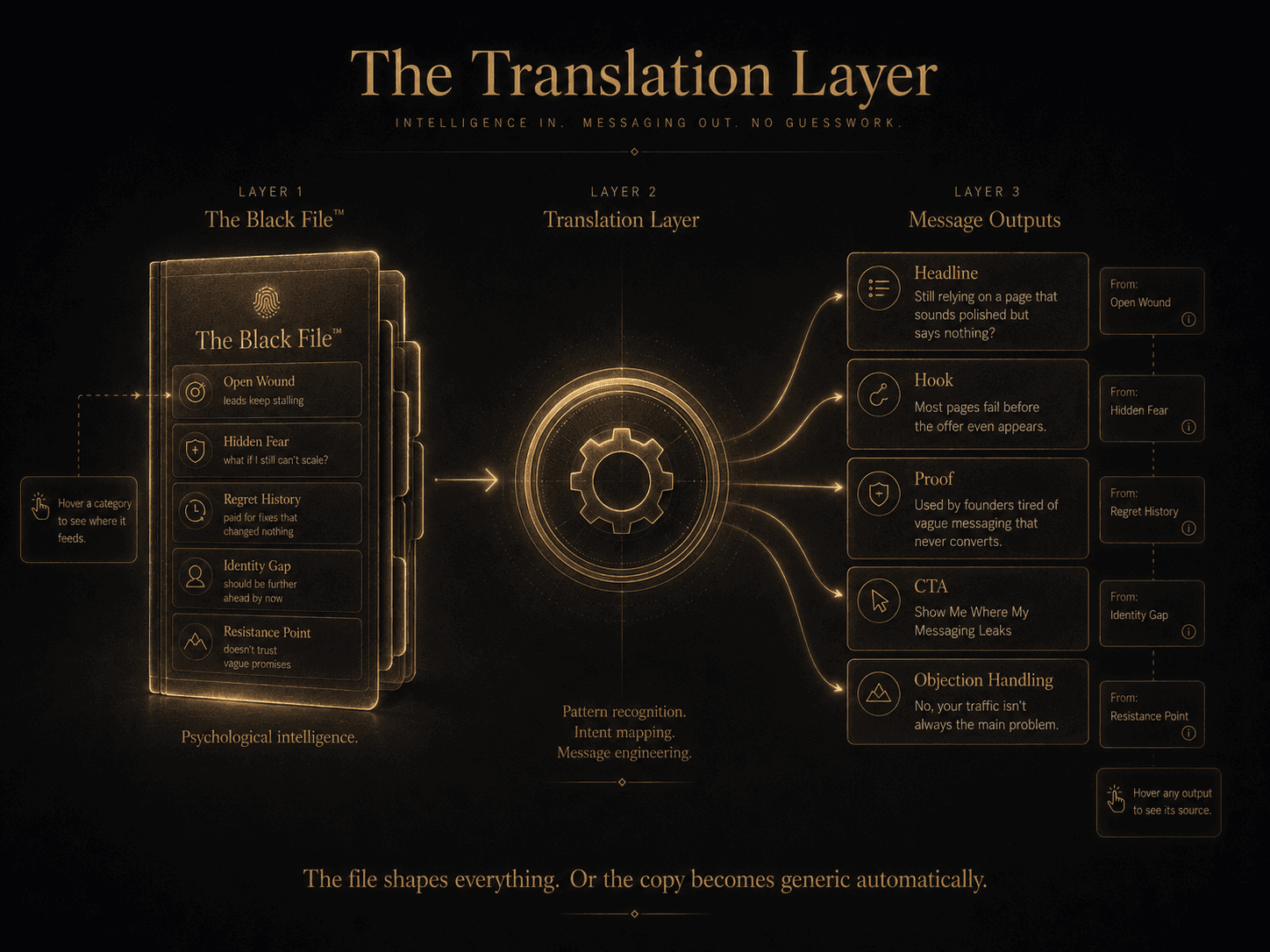
The Message Translation Layer™
The Black File should directly shape the page.
If it does not change the copy, it is only research theatre.
Use each Black File category for a specific purpose.
—
Open Wound™ → Headline And Hook
Use the open wound to interrupt attention.
Example:
“Tired of rewriting your page and still feeling hesitant to send traffic to it?”
—
Surface Problem™ → Page Orientation
Use the surface problem to help the buyer understand the category.
Example:
“If your landing page is not converting, the issue may not be traffic.”
—
Hidden Fear™ → Deeper Problem Expansion
Use the hidden fear to make the copy feel emotionally accurate.
Example:
“The frustrating part is not only that the page is underperforming. It is that you can feel something is wrong without being able to explain it clearly.”
—
Burning Desire™ → Outcome And CTA Direction
Use the burning desire to make the next step feel valuable.
Example:
“Get the clarity to send traffic with confidence instead of low-level doubt.”
—
Regret History™ → Objection Handling
Use regret history to show that you understand what they have already tried.
Example:
“You do not need another cosmetic rewrite. You need to know where belief is actually collapsing.”
—
Triggering Event™ → Urgency
Use the triggering event to explain why this matters now.
Example:
“Before you send more paid traffic to a page you still do not fully trust, diagnose the leak first.”
—
Broken Belief™ → Belief Shift
Use the broken belief to reframe the problem.
Example:
“More traffic will not fix a page that loses belief before the offer gets judged.”
—
Identity Gap™ → Transformation
Use identity gap to show who the buyer is becoming.
Example:
“Stop guessing at copy. Start diagnosing the buyer’s pressure like an operator.”
—
Resistance Point™ → Tone And Trust
Use resistance to keep the page grounded.
Example:
“No inflated claims. No plug-and-play theatre. Just a clear diagnosis of what the buyer needs to believe next.”
—
Proof Threshold™ → Evidence Strategy
Use proof threshold to decide what evidence to show.
Example:
“See the before-and-after rewrite, what changed, and why the original page was leaking belief.”
—
Example Translation™
This is how deeper buyer intelligence turns into sharper copy.
——
Weak Research
“They want more leads.”
This produces generic messaging like:
“Get more leads for your business.”
Clear, but weak.
The pressure is missing.
Strong Research
“They feel low-level dread every time paid traffic lands on a page they still do not trust.”
Now the messaging can become:
“Still sending paid traffic to a page that quietly feels unfinished every time someone clicks?”
That feels psychologically closer.
Because the research is deeper.
Another Example
Weak research:
“They want better positioning.”
This produces generic messaging like:
“Clarify your positioning and stand out.”
Understandable, but forgettable.
Strong Research
“They are tired of explaining what they do and still watching people misunderstand the value.”
Now the messaging can become:
“Tired of explaining your offer clearly and still watching buyers miss the point?”
That is sharper.
It names a lived frustration.
It creates recognition.
It gives the copy something real to aim at.
——
The Black File Assembly Process™
Build the file in this order.
Do not reverse it.
Step 1: Collect Raw Language
Gather real buyer language from calls, reviews, comments, DMs, forms, support tickets, and conversations.
Do not clean it too early.
Raw language carries emotional signal.
Step 2: Sort It Into Categories
Place the strongest findings into the 10 Black File categories:
Open Wound™
Surface Problem™
Hidden Fear™
Burning Desire™
Regret History™
Triggering Event™
Broken Belief™
Identity Gap™
Resistance Point™
Proof Threshold™
Step 3: Identify Repeated Emotional Patterns
Look for repetition.
One quote may be interesting.
Repeated phrases reveal a pattern.
Patterns reveal pressure.
Step 4: Map The Core Pressure
Identify the dominant pressure behind the decision.
Ask:
What hurts most?
What are they tired of?
What do they fear?
What have they already tried?
What do they no longer trust?
What do they want to feel instead?
Step 5: Write The Dossier Cleanly
Write the file like a psychological briefing.
Not like a persona card.
Not like a demographic summary.
Not like a generic avatar worksheet.
A good Black File should feel like a human being in motion.
Step 6: Translate The File Into Copy
Use the dossier to create:
hooks
headlines
subheadlines
proof sections
CTAs
objection handling
offer framing
page structure
tone direction
Do not write the page first and invent the file afterward.
That is backwards.
The file comes first.
The copy follows.
——
Final Black File Output™
By the end of this process, you should have:
one buyer pressure summary
ten completed Black File categories
five real buyer phrases
three hook angles
three headline angles
three proof requirements
one CTA direction
one tone direction
one primary belief shift
This is enough to materially improve almost any weak page.
—--
Buyer Pressure Summary™
Complete this before writing the page.
The buyer is:
They are currently struggling with:
The pressure they are carrying is:
They have already tried:
They are afraid that:
They want to move from:
They want to move toward:
The page must help them believe:
——
Buyer Intelligence Audit™
Use this audit to check whether your Black File is strong enough.
Score one point for every question you can answer clearly.
Can I clearly answer what pressure interrupts their attention?
Yes / No
Can I clearly answer what they are privately afraid may be true?
Yes / No
Can I clearly answer what they are tired of hearing?
Yes / No
Can I clearly answer what they distrust now?
Yes / No
Can I clearly answer what emotional language they naturally use?
Yes / No
Can I clearly answer what proof they would actually believe?
Yes / No
Can I clearly answer what identity they are trying to move away from?
Yes / No
Can I clearly answer what identity they are trying to move toward?
Yes / No
Can I clearly answer what failed attempts shaped their scepticism?
Yes / No
Can I clearly answer what kind of CTA fits their current readiness?
Yes / No
——
Your Buyer Intelligence Score™
Total Score: ___ / 10
What Your Score Means
8–10: Strong Black File
You have enough buyer intelligence to begin translating the file into copy.
The copy should now feel more aimed, specific, and emotionally relevant.
5–7: Usable But Shallow
You have some useful information, but key pressure points are probably missing.
Go deeper before rewriting major page sections.
0–4: Not Ready
Do not write the page yet.
The buyer file is too shallow.
You are likely to produce broad, generic, polished-but-weak copy.
Gather more evidence.
Find the pressure.
Then write.
——
Using AI To Strengthen The Black File™
AI becomes dramatically more useful when paired with real buyer research.
You can use any capable AI tool to organise, cluster, and pressure-test your buyer intelligence.
If you are using Funnels By Maris Spalins™, the prompts are designed to work especially well with the frameworks, principles, and buyer psychology systems explored throughout The $100M Funnel Playbook.
AI can help you:
organise buyer research
identify emotional patterns
cluster recurring objections
extract identity language
sharpen messaging
improve relevance
identify weak positioning
strengthen hooks and headlines
pressure-test funnel messaging
But the rule remains:
Do not use AI to invent the buyer.
Use AI to organise and sharpen what real buyer evidence already shows.
The better your research becomes, the more strategically valuable AI becomes.
——
Black File AI Prompt™
Use this prompt after you have collected buyer language.
Act as a conversion strategist trained in buyer psychology and pressure-based messaging.
Analyse the buyer research below and build a Black File Protocol™ dossier.
Use the following categories:
Open Wound™
Surface Problem™
Hidden Fear™
Burning Desire™
Regret History™
Triggering Event™
Broken Belief™
Identity Gap™
Resistance Point™
Proof Threshold™
For each category, include:
the strongest insight
exact buyer language where available
what this means psychologically
how it could influence the page copy
Then give me:
one buyer pressure summary
three hook angles
three headline angles
three proof requirements
one CTA direction
one tone recommendation
Do not invent proof.
Do not fabricate buyer quotes.
Use only the research provided.
Here is the buyer research:
[paste buyer research]
——
The Biggest Black File Mistake™
Most people stop too early.
They identify the category.
But not the pressure.
They identify the symptom.
But not the emotional cost.
They identify the problem.
But not the identity tension underneath it.
They know the buyer label.
They do not know the buyer’s pressure.
That is why so much copy sounds technically acceptable but emotionally forgettable.
The goal is not to fill in a worksheet.
The goal is to understand the buyer deeply enough that the message starts feeling hard to ignore.
——
Quick Black File Rebuild Exercise™
Use this when your current page feels vague, flat, or generic.
My Buyer:
Their Surface Problem:
Their Open Wound:
Their Hidden Fear:
Their Burning Desire:
Their Regret History:
Their Triggering Event:
Their Broken Belief:
Their Current Identity:
Their Desired Identity:
Their Resistance Point:
Their Proof Threshold:
One Phrase They Would Actually Say:
One Hook Inspired By This File:
One Headline Inspired By This File:
One CTA Direction Inspired By This File:
——
The Black File To Page Copy Bridge™
Once the file is complete, translate it into page copy.
Hook
Use the Open Wound™ or Hidden Fear™.
My hook:
Headline
Use the Open Wound™, Broken Belief™, or Burning Desire™.
My headline:
Subheadline
Use the Surface Problem™, Triggering Event™, or better diagnosis.
My subheadline:
Proof Cue
Use the Proof Threshold™.
My proof cue:
Objection Section
Use the Regret History™ and Resistance Point™.
My objection-handling angle:
CTA
Use the Burning Desire™ and readiness level.
My CTA:
Tone Direction
Use the Resistance Point™.
The tone should feel:
The tone must avoid:
——
Final Principle™
Strong copy does not come from clever writing.
It comes from accurate buyer intelligence.
The deeper you understand:
pressure
fear
identity tension
failed attempts
emotional language
resistance
proof expectations
The less your messaging feels like marketing.
And the more it feels like recognition.
That is the real purpose of The Black File Protocol™.
Build the file before you rewrite the page.
If the buyer file is shallow, the copy will become shallow again.
But when the buyer intelligence is sharp, the page finally has something real to aim at.
That is where high-conversion messaging begins.
——
From:
The $100M Funnel Playbook. Book I: Foundation Buyer Psychology, Offer Clarity, and the Page Architecture Behind High-Converting Funnels
By Maris Spalins.
——
Copyright Notice
© 2026 The $100M Funnel Playbook / Winyourclients / Maris Spalins. All rights reserved.
This resource, including the frameworks, terminology, examples, scorecards, templates, prompts, methods, and written explanations, is original intellectual property created for The $100M Funnel Playbook. Book I: Foundation — Buyer Psychology, Offer Clarity, And The Page Architecture Behind High-Converting Funnels and published through Winyourclients.
No part of this resource may be copied, reproduced, screenshotted, republished, redistributed, sold, adapted, uploaded, scraped, stored in a database, included in training data, used to train artificial intelligence systems, or used to create derivative commercial or educational materials without prior written permission.
Limited reference, quotation, or sharing is only permitted where the source is clearly and visibly credited.
Any permitted reference must include at least one of the following source credits:
The $100M Funnel Playbook by Maris Spalins
or
Winyourclients — www.winyourclients.com
or
Maris Spalins / Winyourclients
Screenshots, excerpts, summaries, or redistributed versions must not remove, hide, alter, crop out, or obscure the original source, author name, book title, website name, or copyright notice.
This resource is provided for personal learning and implementation only. It is not licensed for resale, republishing, redistribution, AI training, template cloning, course creation, consulting delivery, or commercial reuse without written permission from Maris Spalins or Winyourclients.
For permission requests, licensing, citation approval, or commercial usage enquiries, contact:
Winyourclients
www.winyourclients.com
or
Email directly to Jacob on: help@winyourclients.com
The Black File Protocol™ A pressure-based buyer intelligence worksheet for uncovering the pain, fear, desire, failed attempts, resistance, proof needs, and real language behind high-conversion messaging.
Prefer Audio Or Video?
The Black File Protocol™ is also available as:
🎧 A guided audio walkthrough explaining buyer pressure, emotional precision, and message relevance
🎥 A full video breakdown with real buyer dossier examples, research extraction, and copy translation demonstrationsChoose the format that fits how you learn best.
[Listen To The Audio Walkthrough] (coming soon)
[Watch The Video Breakdown] (coming soon)
——
Why Most Copy Problems Are Actually Intelligence Problems
Most weak copy is not weak because the writer lacks talent.
It is weak because the buyer file is weak.
The messaging sounds broad because the pressure was never mapped properly.
The headline feels generic because the emotional tension was never identified deeply enough.
The CTA feels flat because the writer does not yet understand what kind of movement the buyer is psychologically ready for.
This is one of the biggest misunderstandings in marketing.
People think copywriting starts with:
headlines
hooks
templates
formulas
“creative writing”
better phrasing
stronger wording
It does not.
Strong copy starts with buyer intelligence.
Because the page can only be as sharp as the understanding behind it.
That is what The Black File Protocol™ is designed to solve.
It helps you build the buyer intelligence dossier behind the page, so your copy stops sounding broad, polite, and generic — and starts feeling aimed.
——
What This Resource Helps You Do
The Black File Protocol™ helps you build a pressure-based buyer dossier before writing or rewriting page copy.
Use it to uncover:
what the buyer is really struggling with
what pressure is active right now
what they publicly say they want
what they privately fear may be true
what they have already tried
what they are tired of hearing
what proof they would actually believe
what language feels instantly familiar
what kind of CTA fits their current readiness
This is not extra research.
This is the strategic intelligence layer behind the funnel.
If the buyer file is shallow, the copy will become shallow again.
If the buyer file is sharp, the page finally has something real to aim at.
——
The Black File Is Not A Customer Avatar™
This distinction matters enormously.
Most customer avatar exercises ask questions like:
age
gender
location
income
hobbies
job title
lifestyle
basic goals
That information may be useful in some contexts.
But it is rarely enough to create emotionally accurate messaging.
A customer avatar tells you who the buyer is.
A Black File tells you what pressure the buyer is carrying.
That is the difference.
A Black File is not:
demographic profiling
polite persona building
category description
a market summary
a presentation slide
It is psychological reconnaissance.
The Black File maps:
pressure
emotional cost
identity tension
regret history
hidden fear
failed attempts
resistance
proof expectations
real buyer language
That is what makes messaging feel aimed instead of generic.
——
Avatar vs Black File™
Weak Avatar™
Female founder
32 years old
Wants to grow her business
Struggles with consistency
Wants more leads
Technically usable.
Emotionally weak.
This describes the buyer from the outside.
It gives you a category.
But it does not give you pressure.
——
Strong Black File™
Knows the page is weak but keeps treating it like a traffic problem
Delays decisions by calling the funnel “almost ready”
Rewrites copy to make it safer instead of clearer
Feels embarrassed by how vague the page still sounds after all the effort already invested
Distrusts “plug-and-play” advice because past frameworks created more work than traction
Wants to send traffic with confidence instead of low-level dread
Needs proof that shows exactly what changed, not inflated claims about “growth”
Now the buyer feels human.
Now the copy has something to work from.
Now you can hear:
the pain
the fear
the resistance
the failed attempts
the identity bruise
the proof requirement
the language direction
That changes everything.
——
The Pressure Principle™
Buyers rarely move because of demographics.
They move because pressure becomes emotionally expensive enough to act on.
This is critical.
People buy when:
frustration compounds
uncertainty becomes exhausting
delay becomes painful
identity tension increases
failed attempts accumulate
the future starts feeling threatening
staying where they are begins to cost too much
That means strong copy should not merely describe categories.
It should expose pressure.
Because pressure creates movement.
——
Category-Level Messaging™
Weak example:
“For coaches and consultants looking to grow online.”
Broad.
Polite.
Forgettable.
This message may be technically clear, but it does not create much recognition.
The buyer has to work too hard to find themselves inside it.
——
Pressure-Based Messaging™
Stronger example:
“Tired of rewriting your page every month and still feeling hesitant to send paid traffic to it?”
Now the buyer feels:
emotional familiarity
recognition
tension
pressure
continuation pull
The second message feels closer to lived experience.
That is the difference.
Category language describes the market.
Pressure language enters the buyer’s world.
——
What The Black File Actually Does™
A strong Black File helps you answer the questions that generic buyer research usually misses.
Before writing the page, you should know:
What pain is live enough to interrupt attention?
What belief is keeping the buyer stuck?
What are they privately afraid may be true?
What do they want publicly?
What do they want privately?
What have they already tried?
What are they tired of hearing?
What language feels instantly relevant?
What proof would actually make them believe?
What kind of CTA fits their readiness level?
If you cannot answer these clearly, do not write the page yet.
The buyer file is not ready.
And if the buyer file is not ready, the copy will start guessing.
——
The 10 Black File Categories™
These ten categories form the core structure of the buyer dossier.
Each category reveals a different psychological layer behind buyer behaviour.
Complete each one before rewriting the page.
—
1. Open Wound™
Core Question
What hurts right now?
Not the broad problem.
The live pressure point.
This is the thing the buyer feels most actively.
It is the frustration, tension, or pressure that is close enough to interrupt attention.
Weak Example
“They want more conversions.”
Too abstract.
Too general.
Not enough pressure.
Stronger Example
“They keep delaying ad spend because the page still does not feel trustworthy enough to scale confidently.”
Now the pressure becomes visible.
The buyer is not simply “interested in conversion.”
They are hesitating because the page does not feel strong enough to carry traffic.
That gives the copy something sharper to aim at.
What To Look For
Look for phrases like:
“I’m tired of…”
“This keeps happening…”
“I don’t know why this still isn’t working…”
“I keep fixing it but…”
“It feels like something is off…”
“I’m hesitant to…”
These phrases often reveal the open wound.
Fill This In
The buyer’s open wound is:
The live pressure point is:
The thing they are tired of tolerating is:
Use This For
Use the Open Wound™ for:
headlines
hooks
opening paragraphs
problem sections
first-scroll copy
The hook should usually interrupt the open wound.
Not the broad category.
—
2. Surface Problem™
Core Question
What do they say they need publicly?
This is the problem the buyer will usually admit first.
It is the polite layer.
The public explanation.
The visible symptom.
Examples
They may say they need:
more leads
stronger messaging
clearer positioning
better conversion
better page copy
more sales
stronger funnels
better traffic quality
This is useful.
But it is not deep enough yet.
The surface problem is the starting point, not the final insight.
Why This Matters
Most buyers describe symptoms first.
Not root tension.
Your job is to investigate deeper.
If you only write from the surface problem, your copy will sound like everyone else.
Fill This In
The buyer says they need:
The surface problem they would publicly admit is:
The broad category problem is:
Use This For
Use the Surface Problem™ for:
basic offer framing
category clarity
page context
search-friendly language
initial orientation
But do not stop here.
Surface pain creates understanding.
Deeper pressure creates movement.
—
3. Hidden Fear™
Core Question
What are they privately afraid might be true?
This is where copy starts feeling unusually accurate.
Hidden fear is rarely stated directly.
But it shapes how the buyer reads the page.
Examples
The buyer may privately fear:
“Maybe the problem is my judgement.”
“Maybe I still do not know how to explain what I do.”
“Maybe this should be easier by now.”
“Maybe my offer is not as strong as I thought.”
“Maybe people do not trust me enough.”
“Maybe I am wasting money because I cannot see the real problem.”
“Maybe I am further behind than I admit.”
This is sensitive territory.
Use it carefully.
The goal is not to shame the buyer.
The goal is to understand what is emotionally at stake.
Why This Matters
Fear creates emotional sensitivity.
And emotionally sensitive areas create stronger attention.
When copy touches a hidden fear accurately and respectfully, the buyer feels understood.
Not manipulated.
Understood.
Fill This In
The buyer is privately afraid that:
They would probably never say this publicly, but they worry that:
This fear affects their decision because:
Use This For
Use Hidden Fear™ for:
deeper hooks
problem expansion
objection handling
empathy sections
stakes
urgency
emotional resonance
Do not overuse it.
A little precision here is powerful.
Too much pressure can feel heavy-handed.
—
4. Burning Desire™
Core Question
What do they want badly enough to soften, hide, or understate publicly?
Buyers often describe their desire politely.
But the real desire usually has more emotional charge.
They may say they want “better conversions.”
But underneath that, they may want relief, confidence, control, trust, certainty, status, or momentum.
Good desire feels like relief with shape.
Examples
The buyer may want:
to finally trust the message
to send traffic without low-level dread
to say the offer clearly and confidently
to stop second-guessing every public-facing decision
to feel like the page finally matches the level they want to be known for
to look at the funnel and feel, “Yes. This finally says it properly.”
That is more emotionally useful than “more leads.”
Why This Matters
Desire gives the copy direction.
Pain shows what they want to escape.
Desire shows what they want to move toward.
Strong copy usually needs both.
Fill This In
The buyer publicly wants:
The buyer privately wants:
The emotional relief they want is:
The practical result they want is:
Use This For
Use Burning Desire™ for:
outcome sections
offer framing
transformation copy
CTA language
closing sections
future-state copy
Desire helps the CTA feel like movement, not pressure.
—
5. Regret History™
Core Question
What have they already tried that disappointed them?
Buyers do not arrive neutral.
They arrive carrying memory.
They remember what failed.
They remember what sounded promising but created no real change.
They remember the advice, tactics, and frameworks that disappointed them.
That history shapes scepticism.
Examples
They may have already tried:
prettier design without stronger messaging
endless headline rewrites
CTA tweaks without fixing the sequence
more traffic before fixing the page
generic funnel templates
“plug-and-play” frameworks
another round of copy edits that changed the words but not the psychology
courses that created more notes than traction
Why This Matters
Regret history tells you what the buyer is already resistant to.
If you ignore it, your copy may accidentally sound like one more version of the thing they already distrust.
Fill This In
The buyer has already tried:
What disappointed them was:
What they are tired of hearing is:
The advice or solution they no longer trust is:
Use This For
Use Regret History™ for:
objection handling
differentiation
“why this is different” sections
mechanism explanation
trust-building
offer positioning
Good copy should not pretend the buyer is arriving fresh.
They are arriving with memory.
—
6. Triggering Event™
Core Question
Why does this problem feel urgent now?
Timing affects receptivity enormously.
The same buyer may ignore the message for months — until one event makes the problem feel active.
That event is the trigger.
Examples
The trigger may be:
another weak launch
rising ad costs
traffic going live soon
hearing the same objection repeatedly
watching weaker competitors communicate more clearly
a campaign underperforming
a sales call exposing the same confusion again
finally admitting the page still does not feel ready
Why This Matters
Triggering events explain why the buyer is more open now.
They also help you write urgency without fake scarcity.
Urgency does not have to be manufactured.
Often, it already exists in the buyer’s situation.
Fill This In
The triggering event is:
This became urgent because:
The buyer can no longer ignore it because:
Use This For
Use Triggering Event™ for:
urgency
opening paragraphs
timing-based messaging
launch copy
diagnostic offers
CTA sections
Timing shapes the buyer’s readiness.
—
7. Broken Belief™
Core Question
What explanation is keeping them trapped?
A broken belief is the wrong explanation the buyer is using to understand the problem.
Broken beliefs create broken decisions.
If the buyer misdiagnoses the problem, they will keep making the wrong next move.
Examples
The buyer may believe:
“I just need more traffic.”
“I need more design polish.”
“I need more time.”
“I just need another funnel template.”
“Maybe I am just not naturally good at messaging.”
“Maybe the offer is the problem.”
“Maybe one more round of edits will fix it.”
“Maybe people just are not ready to buy.”
Some of these may be partly true.
But often, they keep the buyer stuck in the wrong loop.
Why This Matters
Strong copy often replaces a broken belief with a better diagnosis.
That is where authority begins.
The page becomes more persuasive when it helps the buyer see the problem more clearly.
Fill This In
The buyer currently believes:
This belief keeps them stuck because:
The better diagnosis is:
Use This For
Use Broken Belief™ for:
hooks
educational sections
belief-shift copy
mechanism explanation
“why this matters” sections
thought leadership
offer positioning
A strong page does not just present an offer.
It changes the buyer’s understanding of the problem.
—
8. Identity Gap™
Core Question
Who are they now, and who are they trying to become?
Identity movement is one of the deepest drivers of action.
The buyer is not only trying to solve a problem.
They are trying to move away from one version of themselves and toward another.
Current Identity™
The buyer may currently feel like someone who is:
second-guessing public-facing decisions
hiding behind broad wording
stalling because the page still feels weak
guessing instead of diagnosing
polishing instead of clarifying
sending traffic with hesitation
rebuilding the same uncertainty in prettier words
Desired Identity™
The buyer wants to become someone who is:
clear
trusted
decisive
confident sending traffic
able to diagnose the real leak
publicly aligned with private ambition
able to explain the offer without rambling
respected for the clarity of their message
Why This Matters
People protect identity deeply.
If the problem makes the buyer feel less capable, less clear, less trusted, or less in control, the emotional stakes rise.
Strong copy can speak to the identity shift without becoming dramatic.
Fill This In
The buyer currently feels like someone who:
The buyer wants to become someone who:
The identity gap is:
Use This For
Use Identity Gap™ for:
deeper messaging
transformation copy
positioning
premium offers
closing sections
brand voice
emotional stakes
The identity gap often gives the page its deepest emotional pull.
—
9. Resistance Point™
Core Question
What are they sceptical of now?
Every buyer arrives with resistance.
Especially if they have been disappointed before.
If your page ignores their resistance, it can trigger distrust while trying to persuade.
Examples
The buyer may be sceptical of:
guru certainty
“plug-and-play” promises
exaggerated claims
polished-but-empty marketing language
vague testimonials
overconfident frameworks
advice that sounds simple but creates more work
anything that sounds too easy
Why This Matters
Resistance tells you what tone the page needs.
Some buyers need energy.
Others need grounded confidence.
Some need proof.
Others need lower-friction next steps.
If you miss this, your copy may sound wrong even if the offer is good.
Fill This In
The buyer is sceptical of:
They no longer trust:
The tone that would trigger resistance is:
The tone that would feel safer is:
Use This For
Use Resistance Point™ for:
tone
proof strategy
objection handling
claims
CTA framing
trust sections
offer explanation
Good copy does not ignore resistance.
It anticipates it.
—
10. Proof Threshold™
Core Question
What evidence would actually feel believable to this buyer?
Proof only works when it matches the wound.
Generic proof is weak.
Specific proof reduces the exact uncertainty the buyer is carrying.
Examples
The buyer may need:
before/after rewrites
side-by-side comparisons
grounded case studies
screenshots
process breakdowns
proof tied directly to their specific problem
explanation of what changed and why it worked
testimonials that sound specific, not polished
Why This Matters
The buyer does not need random proof.
They need proof that answers their current doubt.
If the wound is “my page looks good but does not convert”, then proof should show what changed on a page and why performance improved.
If the wound is “I do not trust templates”, then proof should show diagnosis, not plug-and-play claims.
Fill This In
The buyer would believe this more if they saw:
The proof format they would trust is:
The claim that needs proof most is:
The doubt this proof should reduce is:
Use This For
Use Proof Threshold™ for:
proof sections
case studies
testimonials
CTA-adjacent trust lines
credibility cues
guarantee language
objections
sales page structure
Proof should appear where doubt is likely to form.
——
Where Real Buyer Intelligence Comes From™
Do not invent the Black File from imagination.
Build it from evidence.
Otherwise, you are not doing buyer research.
You are writing fiction with a marketing title.
Use real sources such as:
sales calls
support tickets
intake forms
DMs
Reddit threads
YouTube comments
competitor reviews
one-star reviews
testimonials
Facebook groups
support conversations
discovery notes
client messages
You are searching for:
repeated frustrations
emotional phrases
recurring fears
failed-attempt patterns
identity language
proof expectations
self-protective habits
repeated objections
before/after language
This is where relevance comes from.
The goal is not to collect random quotes.
The goal is to detect patterns that belong in the Black File.
——
The Pattern Recognition Process™
Strong buyer intelligence is built through pattern detection.
Not isolated quotes.
Do not treat every single phrase as equally important.
Look for repetition.
Patterns reveal pressure.
——
Repeated Emotional Language™
Look for phrases like:
“I’m tired of…”
“It feels like…”
“I thought this would…”
“I keep trying…”
“I’m worried that…”
“I don’t understand why…”
“I should be further along…”
Repeated emotional phrasing matters enormously because it shows you how the buyer naturally describes the problem.
——
Repeated Failed Attempts™
Ask:
What keeps failing repeatedly?
Look for patterns such as:
they tried more traffic
they tried a redesign
they tried templates
they tried another headline
they tried another launch
they tried copying competitors
they tried simplifying but made the message weaker
Failed attempts reveal scepticism.
They also reveal what the copy must avoid sounding like.
——
Repeated Identity Tension™
Look for phrases like:
“I should be further along by now.”
“I feel like I’m guessing.”
“I’m embarrassed this still isn’t clear.”
“I know the offer is good, but I cannot explain it properly.”
“It looks fine, but I do not trust it.”
This is where messaging becomes psychologically sharp.
Identity tension shows what the problem seems to say about the buyer.
And that is often where the strongest copy lives.
——
The “This Feels Written For Me” Effect™
Strong copy creates recognition.
Not because it sounds dramatic.
Because it sounds accurate.
Buyers trust pages faster when they feel:
understood
recognised
emotionally mirrored
accurately diagnosed
That trust acceleration happens when the Black File is honest enough.
If the buyer reads the final copy and thinks:
“That is exactly what I have been dealing with.”
The Black File is working.
If they think:
“This could apply to anyone.”
The file is still too shallow.
—-
The Message Translation Layer™
The Black File should directly shape the page.
If it does not change the copy, it is only research theatre.
Use each Black File category for a specific purpose.
—
Open Wound™ → Headline And Hook
Use the open wound to interrupt attention.
Example:
“Tired of rewriting your page and still feeling hesitant to send traffic to it?”
—
Surface Problem™ → Page Orientation
Use the surface problem to help the buyer understand the category.
Example:
“If your landing page is not converting, the issue may not be traffic.”
—
Hidden Fear™ → Deeper Problem Expansion
Use the hidden fear to make the copy feel emotionally accurate.
Example:
“The frustrating part is not only that the page is underperforming. It is that you can feel something is wrong without being able to explain it clearly.”
—
Burning Desire™ → Outcome And CTA Direction
Use the burning desire to make the next step feel valuable.
Example:
“Get the clarity to send traffic with confidence instead of low-level doubt.”
—
Regret History™ → Objection Handling
Use regret history to show that you understand what they have already tried.
Example:
“You do not need another cosmetic rewrite. You need to know where belief is actually collapsing.”
—
Triggering Event™ → Urgency
Use the triggering event to explain why this matters now.
Example:
“Before you send more paid traffic to a page you still do not fully trust, diagnose the leak first.”
—
Broken Belief™ → Belief Shift
Use the broken belief to reframe the problem.
Example:
“More traffic will not fix a page that loses belief before the offer gets judged.”
—
Identity Gap™ → Transformation
Use identity gap to show who the buyer is becoming.
Example:
“Stop guessing at copy. Start diagnosing the buyer’s pressure like an operator.”
—
Resistance Point™ → Tone And Trust
Use resistance to keep the page grounded.
Example:
“No inflated claims. No plug-and-play theatre. Just a clear diagnosis of what the buyer needs to believe next.”
—
Proof Threshold™ → Evidence Strategy
Use proof threshold to decide what evidence to show.
Example:
“See the before-and-after rewrite, what changed, and why the original page was leaking belief.”
—
Example Translation™
This is how deeper buyer intelligence turns into sharper copy.
——
Weak Research
“They want more leads.”
This produces generic messaging like:
“Get more leads for your business.”
Clear, but weak.
The pressure is missing.
Strong Research
“They feel low-level dread every time paid traffic lands on a page they still do not trust.”
Now the messaging can become:
“Still sending paid traffic to a page that quietly feels unfinished every time someone clicks?”
That feels psychologically closer.
Because the research is deeper.
Another Example
Weak research:
“They want better positioning.”
This produces generic messaging like:
“Clarify your positioning and stand out.”
Understandable, but forgettable.
Strong Research
“They are tired of explaining what they do and still watching people misunderstand the value.”
Now the messaging can become:
“Tired of explaining your offer clearly and still watching buyers miss the point?”
That is sharper.
It names a lived frustration.
It creates recognition.
It gives the copy something real to aim at.
——
The Black File Assembly Process™
Build the file in this order.
Do not reverse it.
Step 1: Collect Raw Language
Gather real buyer language from calls, reviews, comments, DMs, forms, support tickets, and conversations.
Do not clean it too early.
Raw language carries emotional signal.
Step 2: Sort It Into Categories
Place the strongest findings into the 10 Black File categories:
Open Wound™
Surface Problem™
Hidden Fear™
Burning Desire™
Regret History™
Triggering Event™
Broken Belief™
Identity Gap™
Resistance Point™
Proof Threshold™
Step 3: Identify Repeated Emotional Patterns
Look for repetition.
One quote may be interesting.
Repeated phrases reveal a pattern.
Patterns reveal pressure.
Step 4: Map The Core Pressure
Identify the dominant pressure behind the decision.
Ask:
What hurts most?
What are they tired of?
What do they fear?
What have they already tried?
What do they no longer trust?
What do they want to feel instead?
Step 5: Write The Dossier Cleanly
Write the file like a psychological briefing.
Not like a persona card.
Not like a demographic summary.
Not like a generic avatar worksheet.
A good Black File should feel like a human being in motion.
Step 6: Translate The File Into Copy
Use the dossier to create:
hooks
headlines
subheadlines
proof sections
CTAs
objection handling
offer framing
page structure
tone direction
Do not write the page first and invent the file afterward.
That is backwards.
The file comes first.
The copy follows.
——
Final Black File Output™
By the end of this process, you should have:
one buyer pressure summary
ten completed Black File categories
five real buyer phrases
three hook angles
three headline angles
three proof requirements
one CTA direction
one tone direction
one primary belief shift
This is enough to materially improve almost any weak page.
—--
Buyer Pressure Summary™
Complete this before writing the page.
The buyer is:
They are currently struggling with:
The pressure they are carrying is:
They have already tried:
They are afraid that:
They want to move from:
They want to move toward:
The page must help them believe:
——
Buyer Intelligence Audit™
Use this audit to check whether your Black File is strong enough.
Score one point for every question you can answer clearly.
Can I clearly answer what pressure interrupts their attention?
Yes / No
Can I clearly answer what they are privately afraid may be true?
Yes / No
Can I clearly answer what they are tired of hearing?
Yes / No
Can I clearly answer what they distrust now?
Yes / No
Can I clearly answer what emotional language they naturally use?
Yes / No
Can I clearly answer what proof they would actually believe?
Yes / No
Can I clearly answer what identity they are trying to move away from?
Yes / No
Can I clearly answer what identity they are trying to move toward?
Yes / No
Can I clearly answer what failed attempts shaped their scepticism?
Yes / No
Can I clearly answer what kind of CTA fits their current readiness?
Yes / No
——
Your Buyer Intelligence Score™
Total Score: ___ / 10
What Your Score Means
8–10: Strong Black File
You have enough buyer intelligence to begin translating the file into copy.
The copy should now feel more aimed, specific, and emotionally relevant.
5–7: Usable But Shallow
You have some useful information, but key pressure points are probably missing.
Go deeper before rewriting major page sections.
0–4: Not Ready
Do not write the page yet.
The buyer file is too shallow.
You are likely to produce broad, generic, polished-but-weak copy.
Gather more evidence.
Find the pressure.
Then write.
——
Using AI To Strengthen The Black File™
AI becomes dramatically more useful when paired with real buyer research.
You can use any capable AI tool to organise, cluster, and pressure-test your buyer intelligence.
If you are using Funnels By Maris Spalins™, the prompts are designed to work especially well with the frameworks, principles, and buyer psychology systems explored throughout The $100M Funnel Playbook.
AI can help you:
organise buyer research
identify emotional patterns
cluster recurring objections
extract identity language
sharpen messaging
improve relevance
identify weak positioning
strengthen hooks and headlines
pressure-test funnel messaging
But the rule remains:
Do not use AI to invent the buyer.
Use AI to organise and sharpen what real buyer evidence already shows.
The better your research becomes, the more strategically valuable AI becomes.
——
Black File AI Prompt™
Use this prompt after you have collected buyer language.
Act as a conversion strategist trained in buyer psychology and pressure-based messaging.
Analyse the buyer research below and build a Black File Protocol™ dossier.
Use the following categories:
Open Wound™
Surface Problem™
Hidden Fear™
Burning Desire™
Regret History™
Triggering Event™
Broken Belief™
Identity Gap™
Resistance Point™
Proof Threshold™
For each category, include:
the strongest insight
exact buyer language where available
what this means psychologically
how it could influence the page copy
Then give me:
one buyer pressure summary
three hook angles
three headline angles
three proof requirements
one CTA direction
one tone recommendation
Do not invent proof.
Do not fabricate buyer quotes.
Use only the research provided.
Here is the buyer research:
[paste buyer research]
——
The Biggest Black File Mistake™
Most people stop too early.
They identify the category.
But not the pressure.
They identify the symptom.
But not the emotional cost.
They identify the problem.
But not the identity tension underneath it.
They know the buyer label.
They do not know the buyer’s pressure.
That is why so much copy sounds technically acceptable but emotionally forgettable.
The goal is not to fill in a worksheet.
The goal is to understand the buyer deeply enough that the message starts feeling hard to ignore.
——
Quick Black File Rebuild Exercise™
Use this when your current page feels vague, flat, or generic.
My Buyer:
Their Surface Problem:
Their Open Wound:
Their Hidden Fear:
Their Burning Desire:
Their Regret History:
Their Triggering Event:
Their Broken Belief:
Their Current Identity:
Their Desired Identity:
Their Resistance Point:
Their Proof Threshold:
One Phrase They Would Actually Say:
One Hook Inspired By This File:
One Headline Inspired By This File:
One CTA Direction Inspired By This File:
——
The Black File To Page Copy Bridge™
Once the file is complete, translate it into page copy.
Hook
Use the Open Wound™ or Hidden Fear™.
My hook:
Headline
Use the Open Wound™, Broken Belief™, or Burning Desire™.
My headline:
Subheadline
Use the Surface Problem™, Triggering Event™, or better diagnosis.
My subheadline:
Proof Cue
Use the Proof Threshold™.
My proof cue:
Objection Section
Use the Regret History™ and Resistance Point™.
My objection-handling angle:
CTA
Use the Burning Desire™ and readiness level.
My CTA:
Tone Direction
Use the Resistance Point™.
The tone should feel:
The tone must avoid:
——
Final Principle™
Strong copy does not come from clever writing.
It comes from accurate buyer intelligence.
The deeper you understand:
pressure
fear
identity tension
failed attempts
emotional language
resistance
proof expectations
The less your messaging feels like marketing.
And the more it feels like recognition.
That is the real purpose of The Black File Protocol™.
Build the file before you rewrite the page.
If the buyer file is shallow, the copy will become shallow again.
But when the buyer intelligence is sharp, the page finally has something real to aim at.
That is where high-conversion messaging begins.
——
From:
The $100M Funnel Playbook. Book I: Foundation Buyer Psychology, Offer Clarity, and the Page Architecture Behind High-Converting Funnels
By Maris Spalins.
——
Copyright Notice
© 2026 The $100M Funnel Playbook / Winyourclients / Maris Spalins. All rights reserved.
This resource, including the frameworks, terminology, examples, scorecards, templates, prompts, methods, and written explanations, is original intellectual property created for The $100M Funnel Playbook. Book I: Foundation — Buyer Psychology, Offer Clarity, And The Page Architecture Behind High-Converting Funnels and published through Winyourclients.
No part of this resource may be copied, reproduced, screenshotted, republished, redistributed, sold, adapted, uploaded, scraped, stored in a database, included in training data, used to train artificial intelligence systems, or used to create derivative commercial or educational materials without prior written permission.
Limited reference, quotation, or sharing is only permitted where the source is clearly and visibly credited.
Any permitted reference must include at least one of the following source credits:
The $100M Funnel Playbook by Maris Spalins
or
Winyourclients — www.winyourclients.com
or
Maris Spalins / Winyourclients
Screenshots, excerpts, summaries, or redistributed versions must not remove, hide, alter, crop out, or obscure the original source, author name, book title, website name, or copyright notice.
This resource is provided for personal learning and implementation only. It is not licensed for resale, republishing, redistribution, AI training, template cloning, course creation, consulting delivery, or commercial reuse without written permission from Maris Spalins or Winyourclients.
For permission requests, licensing, citation approval, or commercial usage enquiries, contact:
Winyourclients
www.winyourclients.com
or
Email directly to Jacob on: help@winyourclients.com
Other Blogs
Other Blogs
Check our other project Blogs with useful insight and information for your businesses
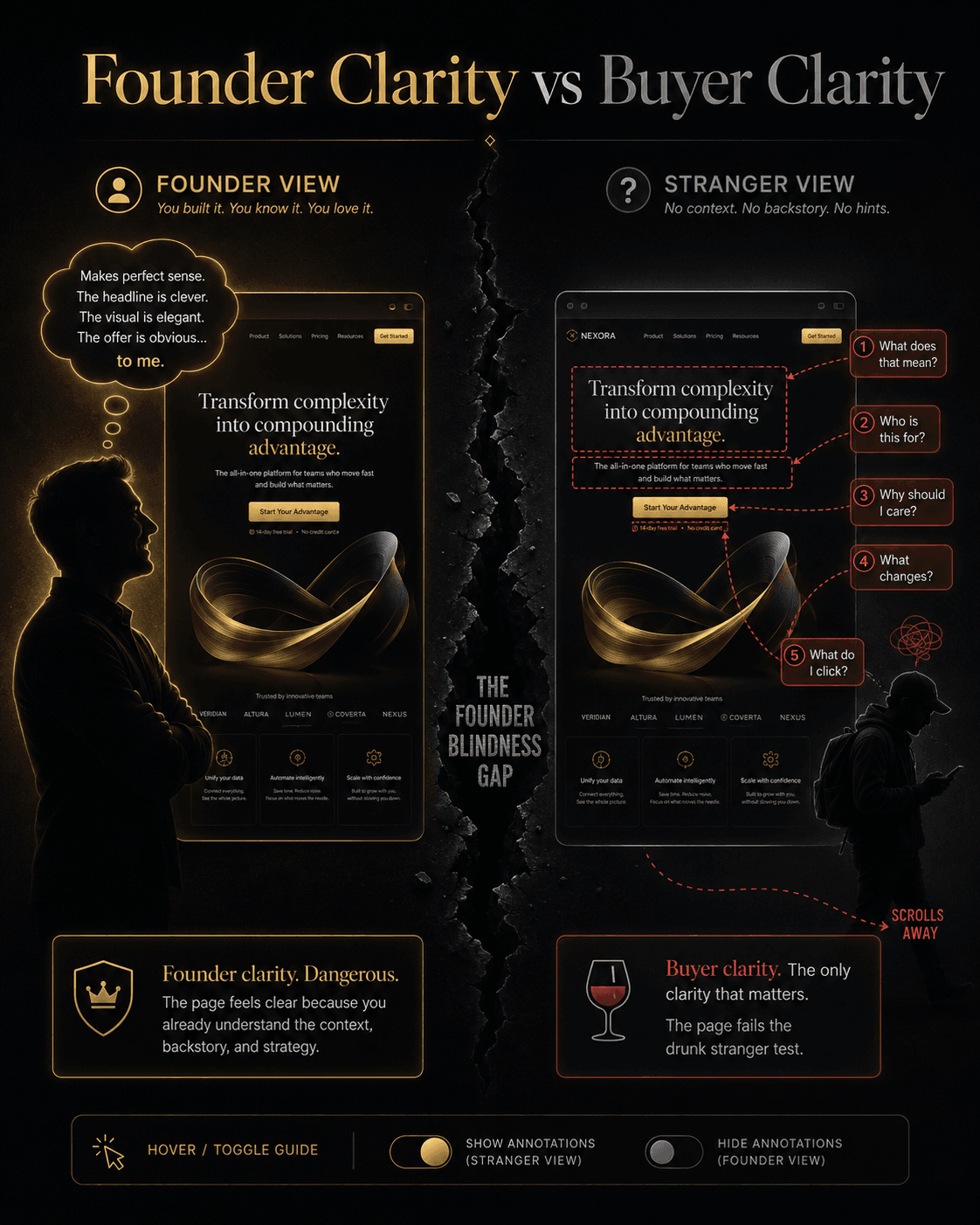
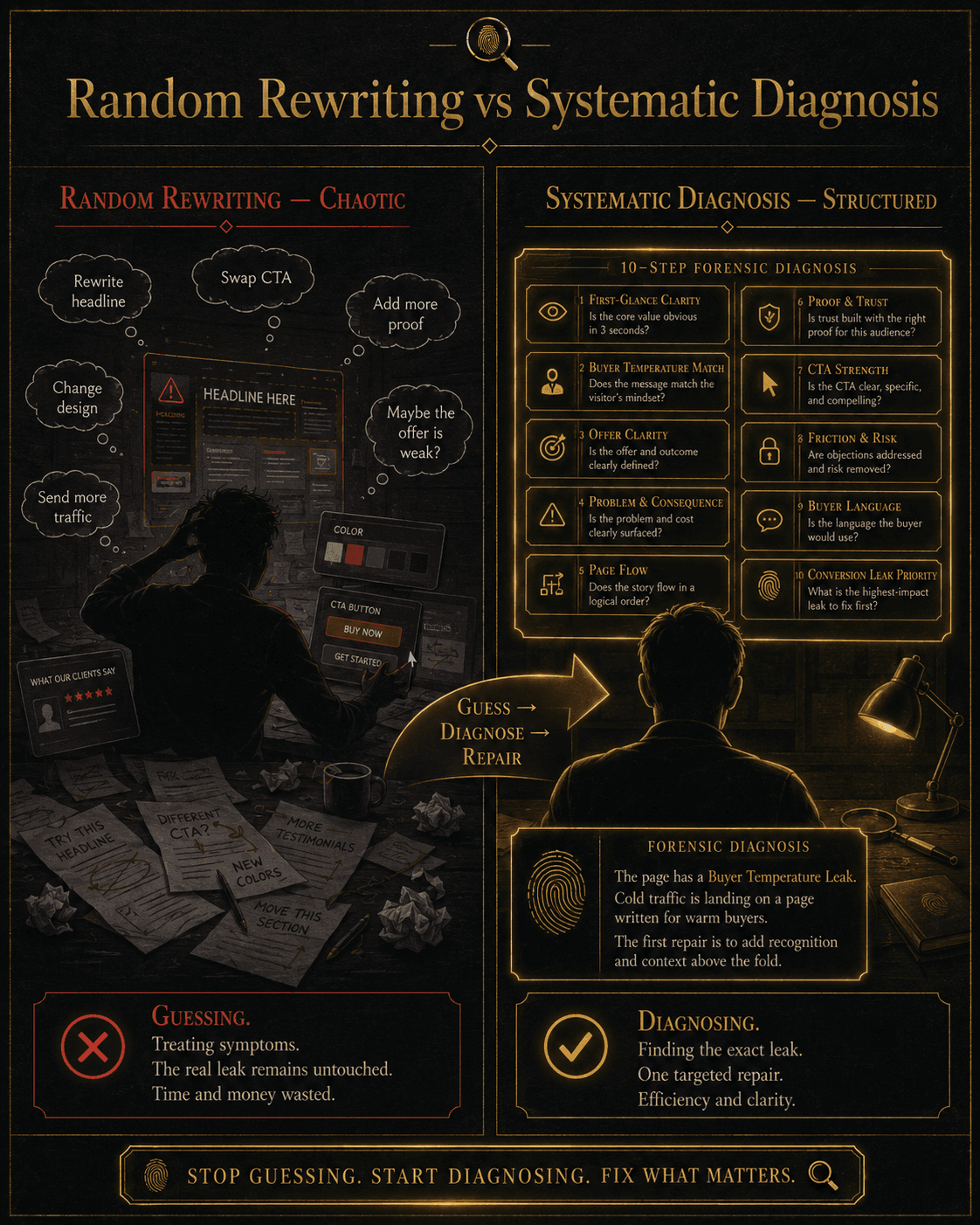
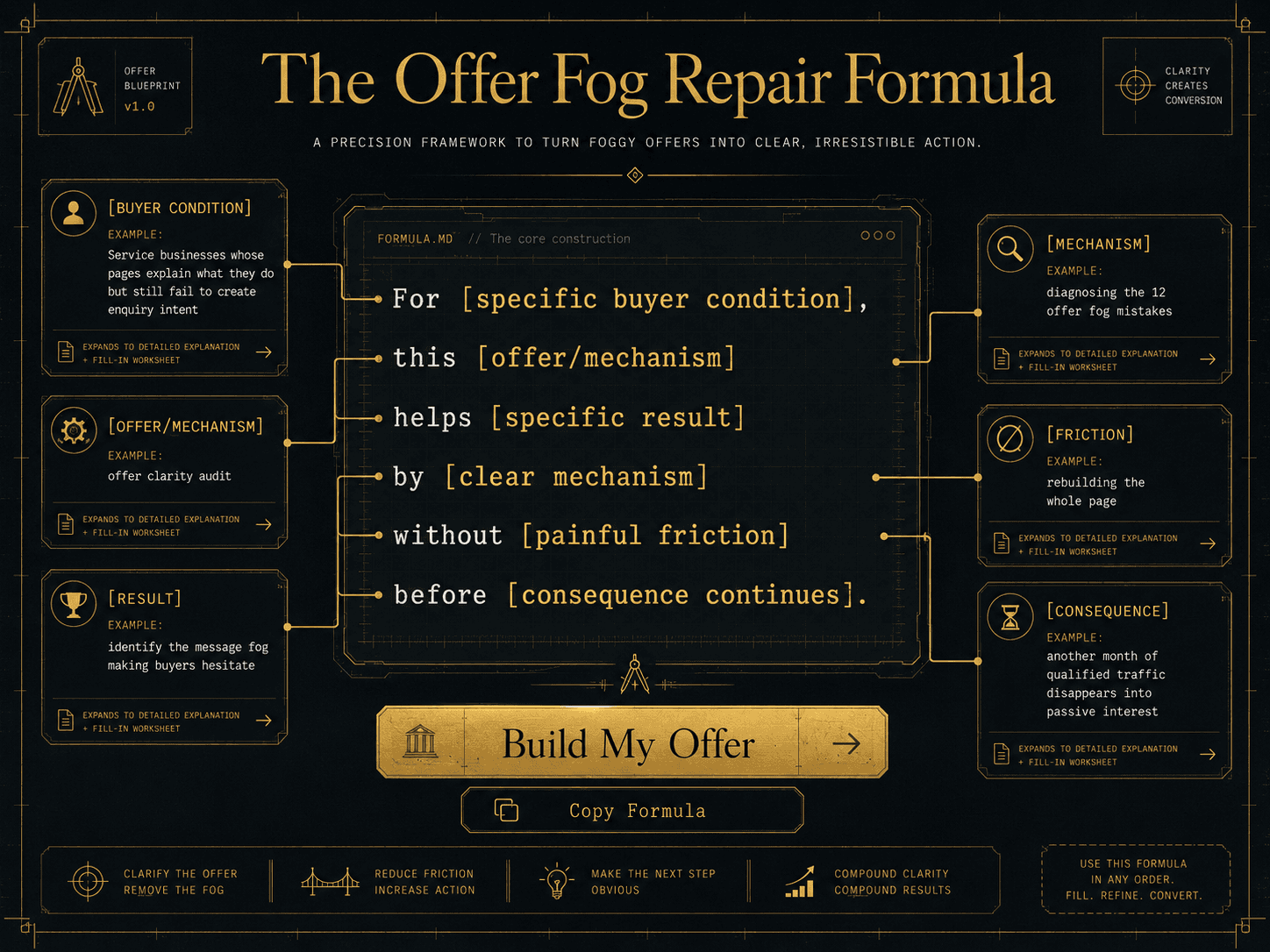
Other Blogs
Other Blogs
Check our other project Blogs with useful insight and information for your businesses