Our Three Step Process
May 5, 2026
Chap 1 | Resource 1 (b) |The Drunk Stranger Framework
Our Three Step Process
May 5, 2026
Chap 1 | Resource 1 (b) |The Drunk Stranger Framework
The Drunk Stranger Framework™ Understanding First-Contact Psychology, Funnel Leakage, And Why Buyers Leave Before The Sales Argument Even Begins.
Prefer Audio Or Video?
The Drunk Stranger Framework™ is also available as:
🎧 A guided audio walkthrough for learning on the move
🎥 A video breakdown with practical examples and implementation guidanceChoose the format that fits how you learn best.
Listen To The Audio Walkthrough. Click HERE. (coming soon)
Watch The Video Breakdown. Click HERE. (coming soon)
——
WHY MOST FUNNELS DIE BEFORE THEY EVEN BEGIN
Most founders think funnels fail because:
Traffic quality is bad.
The offer is weak.
The design needs improving.
The algorithm changed.
Ads stopped working.
Sometimes that is true.
Most of the time, it is not.
Most funnels fail much earlier.
They fail during first contact.
The buyer lands on the page.
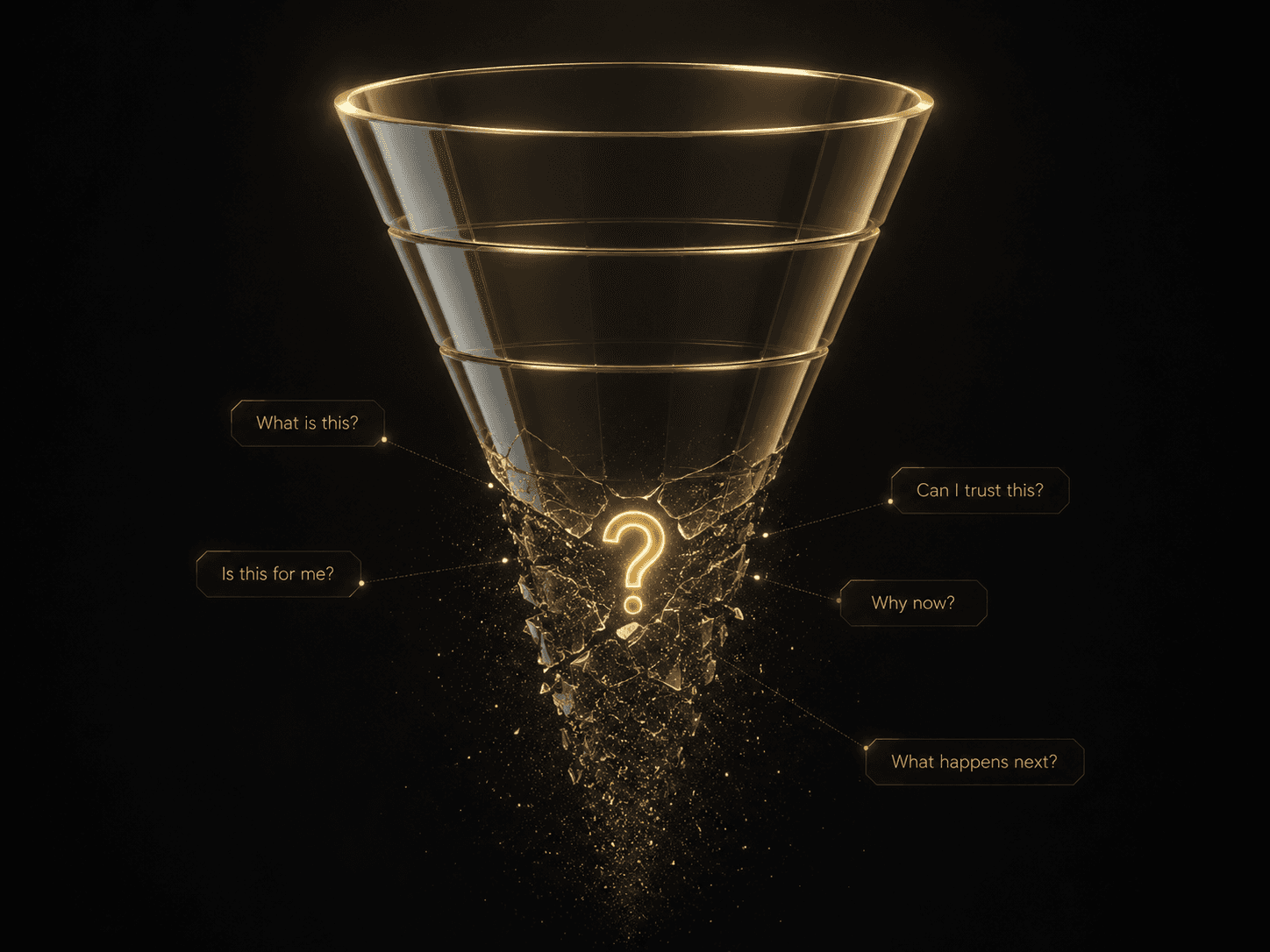
Their brain instantly starts asking silent questions:
“What is this?”
“Is this for me?”
“Why should I care?”
“Can I trust this?”
“What happens next?”
And the terrifying part is this:
Most of those decisions happen emotionally before the buyer consciously reads much at all.
The page either creates:
Clarity
Relevance
Belief
Momentum
…or it quietly creates confusion.
And confused buyers rarely continue.
That is what this framework is designed to help you understand and repair.
——
Why Most Funnels Die Before They Even Begin
Most founders think funnels fail because traffic quality is bad.
Or because the offer needs changing.
Or because the design is not good enough.
Or because the algorithm changed.
Or because the ads stopped working.
Sometimes that is true.
Most of the time, it is not.
Most funnels fail much earlier.
They fail during first contact.
The buyer lands on the page.
Their brain instantly starts asking silent questions:
“What is this?”
“Is this for me?”
“Why should I care?”
“Can I trust this?”
“What happens next?”
And the terrifying part is this:
Most of those decisions happen before the buyer consciously reads much at all.
The page either creates clarity, relevance, belief, and momentum…
Or it quietly creates confusion.
And confused buyers rarely continue.
That is what this framework is designed to expose and repair.
It helps you find the invisible leaks that make buyers leave before your full sales argument even begins.
——
What This Resource Helps You Do
The Drunk Stranger Framework™ helps you pressure-test any page against the brutal reality of first-contact conversion.
Use it to diagnose:
weak headlines.
vague promises.
unclear audiences.
soft CTAs.
missing trust signals.
confusing hero sections.
unnecessary cognitive friction.
first-scroll conversion leaks.
This is not a branding exercise.
It is not a design preference checklist.
It is a continuation test.
The question is simple:
Does your page create enough clarity, relevance, belief, and momentum to earn the next few seconds?
If the answer is no, the page leaks.
——
The First-Contact Decision Window™
The first few seconds of a page matter disproportionately.
Not because buyers are stupid.
Because attention is fragile.
Your buyer is distracted.
They are mentally overloaded.
They are emotionally sceptical.
They are comparing options.
They are low on patience.
They are filtering aggressively.
This means your page is not being evaluated slowly.
It is being stress-tested instantly.
Weak pages usually fail in one of five ways:
the offer feels vague
the audience feels unclear
the outcome feels soft
the CTA feels pointless
the page asks for trust too early
None of these failures feel dramatic while building the page.
But together, they quietly suffocate conversion.
This is what creates funnel leakage.
The buyer does not always leave because they rejected your offer.
Sometimes they leave because your page never became clear enough, relevant enough, believable enough, or valuable enough to continue.
——
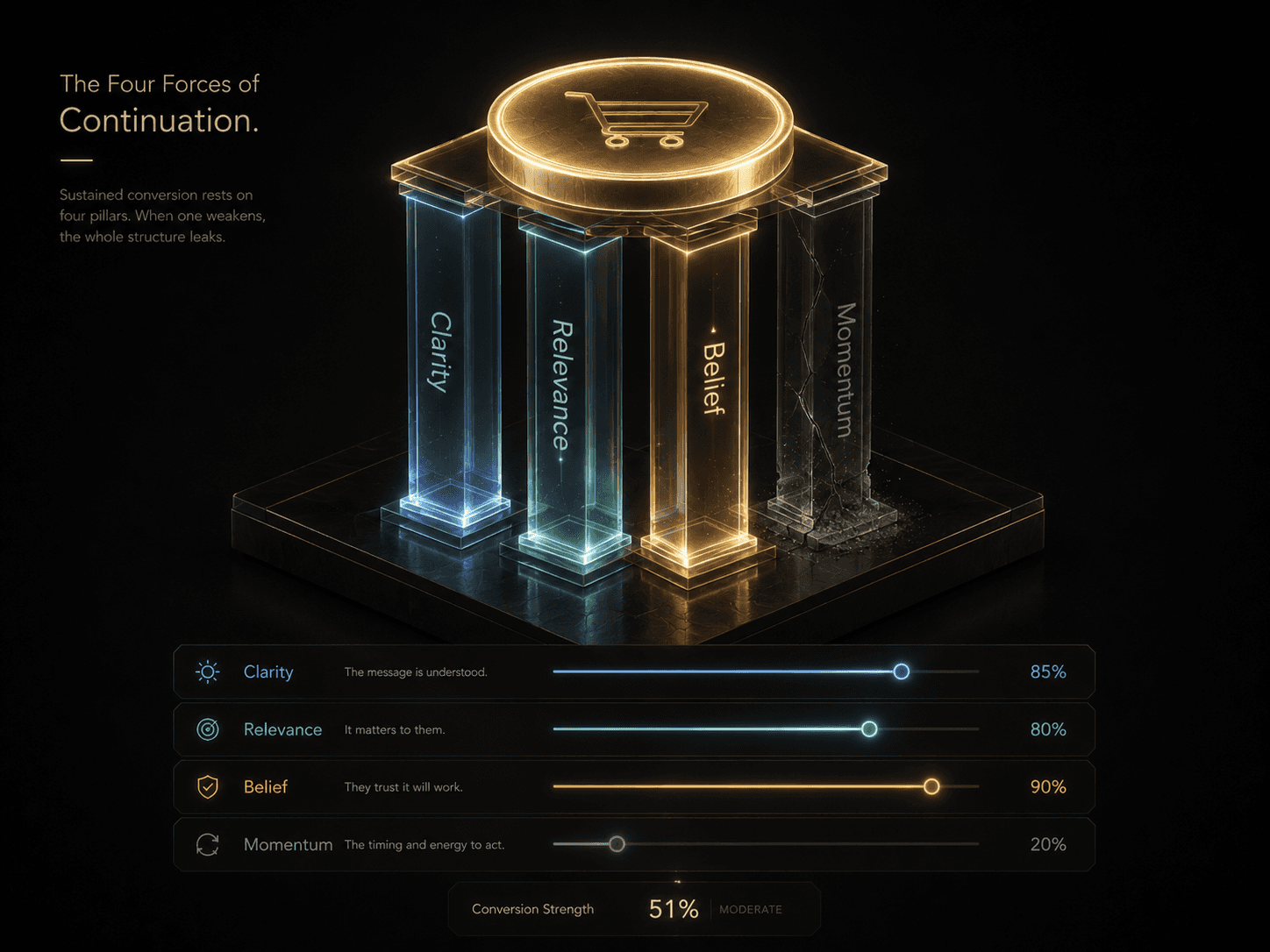
The Four Forces Of Continuation™
Strong funnels create four psychological conditions quickly.
These are the four forces of continuation.
1. Clarity
The buyer immediately understands:
what this is
what it does
what problem it solves
why it exists
Clarity lowers mental effort.
Confusion increases friction.
And friction makes leaving feel easier than continuing.
2. Relevance
The buyer feels:
“This is meant for someone like me.”
Relevance is what makes the page feel personally important.
A page can be clear and still fail if the buyer does not feel recognised.
The reader needs to see their problem, frustration, desire, or stalled outcome reflected back to them.
3. Belief
The page reduces uncertainty using:
proof
specificity
visible outcomes
credibility
mechanism
trust signals
Belief is what stops the page from sounding like another marketing claim.
Cold and warm buyers do not trust confidence alone.
They trust evidence.
4. Momentum
The buyer feels naturally pulled toward the next step.
Not pressured.
Not confused.
Pulled forward.
Momentum happens when the page makes the next action feel obvious, useful, and worth taking.
Every strong funnel creates these four forces.
Every weak funnel leaks one or more of them.
——
Why “Professional” Pages Still Fail
This is one of the biggest misunderstandings in marketing.
A page can look beautiful.
It can look polished.
It can look expensive.
It can look modern.
It can be perfectly “on brand”.
And still quietly destroy conversion.
Because buyers do not reward pages for aesthetics alone.
They reward pages for making continuation feel worthwhile.
Many weak funnels sound like this:
“Empowering scalable business transformation through innovative solutions.”
It looks professional.
It sounds polished.
But it means almost nothing.
The buyer now has to work to interpret the page.
And buyers do not enjoy unnecessary cognitive effort.
That is why clarity beats cleverness so often.
Cleverness asks the buyer to admire you.
Clarity helps the buyer move.
And movement is the game.
——
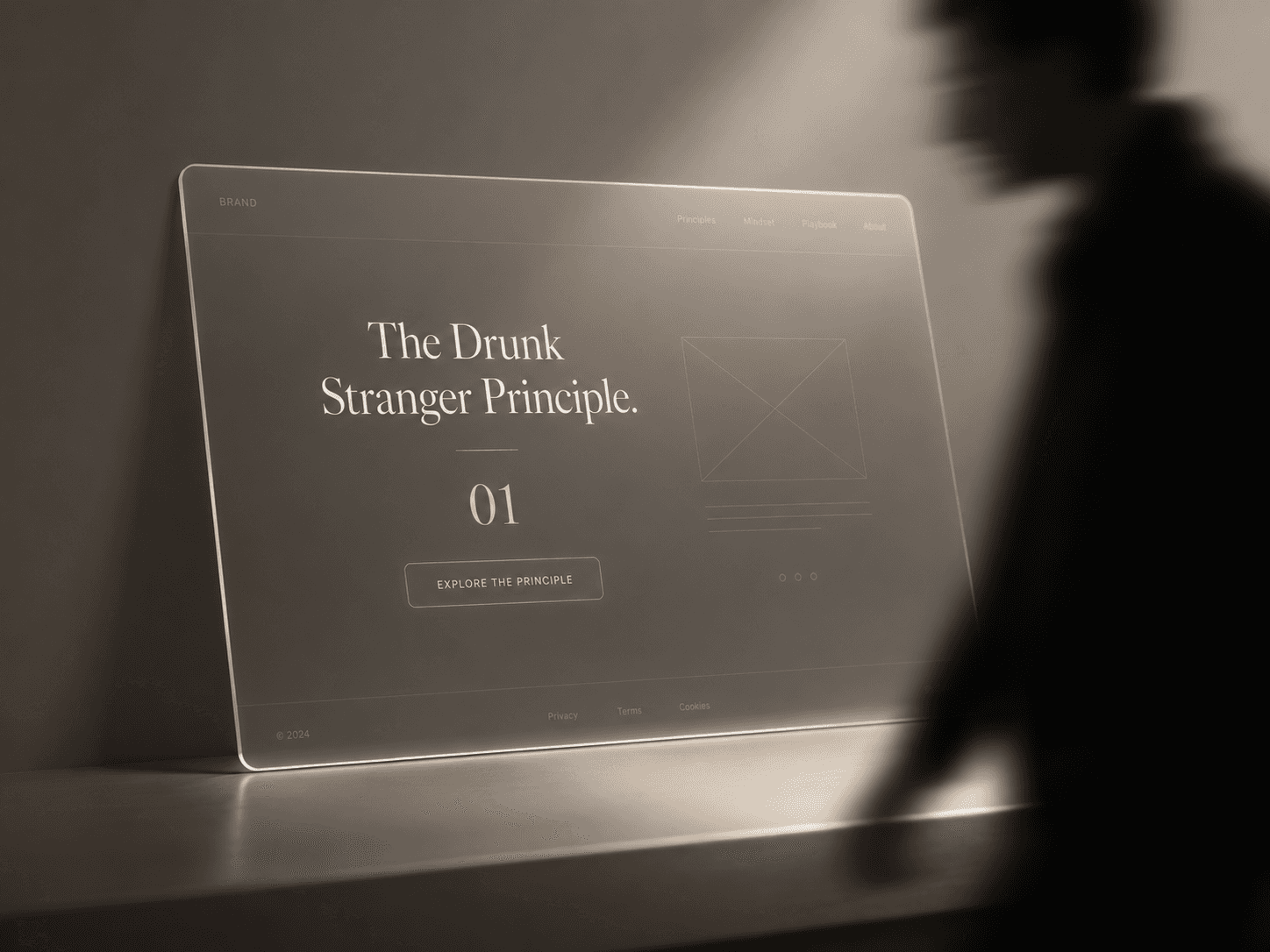
The Drunk Stranger Principle™
Imagine a distracted stranger lands on your page at 1:14am.
Half-focused.
Mentally tired.
Slightly drunk.
Scrolling fast.
Could they still understand:
what this is
who it is for
why it matters
what to do next
why they should trust it
If not, the page leaks.
That is the Drunk Stranger Principle™.
It is not really about drunk people.
It is about cognitive friction.
The more mental effort your page demands, the more buyers disappear before the sales argument even begins.
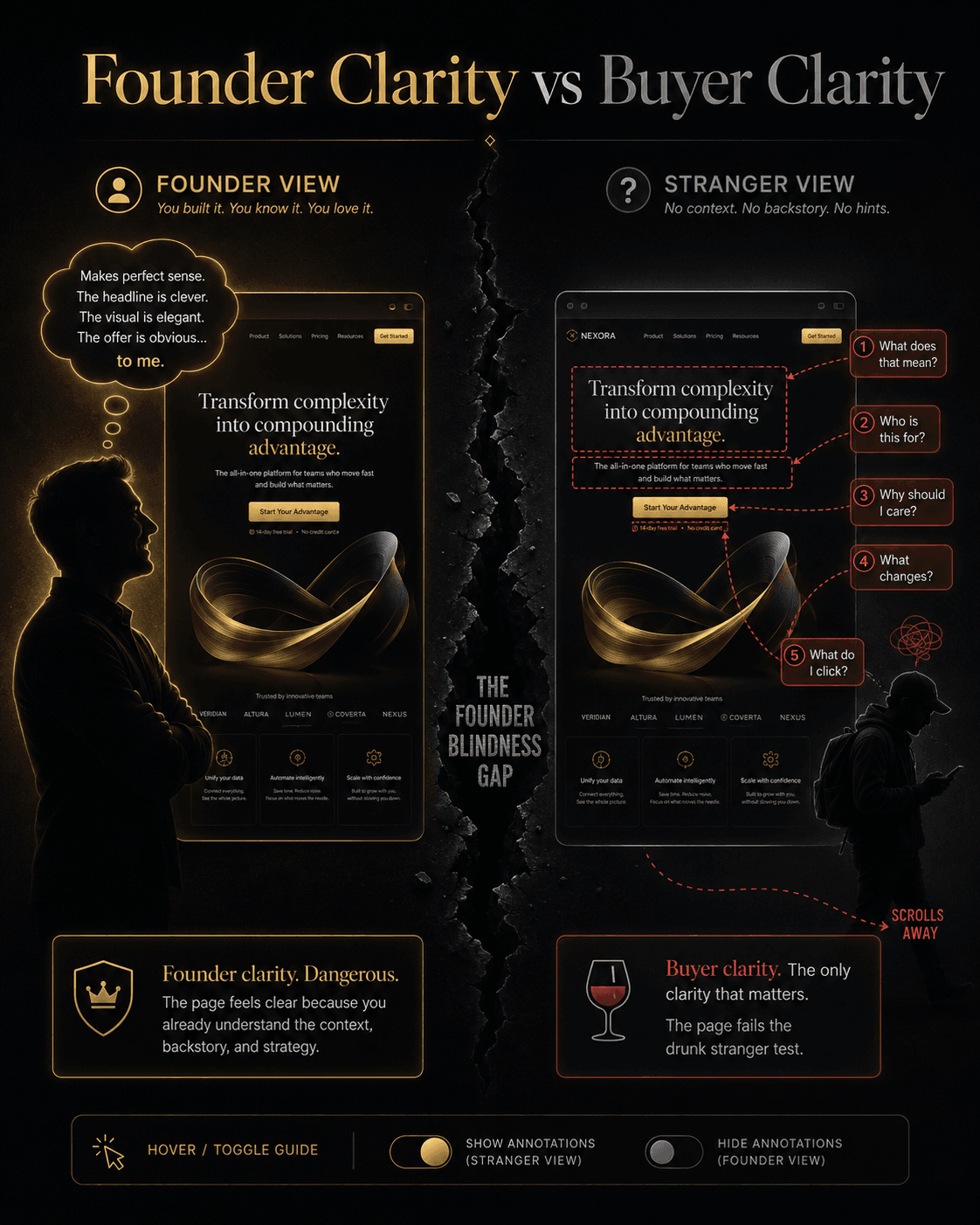
This principle is useful because it strips away founder blindness.
Founders often understand their own pages because they already know:
the product
the context
the offer
the mechanism
the jargon
the backstory
the reason the page exists
The buyer does not.
And funnels must be built for buyers.
Not insiders.
——
The Drunk Stranger Test™
The Drunk Stranger Test™ is a simple first-contact audit for landing pages, homepages, booking pages, lead magnet pages, and sales pages.
It answers one question:
Can someone understand, trust, and continue from your page without needing you to explain it?
If the page needs your explanation, the page is not clear enough.
That is the standard.
——
How To Use The Test
Step 1
Open the page you want to test.
This can be your:
homepage
landing page
booking page
lead magnet page
sales page
product page
funnel step
Step 2
Show only the hero section.
Do not show the full page yet.
Do not explain the offer.
Do not give background.
Do not defend the page.
No extra context.
The test only works if the page has to stand on its own.
Step 3
Give the viewer 3–5 seconds maximum.
Use:
a stranger
a friend
a colleague
a customer
a potential buyer
AI
or yourself after stepping away for several hours
Step 4
Ask the five core questions:
What is this page about?
Who is this for?
What outcome is being promised?
What should I do next?
Why should I trust it?
Step 5
Score the page honestly.
Do not score based on what you meant.
Score based on what the page actually communicates.
——
The Drunk Stranger Scorecard™
Score each test from 1 to 5.
1 = very weak
2 = unclear
3 = acceptable but leaking
4 = strong
5 = immediately clear and compelling
Test 1: 3-Second Clarity
Core Question
Can someone understand what this page is about within 3 seconds?
Weak Example
“Empowering scalable digital transformation.”
Stronger Example
“Get 15–20 Qualified Sales Calls Per Month Without Hiring Another Setter.”
Why This Matters
Clarity lowers cognitive friction.
Vagueness increases uncertainty.
And uncertainty weakens continuation.
If the buyer cannot quickly understand what the page is about, they are forced to interpret.
Interpretation creates effort.
Effort creates hesitation.
Hesitation creates exits.
Common Clarity Leaks
abstract language
corporate jargon
clever but unclear headlines
missing specificity
unclear outcomes
no visible problem
no concrete promise
Fix Actions
Rewrite the headline using one of these four angles:
pain
payoff
transformation
specificity
Use this forcing template:
“We help [audience] get [outcome] without [pain/friction].”
Example:
“We help agency owners book more qualified calls without relying on referrals.”
Score
3-Second Clarity Score: ___ / 5
——
Test 2: Audience Recognition
Core Question
Can the visitor instantly tell this page is meant for someone like them?
Weak Example
“We help businesses scale efficiently.”
Stronger Example
“Tired of getting ghosted after sales calls?”
Why This Matters
Buyers continue reading when they feel recognised.
Generic messaging weakens attention.
Specific pain strengthens continuation.
The page should make the right buyer feel:
“This is about me.”
Not:
“This could be for anyone.”
If the audience is too broad, the page feels less relevant.
And if the page feels less relevant, the buyer has less reason to stay.
Common Audience Leaks
broad positioning
founder-first messaging
generic language
weak emotional relevance
unclear ICP
no specific pain
no visible buyer situation
Fix Actions
Rewrite the opening section around:
buyer pain
frustrations
stalled outcomes
desired change
real-world symptoms
emotional cost
Ask yourself:
Would the right buyer feel personally called out, or merely generally included?
Score
Audience Recognition Score: ___ / 5
——
Test 3: Promise Visibility
Core Question
Does the outcome feel concrete enough to trust?
Weak Example
“Unlock your potential.”
Stronger Example
“Reduce Client No-Shows Using A 4-Step Reminder Flow.”
Why This Matters
Specificity creates believability.
Vague promises create doubt.
The buyer should be able to picture the outcome mentally.
A promise becomes stronger when it feels visible.
That does not mean you should invent numbers.
Only use specific numbers, timeframes, or outcomes you can support.
Specificity increases belief only when it is credible.
Common Promise Leaks
abstract transformation
generic “growth” language
soft outcomes
invisible payoff
unclear before/after
no measurable change
no emotional payoff
Fix Actions
Add:
numbers
measurable outcomes
visible transformation
emotional payoff
timeframes
clear before/after contrast
Use this question:
What does the buyer actually get if this works?
Then make that outcome visible.
Score
Promise Visibility Score: ___ / 5
——
Test 4: Action Obviousness
Core Question
Can the buyer instantly understand what to do next?
Weak Example
“Submit.”
Stronger Example
“Get My Free 7-Minute Funnel Breakdown.”
Dead Button Syndrome™
Many CTAs feel like administration instead of progress.
That destroys momentum.
A weak CTA tells people what to do.
A strong CTA tells people what they get.
The CTA is not just a button.
It is the moment where interest becomes movement.
If the action feels vague, the buyer hesitates.
If the action feels valuable, the buyer has a reason to click.
Why This Matters
The CTA should communicate:
reward
movement
value
clarity
next step
Not just instruction.
A button should not feel like paperwork.
It should feel like progress.
Common CTA Leaks
generic button labels
unclear reward
weak next step
too many competing actions
no visible outcome
high-friction wording
no reason to click now
Fix Actions
Rewrite the CTA using:
visible reward
specificity
low friction
clear outcome
personal ownership
Examples:
“Learn More” becomes “Show Me The 3 Funnel Leaks.”
“Submit” becomes “Send My Audit.”
“Book A Call” becomes “Get My 10-Minute Funnel Breakdown.”
“Download” becomes “Get The PDF Swipe Vault.”
“Contact Us” becomes “Get My Free Strategy Review.”
Score
Action Obviousness Score: ___ / 5
——
Test 5: Trust Signal
Core Question
Does the page provide visible proof before asking for commitment?
Weak Example
“Thousands trust us.”
Stronger Example
“Generated 27 Qualified Leads In 10 Days After Rebuilding The Hero Section.”
Why This Matters
Cold buyers do not trust confidence alone.
They trust evidence.
Proof reduces uncertainty before doubt hardens.
A page should not make a strong claim and then leave the buyer alone with doubt.
The proof does not need to be huge.
But it does need to appear early enough to support the claim.
Common Trust Leaks
generic testimonials
claims without proof
proof arriving too late
weak credibility cues
vague social proof
unsupported numbers
no proof near the CTA
Fix Actions
Add:
screenshots
quantified outcomes
testimonial fragments
client logos
recognisable names
trust indicators
before/after proof
mechanism proof
proof near the CTA
Use this proof hierarchy:
Weak proof:
“Trusted by many.”
Better proof:
“120+ clients served.”
Strong proof:
“27 qualified leads in 10 days after hero and CTA rebuild.”
Best proof:
A specific screenshot, testimonial, or case study attached to the exact claim being made.
Score
Trust Signal Score: ___ / 5
——
Your Total Drunk Stranger Score™
Add your five scores together.
3-Second Clarity: ___ / 5
Audience Recognition: ___ / 5
Promise Visibility: ___ / 5
Action Obviousness: ___ / 5
Trust Signal: ___ / 5
Total Score: ___ / 25
What Your Score Means
22–25: Strong First Contact
Your page is clear, relevant, believable, and easy to act on.
You can send traffic with more confidence.
Still test and refine, but the first-contact foundation is strong.
18–21: Leaking But Repairable
The page has potential, but one or two key areas are weakening continuation.
Fix the lowest-scoring sections before increasing traffic.
11–17: Serious First-Contact Friction
The page may look complete, but buyers are likely working too hard to understand, trust, or act.
Repair the hero section before redesigning anything else.
0–10: Polite Distraction
The page is probably not converting because it is not creating enough clarity, relevance, belief, or momentum.
Go back to the opening screen.
Fix the sequence.
Then retest.
——
The Page Leak Calculator™
First-contact leaks become expensive quickly.
Use this simple calculator to estimate the cost.
Monthly visitors: _______
Cost per click: _______
Estimated percentage leaving because first contact fails: _______ %
Estimated wasted traffic: _______
Estimated wasted spend: _______
Example:
If 1,000 people visit your page…
And 40% leave because first contact fails…
And each click costs £5…
You burn £2,000 before the real sales argument even begins.
Most funnel leaks are expensive long before they become obvious.
That is why repairing first contact matters.
You are not just improving copy.
You are protecting paid attention from being wasted.
——
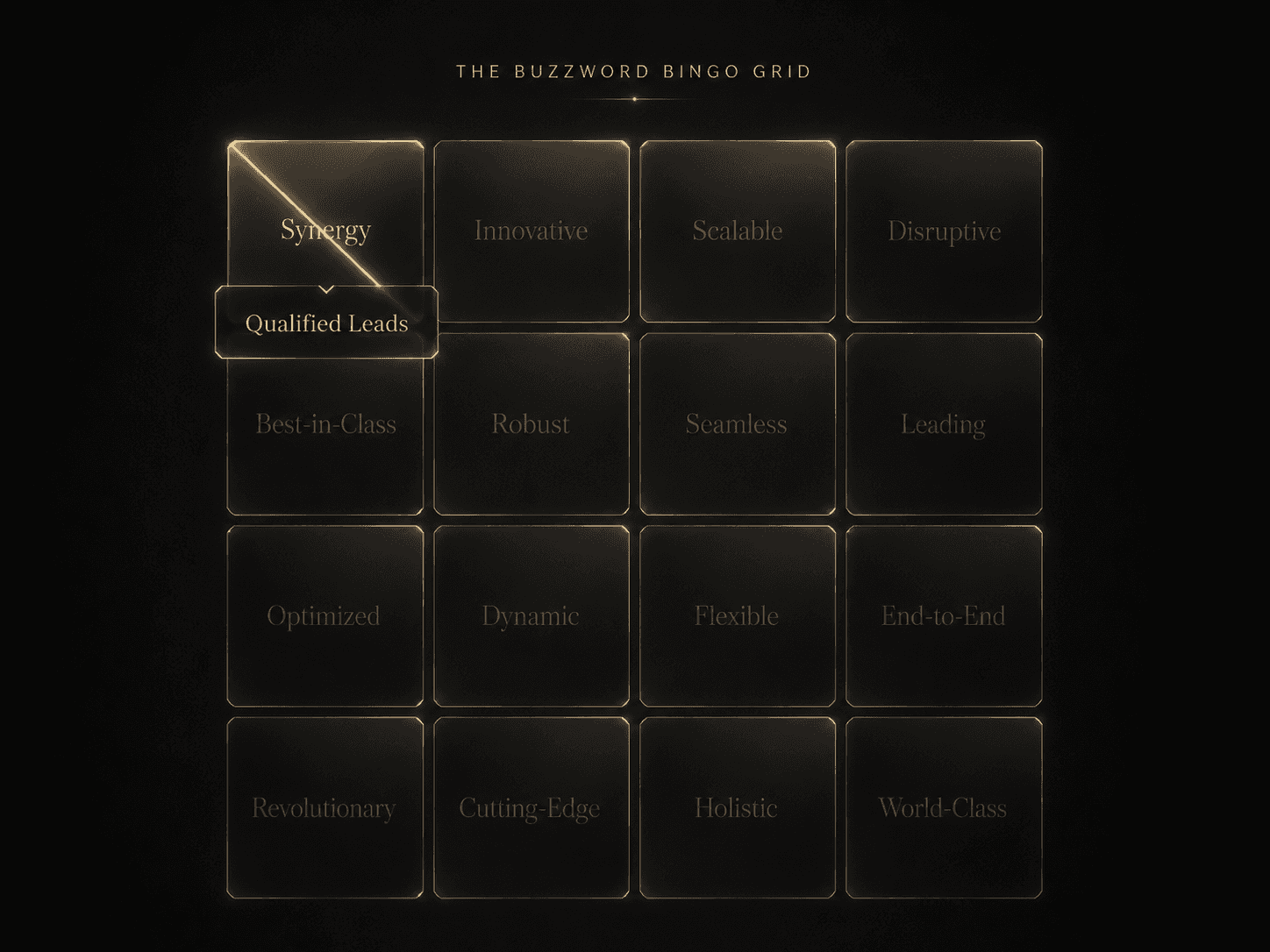
Buzzword Bingo™
Count how many of these appear in your hero section:
☐ Synergy
☐ Innovative
☐ World-class
☐ Scalable
☐ Bespoke
☐ Transformative
☐ Seamless
☐ Solutions
☐ Empowering
☐ Revolutionary
☐ Cutting-edge
☐ Robust
☐ Optimised
☐ Excellence
☐ Modern
This is not a ban on these words.
Some of them can be useful in the right context.
The problem is using abstract language before the buyer understands the concrete value.
If your headline or subheadline relies heavily on these words, there is a good chance the buyer understands less than you think they do.
Buzzwords often feel safe to the founder.
But they create fog for the buyer.
Replace abstraction with:
specific pain
specific outcome
specific audience
specific mechanism
specific next step
The buyer does not need you to sound impressive.
They need you to make the value obvious.
——
The One-Sentence Forcing Template™
Complete this sentence clearly:
“This page is for __________________ who is tired of __________________ so they can get __________________ without __________________.”
Example:
“This page is for agency owners who are tired of inconsistent lead flow so they can book more qualified calls without relying on referrals.”
If you struggle to complete this sentence, the funnel likely lacks:
positioning clarity
audience specificity
visible transformation
strategic focus
offer sharpness
Do not move forward until this sentence is clear.
A page that cannot be summarised clearly usually cannot convert clearly.
——
The No-Context Screenshot Challenge™
Take a screenshot of your hero section.
Remove the logo.
Send it to someone with zero context.
Ask them:
“What does this company do?”
“Who is this for?”
“What problem is being solved?”
“What happens if I click?”
Do not explain anything.
Do not add background.
Do not defend the page.
Let the page speak for itself.
Score The Response
If they answer 4 out of 4 correctly:
Your hero section is strong.
If they answer 2–3 out of 4 correctly:
Your page is leaking.
If they answer 0–1 out of 4 correctly:
Rebuild the hero.
If someone needs your explanation to understand the page, the page is depending on context the buyer does not have.
And explanation usually arrives too late.
——
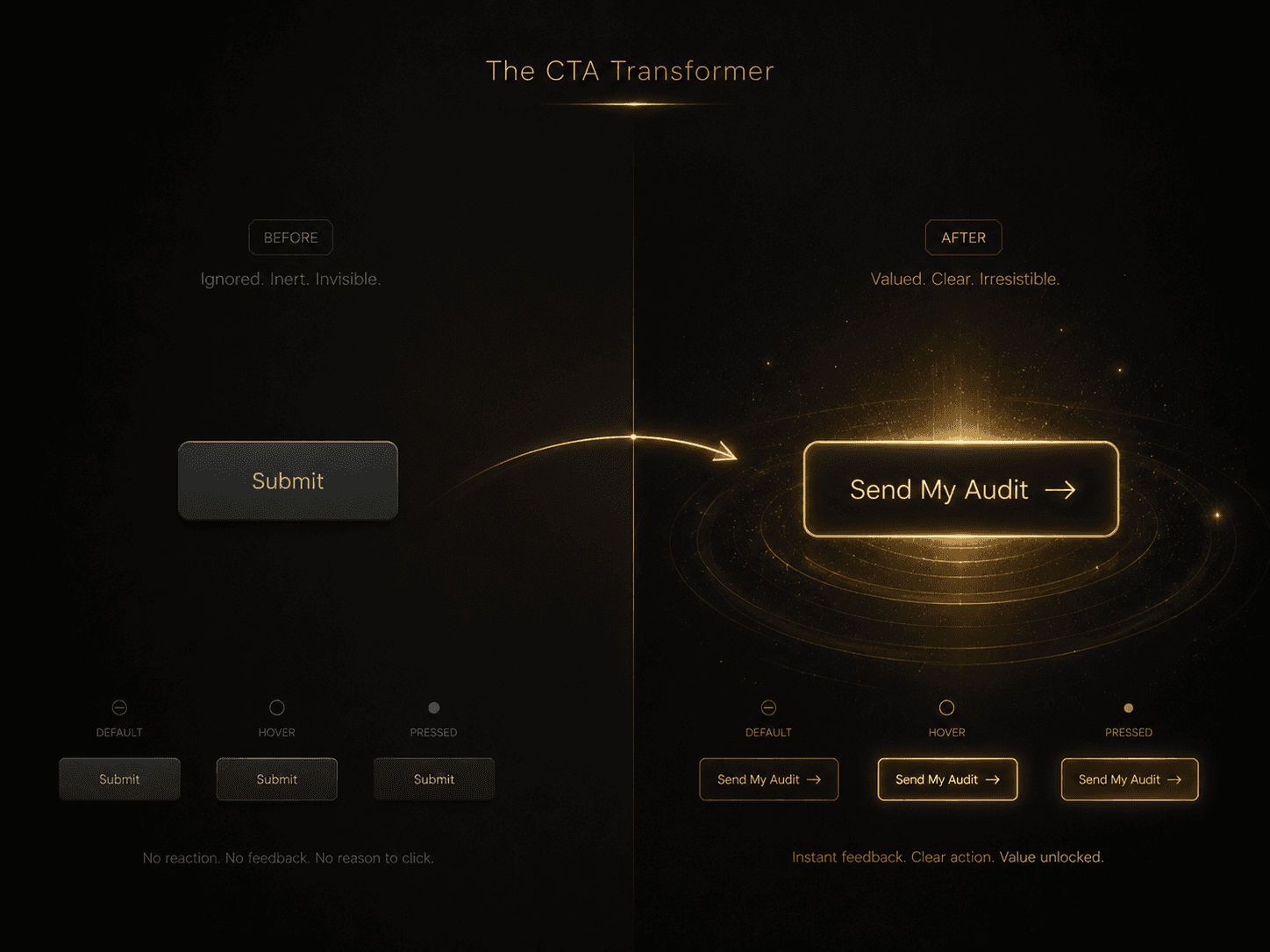
The CTA Transformer™
Use this section when your CTA feels vague, passive, or low-value.
Weak CTA:
“Learn More”
Stronger CTA:
“Show Me The 3 Funnel Leaks”
—-
Weak CTA:
“Submit”
Stronger CTA:
“Send My Audit”
—-
Weak CTA:
“Book A Call”
Stronger CTA:
“Get My 10-Minute Funnel Breakdown”
—-
Weak CTA:
“Download”
Stronger CTA:
“Get The PDF Swipe Vault”
—-
Weak CTA:
“Contact Us”
Stronger CTA:
“Get My Free Strategy Review”
—-
Weak CTA:
“Start Now”
Stronger CTA:
“Build My First Campaign”
—-
Weak CTA:
“Get Started”
Stronger CTA:
“Create My First Funnel Map”
—-
Weak CTA:
“Apply Now”
Stronger CTA:
“Apply For The 30-Minute Growth Audit”
—-
The pattern is simple.
Do not only describe the action.
Show the reward.
A CTA becomes stronger when the buyer can see what they are getting and why it is worth clicking.
——
The Trust Signal Heat Map™
Not all proof belongs in the same place.
Proof works best when it appears close to the doubt it is meant to reduce.
Above The Fold
Use proof that reduces first-contact doubt.
Examples:
quantified outcomes
short proof cues
trust lines
recognisable logos
specific credibility markers
Purpose:
Make the first screen feel safer to continue.
Near The CTA
Use proof that reduces action anxiety.
Examples:
testimonial fragments
screenshots
short proof snippets
mechanism explanation
risk reversal
“what happens next” reassurance
Purpose:
Make the click feel less risky and more worthwhile.
Lower Page
Use proof that supports deeper evaluation.
Examples:
case studies
detailed testimonials
before/after results
FAQs
process breakdowns
objection handling
comparison sections
Purpose:
Help warmer buyers build confidence before making a decision.
The rule is simple:
Do not make the buyer wait too long for evidence.
Proof should arrive before doubt hardens.
——
Repairing First-Contact Leaks
Most weak funnels do not need complete redesigns first.
They need first-contact repair.
Fix these before rebuilding the entire page:
Headline clarity
Make the core message easier to understand.
Audience recognition
Make the right buyer feel personally seen.
Promise specificity
Make the outcome more concrete.
CTA reward visibility
Make the next step feel valuable.
Proof cue above the fold
Give the buyer a reason to believe before asking for action.
Most funnels fail from micro-leaks, not catastrophic collapse.
The page does not need to be ugly to underperform.
It only needs to be unclear enough, vague enough, generic enough, or untrusted enough for the buyer to leave.
Repair first contact first.
——
The 24-Hour Implementation Process™
Do not redesign the entire funnel yet.
Run this process first.
Hour 1: Screenshot And Test
Take a screenshot of your hero section.
Run the No-Context Screenshot Challenge.
Ask:
What is this?
Who is it for?
What problem does it solve?
What happens next?
Write down where people hesitate.
That hesitation is the leak.
Hour 2: Rewrite The Headline
Rewrite the headline around one of these:
pain
payoff
transformation
specific outcome
Avoid abstraction.
Avoid cleverness that requires interpretation.
Make the message easier to understand.
Hour 3: Rewrite The CTA
Replace generic button text with a reward-visible CTA.
Do not ask people to “submit”, “learn more”, or “contact us” unless the value is obvious.
Make the click feel like progress.
Hour 4: Add One Proof Cue
Add one trust signal near the hero section or CTA.
Use:
a specific result
a short testimonial
a client logo
a screenshot
a credibility marker
a mechanism cue
Do not overbuild.
Just reduce doubt earlier.
Hour 24: Retest With A Fresh Person
Show the revised hero section to someone new.
Give them 3–5 seconds.
Ask the same questions again.
If the answers improve, the page is moving in the right direction.
If they still hesitate, keep repairing the first screen.
Do not redesign everything.
Diagnose first.
Repair second.
Scale third.
——
Final Principle
The goal of a funnel is not to impress the buyer.
The goal is to make continuation feel worthwhile.
That is the real game.
Strong pages create:
clarity
relevance
belief
momentum
Weak pages quietly create:
friction
confusion
uncertainty
hesitation
And hesitation kills continuation long before the buyer reaches the full sales argument.
That is what the Drunk Stranger Framework™ is built to expose and repair.
Run it on one page today.
Do not redesign first.
Do not add more sections first.
Do not blame traffic first.
Test the first-contact experience.
Find the leak.
Fix the leak.
Then send more traffic.
——
From:
The $100M Funnel Playbook. Book I: Foundation Buyer Psychology, Offer Clarity, and the Page Architecture Behind High-Converting Funnels
By Maris Spalins.
——
Copyright Notice
© 2026 The $100M Funnel Playbook / Winyourclients / Maris Spalins. All rights reserved.
This resource, including the frameworks, terminology, examples, scorecards, templates, prompts, methods, and written explanations, is original intellectual property created for The $100M Funnel Playbook. Book I: Foundation — Buyer Psychology, Offer Clarity, And The Page Architecture Behind High-Converting Funnels and published through Winyourclients.
No part of this resource may be copied, reproduced, screenshotted, republished, redistributed, sold, adapted, uploaded, scraped, stored in a database, included in training data, used to train artificial intelligence systems, or used to create derivative commercial or educational materials without prior written permission.
Limited reference, quotation, or sharing is only permitted where the source is clearly and visibly credited.
Any permitted reference must include at least one of the following source credits:
The $100M Funnel Playbook by Maris Spalins
or
Winyourclients — www.winyourclients.com
or
Maris Spalins / Winyourclients
Screenshots, excerpts, summaries, or redistributed versions must not remove, hide, alter, crop out, or obscure the original source, author name, book title, website name, or copyright notice.
This resource is provided for personal learning and implementation only. It is not licensed for resale, republishing, redistribution, AI training, template cloning, course creation, consulting delivery, or commercial reuse without written permission from Maris Spalins or Winyourclients.
For permission requests, licensing, citation approval, or commercial usage enquiries, contact:
Winyourclients
www.winyourclients.com
or
Email directly to Jacob on: help@winyourclients.com
The Drunk Stranger Framework™ Understanding First-Contact Psychology, Funnel Leakage, And Why Buyers Leave Before The Sales Argument Even Begins.
Prefer Audio Or Video?
The Drunk Stranger Framework™ is also available as:
🎧 A guided audio walkthrough for learning on the move
🎥 A video breakdown with practical examples and implementation guidanceChoose the format that fits how you learn best.
Listen To The Audio Walkthrough. Click HERE. (coming soon)
Watch The Video Breakdown. Click HERE. (coming soon)
——
WHY MOST FUNNELS DIE BEFORE THEY EVEN BEGIN
Most founders think funnels fail because:
Traffic quality is bad.
The offer is weak.
The design needs improving.
The algorithm changed.
Ads stopped working.
Sometimes that is true.
Most of the time, it is not.
Most funnels fail much earlier.
They fail during first contact.
The buyer lands on the page.
Their brain instantly starts asking silent questions:
“What is this?”
“Is this for me?”
“Why should I care?”
“Can I trust this?”
“What happens next?”
And the terrifying part is this:
Most of those decisions happen emotionally before the buyer consciously reads much at all.
The page either creates:
Clarity
Relevance
Belief
Momentum
…or it quietly creates confusion.
And confused buyers rarely continue.
That is what this framework is designed to help you understand and repair.
——
Why Most Funnels Die Before They Even Begin
Most founders think funnels fail because traffic quality is bad.
Or because the offer needs changing.
Or because the design is not good enough.
Or because the algorithm changed.
Or because the ads stopped working.
Sometimes that is true.
Most of the time, it is not.
Most funnels fail much earlier.
They fail during first contact.
The buyer lands on the page.
Their brain instantly starts asking silent questions:
“What is this?”
“Is this for me?”
“Why should I care?”
“Can I trust this?”
“What happens next?”
And the terrifying part is this:
Most of those decisions happen before the buyer consciously reads much at all.
The page either creates clarity, relevance, belief, and momentum…
Or it quietly creates confusion.
And confused buyers rarely continue.
That is what this framework is designed to expose and repair.
It helps you find the invisible leaks that make buyers leave before your full sales argument even begins.
——
What This Resource Helps You Do
The Drunk Stranger Framework™ helps you pressure-test any page against the brutal reality of first-contact conversion.
Use it to diagnose:
weak headlines.
vague promises.
unclear audiences.
soft CTAs.
missing trust signals.
confusing hero sections.
unnecessary cognitive friction.
first-scroll conversion leaks.
This is not a branding exercise.
It is not a design preference checklist.
It is a continuation test.
The question is simple:
Does your page create enough clarity, relevance, belief, and momentum to earn the next few seconds?
If the answer is no, the page leaks.
——
The First-Contact Decision Window™
The first few seconds of a page matter disproportionately.
Not because buyers are stupid.
Because attention is fragile.
Your buyer is distracted.
They are mentally overloaded.
They are emotionally sceptical.
They are comparing options.
They are low on patience.
They are filtering aggressively.
This means your page is not being evaluated slowly.
It is being stress-tested instantly.
Weak pages usually fail in one of five ways:
the offer feels vague
the audience feels unclear
the outcome feels soft
the CTA feels pointless
the page asks for trust too early
None of these failures feel dramatic while building the page.
But together, they quietly suffocate conversion.
This is what creates funnel leakage.
The buyer does not always leave because they rejected your offer.
Sometimes they leave because your page never became clear enough, relevant enough, believable enough, or valuable enough to continue.
——
The Four Forces Of Continuation™
Strong funnels create four psychological conditions quickly.
These are the four forces of continuation.
1. Clarity
The buyer immediately understands:
what this is
what it does
what problem it solves
why it exists
Clarity lowers mental effort.
Confusion increases friction.
And friction makes leaving feel easier than continuing.
2. Relevance
The buyer feels:
“This is meant for someone like me.”
Relevance is what makes the page feel personally important.
A page can be clear and still fail if the buyer does not feel recognised.
The reader needs to see their problem, frustration, desire, or stalled outcome reflected back to them.
3. Belief
The page reduces uncertainty using:
proof
specificity
visible outcomes
credibility
mechanism
trust signals
Belief is what stops the page from sounding like another marketing claim.
Cold and warm buyers do not trust confidence alone.
They trust evidence.
4. Momentum
The buyer feels naturally pulled toward the next step.
Not pressured.
Not confused.
Pulled forward.
Momentum happens when the page makes the next action feel obvious, useful, and worth taking.
Every strong funnel creates these four forces.
Every weak funnel leaks one or more of them.
——
Why “Professional” Pages Still Fail
This is one of the biggest misunderstandings in marketing.
A page can look beautiful.
It can look polished.
It can look expensive.
It can look modern.
It can be perfectly “on brand”.
And still quietly destroy conversion.
Because buyers do not reward pages for aesthetics alone.
They reward pages for making continuation feel worthwhile.
Many weak funnels sound like this:
“Empowering scalable business transformation through innovative solutions.”
It looks professional.
It sounds polished.
But it means almost nothing.
The buyer now has to work to interpret the page.
And buyers do not enjoy unnecessary cognitive effort.
That is why clarity beats cleverness so often.
Cleverness asks the buyer to admire you.
Clarity helps the buyer move.
And movement is the game.
——
The Drunk Stranger Principle™
Imagine a distracted stranger lands on your page at 1:14am.
Half-focused.
Mentally tired.
Slightly drunk.
Scrolling fast.
Could they still understand:
what this is
who it is for
why it matters
what to do next
why they should trust it
If not, the page leaks.
That is the Drunk Stranger Principle™.
It is not really about drunk people.
It is about cognitive friction.
The more mental effort your page demands, the more buyers disappear before the sales argument even begins.
This principle is useful because it strips away founder blindness.
Founders often understand their own pages because they already know:
the product
the context
the offer
the mechanism
the jargon
the backstory
the reason the page exists
The buyer does not.
And funnels must be built for buyers.
Not insiders.
——
The Drunk Stranger Test™
The Drunk Stranger Test™ is a simple first-contact audit for landing pages, homepages, booking pages, lead magnet pages, and sales pages.
It answers one question:
Can someone understand, trust, and continue from your page without needing you to explain it?
If the page needs your explanation, the page is not clear enough.
That is the standard.
——
How To Use The Test
Step 1
Open the page you want to test.
This can be your:
homepage
landing page
booking page
lead magnet page
sales page
product page
funnel step
Step 2
Show only the hero section.
Do not show the full page yet.
Do not explain the offer.
Do not give background.
Do not defend the page.
No extra context.
The test only works if the page has to stand on its own.
Step 3
Give the viewer 3–5 seconds maximum.
Use:
a stranger
a friend
a colleague
a customer
a potential buyer
AI
or yourself after stepping away for several hours
Step 4
Ask the five core questions:
What is this page about?
Who is this for?
What outcome is being promised?
What should I do next?
Why should I trust it?
Step 5
Score the page honestly.
Do not score based on what you meant.
Score based on what the page actually communicates.
——
The Drunk Stranger Scorecard™
Score each test from 1 to 5.
1 = very weak
2 = unclear
3 = acceptable but leaking
4 = strong
5 = immediately clear and compelling
Test 1: 3-Second Clarity
Core Question
Can someone understand what this page is about within 3 seconds?
Weak Example
“Empowering scalable digital transformation.”
Stronger Example
“Get 15–20 Qualified Sales Calls Per Month Without Hiring Another Setter.”
Why This Matters
Clarity lowers cognitive friction.
Vagueness increases uncertainty.
And uncertainty weakens continuation.
If the buyer cannot quickly understand what the page is about, they are forced to interpret.
Interpretation creates effort.
Effort creates hesitation.
Hesitation creates exits.
Common Clarity Leaks
abstract language
corporate jargon
clever but unclear headlines
missing specificity
unclear outcomes
no visible problem
no concrete promise
Fix Actions
Rewrite the headline using one of these four angles:
pain
payoff
transformation
specificity
Use this forcing template:
“We help [audience] get [outcome] without [pain/friction].”
Example:
“We help agency owners book more qualified calls without relying on referrals.”
Score
3-Second Clarity Score: ___ / 5
——
Test 2: Audience Recognition
Core Question
Can the visitor instantly tell this page is meant for someone like them?
Weak Example
“We help businesses scale efficiently.”
Stronger Example
“Tired of getting ghosted after sales calls?”
Why This Matters
Buyers continue reading when they feel recognised.
Generic messaging weakens attention.
Specific pain strengthens continuation.
The page should make the right buyer feel:
“This is about me.”
Not:
“This could be for anyone.”
If the audience is too broad, the page feels less relevant.
And if the page feels less relevant, the buyer has less reason to stay.
Common Audience Leaks
broad positioning
founder-first messaging
generic language
weak emotional relevance
unclear ICP
no specific pain
no visible buyer situation
Fix Actions
Rewrite the opening section around:
buyer pain
frustrations
stalled outcomes
desired change
real-world symptoms
emotional cost
Ask yourself:
Would the right buyer feel personally called out, or merely generally included?
Score
Audience Recognition Score: ___ / 5
——
Test 3: Promise Visibility
Core Question
Does the outcome feel concrete enough to trust?
Weak Example
“Unlock your potential.”
Stronger Example
“Reduce Client No-Shows Using A 4-Step Reminder Flow.”
Why This Matters
Specificity creates believability.
Vague promises create doubt.
The buyer should be able to picture the outcome mentally.
A promise becomes stronger when it feels visible.
That does not mean you should invent numbers.
Only use specific numbers, timeframes, or outcomes you can support.
Specificity increases belief only when it is credible.
Common Promise Leaks
abstract transformation
generic “growth” language
soft outcomes
invisible payoff
unclear before/after
no measurable change
no emotional payoff
Fix Actions
Add:
numbers
measurable outcomes
visible transformation
emotional payoff
timeframes
clear before/after contrast
Use this question:
What does the buyer actually get if this works?
Then make that outcome visible.
Score
Promise Visibility Score: ___ / 5
——
Test 4: Action Obviousness
Core Question
Can the buyer instantly understand what to do next?
Weak Example
“Submit.”
Stronger Example
“Get My Free 7-Minute Funnel Breakdown.”
Dead Button Syndrome™
Many CTAs feel like administration instead of progress.
That destroys momentum.
A weak CTA tells people what to do.
A strong CTA tells people what they get.
The CTA is not just a button.
It is the moment where interest becomes movement.
If the action feels vague, the buyer hesitates.
If the action feels valuable, the buyer has a reason to click.
Why This Matters
The CTA should communicate:
reward
movement
value
clarity
next step
Not just instruction.
A button should not feel like paperwork.
It should feel like progress.
Common CTA Leaks
generic button labels
unclear reward
weak next step
too many competing actions
no visible outcome
high-friction wording
no reason to click now
Fix Actions
Rewrite the CTA using:
visible reward
specificity
low friction
clear outcome
personal ownership
Examples:
“Learn More” becomes “Show Me The 3 Funnel Leaks.”
“Submit” becomes “Send My Audit.”
“Book A Call” becomes “Get My 10-Minute Funnel Breakdown.”
“Download” becomes “Get The PDF Swipe Vault.”
“Contact Us” becomes “Get My Free Strategy Review.”
Score
Action Obviousness Score: ___ / 5
——
Test 5: Trust Signal
Core Question
Does the page provide visible proof before asking for commitment?
Weak Example
“Thousands trust us.”
Stronger Example
“Generated 27 Qualified Leads In 10 Days After Rebuilding The Hero Section.”
Why This Matters
Cold buyers do not trust confidence alone.
They trust evidence.
Proof reduces uncertainty before doubt hardens.
A page should not make a strong claim and then leave the buyer alone with doubt.
The proof does not need to be huge.
But it does need to appear early enough to support the claim.
Common Trust Leaks
generic testimonials
claims without proof
proof arriving too late
weak credibility cues
vague social proof
unsupported numbers
no proof near the CTA
Fix Actions
Add:
screenshots
quantified outcomes
testimonial fragments
client logos
recognisable names
trust indicators
before/after proof
mechanism proof
proof near the CTA
Use this proof hierarchy:
Weak proof:
“Trusted by many.”
Better proof:
“120+ clients served.”
Strong proof:
“27 qualified leads in 10 days after hero and CTA rebuild.”
Best proof:
A specific screenshot, testimonial, or case study attached to the exact claim being made.
Score
Trust Signal Score: ___ / 5
——
Your Total Drunk Stranger Score™
Add your five scores together.
3-Second Clarity: ___ / 5
Audience Recognition: ___ / 5
Promise Visibility: ___ / 5
Action Obviousness: ___ / 5
Trust Signal: ___ / 5
Total Score: ___ / 25
What Your Score Means
22–25: Strong First Contact
Your page is clear, relevant, believable, and easy to act on.
You can send traffic with more confidence.
Still test and refine, but the first-contact foundation is strong.
18–21: Leaking But Repairable
The page has potential, but one or two key areas are weakening continuation.
Fix the lowest-scoring sections before increasing traffic.
11–17: Serious First-Contact Friction
The page may look complete, but buyers are likely working too hard to understand, trust, or act.
Repair the hero section before redesigning anything else.
0–10: Polite Distraction
The page is probably not converting because it is not creating enough clarity, relevance, belief, or momentum.
Go back to the opening screen.
Fix the sequence.
Then retest.
——
The Page Leak Calculator™
First-contact leaks become expensive quickly.
Use this simple calculator to estimate the cost.
Monthly visitors: _______
Cost per click: _______
Estimated percentage leaving because first contact fails: _______ %
Estimated wasted traffic: _______
Estimated wasted spend: _______
Example:
If 1,000 people visit your page…
And 40% leave because first contact fails…
And each click costs £5…
You burn £2,000 before the real sales argument even begins.
Most funnel leaks are expensive long before they become obvious.
That is why repairing first contact matters.
You are not just improving copy.
You are protecting paid attention from being wasted.
——
Buzzword Bingo™
Count how many of these appear in your hero section:
☐ Synergy
☐ Innovative
☐ World-class
☐ Scalable
☐ Bespoke
☐ Transformative
☐ Seamless
☐ Solutions
☐ Empowering
☐ Revolutionary
☐ Cutting-edge
☐ Robust
☐ Optimised
☐ Excellence
☐ Modern
This is not a ban on these words.
Some of them can be useful in the right context.
The problem is using abstract language before the buyer understands the concrete value.
If your headline or subheadline relies heavily on these words, there is a good chance the buyer understands less than you think they do.
Buzzwords often feel safe to the founder.
But they create fog for the buyer.
Replace abstraction with:
specific pain
specific outcome
specific audience
specific mechanism
specific next step
The buyer does not need you to sound impressive.
They need you to make the value obvious.
——
The One-Sentence Forcing Template™
Complete this sentence clearly:
“This page is for __________________ who is tired of __________________ so they can get __________________ without __________________.”
Example:
“This page is for agency owners who are tired of inconsistent lead flow so they can book more qualified calls without relying on referrals.”
If you struggle to complete this sentence, the funnel likely lacks:
positioning clarity
audience specificity
visible transformation
strategic focus
offer sharpness
Do not move forward until this sentence is clear.
A page that cannot be summarised clearly usually cannot convert clearly.
——
The No-Context Screenshot Challenge™
Take a screenshot of your hero section.
Remove the logo.
Send it to someone with zero context.
Ask them:
“What does this company do?”
“Who is this for?”
“What problem is being solved?”
“What happens if I click?”
Do not explain anything.
Do not add background.
Do not defend the page.
Let the page speak for itself.
Score The Response
If they answer 4 out of 4 correctly:
Your hero section is strong.
If they answer 2–3 out of 4 correctly:
Your page is leaking.
If they answer 0–1 out of 4 correctly:
Rebuild the hero.
If someone needs your explanation to understand the page, the page is depending on context the buyer does not have.
And explanation usually arrives too late.
——
The CTA Transformer™
Use this section when your CTA feels vague, passive, or low-value.
Weak CTA:
“Learn More”
Stronger CTA:
“Show Me The 3 Funnel Leaks”
—-
Weak CTA:
“Submit”
Stronger CTA:
“Send My Audit”
—-
Weak CTA:
“Book A Call”
Stronger CTA:
“Get My 10-Minute Funnel Breakdown”
—-
Weak CTA:
“Download”
Stronger CTA:
“Get The PDF Swipe Vault”
—-
Weak CTA:
“Contact Us”
Stronger CTA:
“Get My Free Strategy Review”
—-
Weak CTA:
“Start Now”
Stronger CTA:
“Build My First Campaign”
—-
Weak CTA:
“Get Started”
Stronger CTA:
“Create My First Funnel Map”
—-
Weak CTA:
“Apply Now”
Stronger CTA:
“Apply For The 30-Minute Growth Audit”
—-
The pattern is simple.
Do not only describe the action.
Show the reward.
A CTA becomes stronger when the buyer can see what they are getting and why it is worth clicking.
——
The Trust Signal Heat Map™
Not all proof belongs in the same place.
Proof works best when it appears close to the doubt it is meant to reduce.
Above The Fold
Use proof that reduces first-contact doubt.
Examples:
quantified outcomes
short proof cues
trust lines
recognisable logos
specific credibility markers
Purpose:
Make the first screen feel safer to continue.
Near The CTA
Use proof that reduces action anxiety.
Examples:
testimonial fragments
screenshots
short proof snippets
mechanism explanation
risk reversal
“what happens next” reassurance
Purpose:
Make the click feel less risky and more worthwhile.
Lower Page
Use proof that supports deeper evaluation.
Examples:
case studies
detailed testimonials
before/after results
FAQs
process breakdowns
objection handling
comparison sections
Purpose:
Help warmer buyers build confidence before making a decision.
The rule is simple:
Do not make the buyer wait too long for evidence.
Proof should arrive before doubt hardens.
——
Repairing First-Contact Leaks
Most weak funnels do not need complete redesigns first.
They need first-contact repair.
Fix these before rebuilding the entire page:
Headline clarity
Make the core message easier to understand.
Audience recognition
Make the right buyer feel personally seen.
Promise specificity
Make the outcome more concrete.
CTA reward visibility
Make the next step feel valuable.
Proof cue above the fold
Give the buyer a reason to believe before asking for action.
Most funnels fail from micro-leaks, not catastrophic collapse.
The page does not need to be ugly to underperform.
It only needs to be unclear enough, vague enough, generic enough, or untrusted enough for the buyer to leave.
Repair first contact first.
——
The 24-Hour Implementation Process™
Do not redesign the entire funnel yet.
Run this process first.
Hour 1: Screenshot And Test
Take a screenshot of your hero section.
Run the No-Context Screenshot Challenge.
Ask:
What is this?
Who is it for?
What problem does it solve?
What happens next?
Write down where people hesitate.
That hesitation is the leak.
Hour 2: Rewrite The Headline
Rewrite the headline around one of these:
pain
payoff
transformation
specific outcome
Avoid abstraction.
Avoid cleverness that requires interpretation.
Make the message easier to understand.
Hour 3: Rewrite The CTA
Replace generic button text with a reward-visible CTA.
Do not ask people to “submit”, “learn more”, or “contact us” unless the value is obvious.
Make the click feel like progress.
Hour 4: Add One Proof Cue
Add one trust signal near the hero section or CTA.
Use:
a specific result
a short testimonial
a client logo
a screenshot
a credibility marker
a mechanism cue
Do not overbuild.
Just reduce doubt earlier.
Hour 24: Retest With A Fresh Person
Show the revised hero section to someone new.
Give them 3–5 seconds.
Ask the same questions again.
If the answers improve, the page is moving in the right direction.
If they still hesitate, keep repairing the first screen.
Do not redesign everything.
Diagnose first.
Repair second.
Scale third.
——
Final Principle
The goal of a funnel is not to impress the buyer.
The goal is to make continuation feel worthwhile.
That is the real game.
Strong pages create:
clarity
relevance
belief
momentum
Weak pages quietly create:
friction
confusion
uncertainty
hesitation
And hesitation kills continuation long before the buyer reaches the full sales argument.
That is what the Drunk Stranger Framework™ is built to expose and repair.
Run it on one page today.
Do not redesign first.
Do not add more sections first.
Do not blame traffic first.
Test the first-contact experience.
Find the leak.
Fix the leak.
Then send more traffic.
——
From:
The $100M Funnel Playbook. Book I: Foundation Buyer Psychology, Offer Clarity, and the Page Architecture Behind High-Converting Funnels
By Maris Spalins.
——
Copyright Notice
© 2026 The $100M Funnel Playbook / Winyourclients / Maris Spalins. All rights reserved.
This resource, including the frameworks, terminology, examples, scorecards, templates, prompts, methods, and written explanations, is original intellectual property created for The $100M Funnel Playbook. Book I: Foundation — Buyer Psychology, Offer Clarity, And The Page Architecture Behind High-Converting Funnels and published through Winyourclients.
No part of this resource may be copied, reproduced, screenshotted, republished, redistributed, sold, adapted, uploaded, scraped, stored in a database, included in training data, used to train artificial intelligence systems, or used to create derivative commercial or educational materials without prior written permission.
Limited reference, quotation, or sharing is only permitted where the source is clearly and visibly credited.
Any permitted reference must include at least one of the following source credits:
The $100M Funnel Playbook by Maris Spalins
or
Winyourclients — www.winyourclients.com
or
Maris Spalins / Winyourclients
Screenshots, excerpts, summaries, or redistributed versions must not remove, hide, alter, crop out, or obscure the original source, author name, book title, website name, or copyright notice.
This resource is provided for personal learning and implementation only. It is not licensed for resale, republishing, redistribution, AI training, template cloning, course creation, consulting delivery, or commercial reuse without written permission from Maris Spalins or Winyourclients.
For permission requests, licensing, citation approval, or commercial usage enquiries, contact:
Winyourclients
www.winyourclients.com
or
Email directly to Jacob on: help@winyourclients.com
Other Blogs
Other Blogs
Check our other project Blogs with useful insight and information for your businesses
Other Blogs
Other Blogs
Check our other project Blogs with useful insight and information for your businesses